Functional Appliances Dental Lab
-
10+ years experience for China dental lab outsourcing services -
Processing 10,000 dental cases each month -
4 days Turnround time -
5 years warranty support
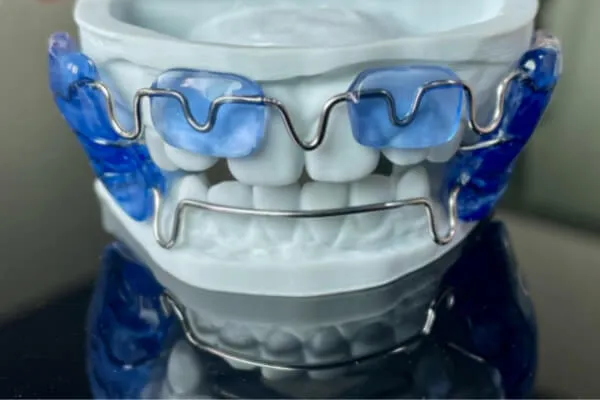
Raytops Functional Appliances Dental
Functional appliances in dentistry are orthodontic devices designed to address misaligned bites, jaw discrepancies, and malocclusions by influencing the growth and development of the jaw. These appliances work to correct the positioning of teeth, promote proper jaw alignment, and improve overall oral function. The primary goal is to achieve a balanced relationship between the bones, muscles, and tissues of the jaw.
Common examples of functional appliances include the Frankel appliance, Twin Block appliance, and Bionator appliance, among others. These devices are particularly effective in guiding jaw development and aligning teeth during the growth phase, offering a non-invasive solution for correcting skeletal and dental issues in children and adolescents.
Featured Functional Appliances Dental
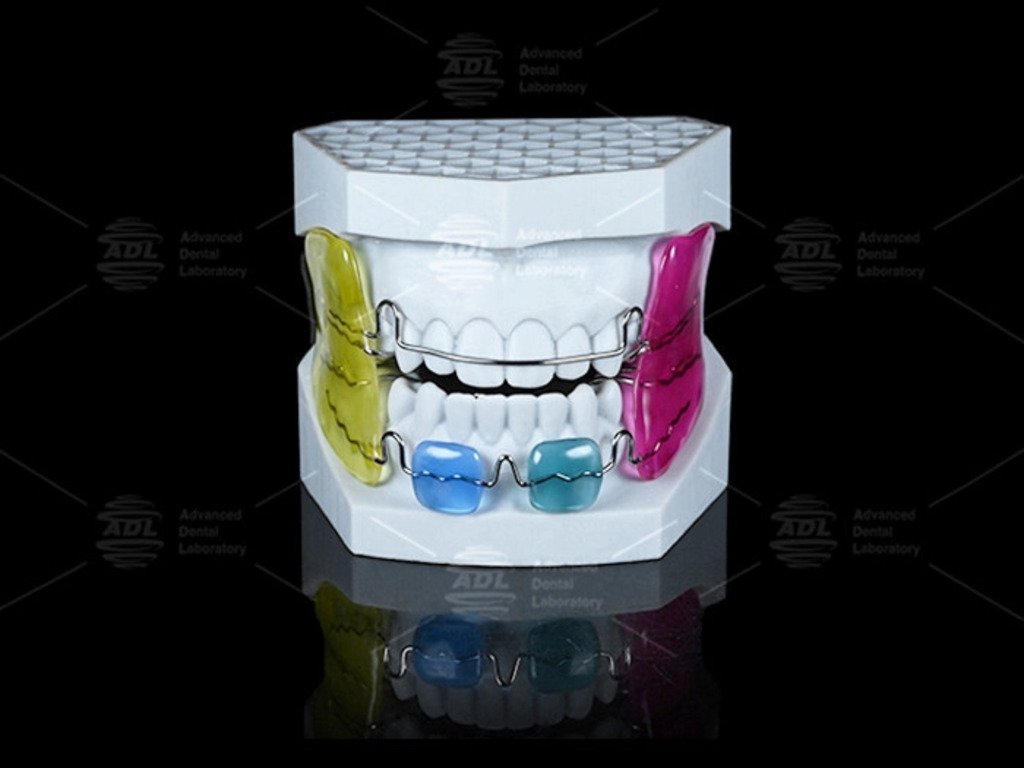
Frankel Appliance
The Frankel Appliance is a removable orthodontic device that is used to treat class II and class III malocclusions by promoting proper jaw development. It works by applying gentle forces to the teeth and jaw, encouraging the lower jaw to grow forward and the upper jaw to move back, correcting bite imbalances. Its ability to influence both dental and skeletal growth, the Frankel Appliance remains a classic and widely-used choice in functional orthodontics for enhancing both function and appearance.
-
Use Case:
The Frankel Appliance is particularly effective for patients with jaw growth problems or bite misalignments, such as overbites or underbites. It is ideal for children and teenagers whose jaws are still growing and can benefit from guided growth. -
Key Benefits:
-
Guides Jaw Growth: Helps in correcting class II and class III malocclusions by guiding the growth of the upper and lower jaws.
-
Non-Invasive: As a removable appliance, it offers a non-surgical treatment option.
-
Comfortable: The appliance is custom-made for each patient, ensuring comfort while it gradually adjusts the jaw.
-
Promotes Balanced Facial Aesthetics: By correcting the jaw alignment, it can help improve facial symmetry and aesthetics.
-
-
Recommended For:
-
Patients with class II or class III malocclusions.
-
Children and adolescents whose jaw development can still be guided.
-
Patients needing a non-surgical solution for jaw growth modification.
-
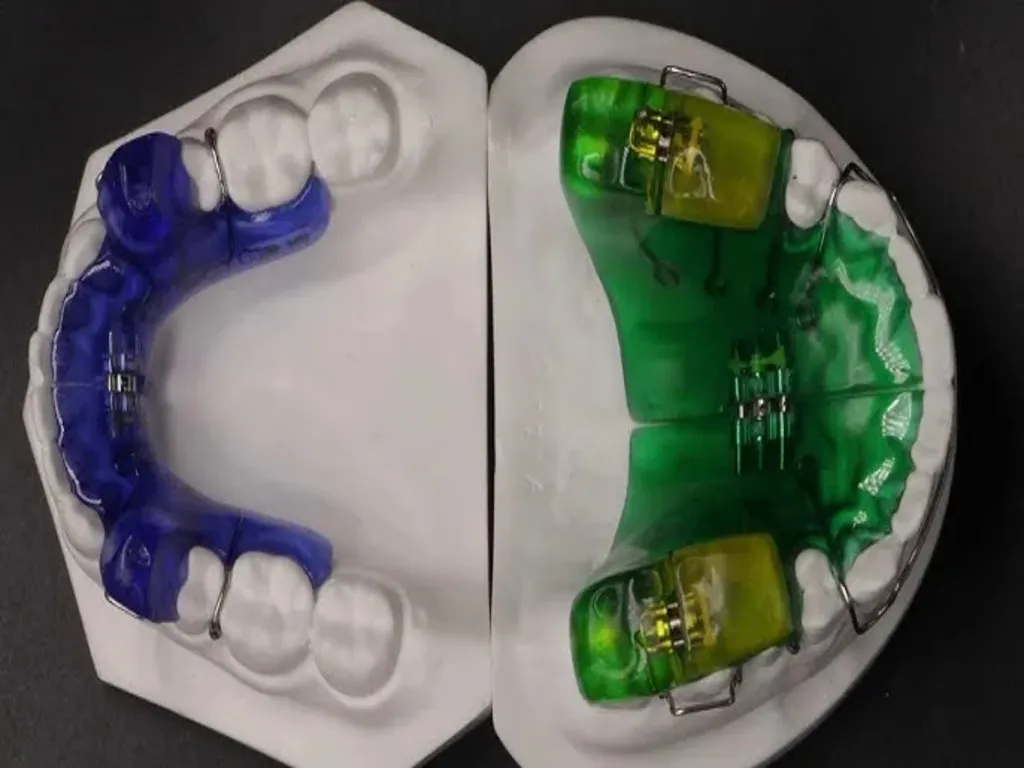
Twin Block Appliance
The Twin Block Appliance is a popular functional appliance used to treat class II malocclusions by repositioning the lower jaw. It consists of two separate components: one that fits over the upper teeth and the other that fits over the lower teeth. The design works by encouraging forward growth of the lower jaw and correcting bite discrepancies.
-
Use Case:
The Twin Block Appliance is ideal for patients with a retrusive lower jaw and class II bite issues, which cause the upper teeth to protrude beyond the lower teeth. This appliance is commonly used in growing children or adolescents who are still in their growth phase. -
Key Benefits:
-
Effective Bite Correction: The appliance helps reposition the lower jaw, improving the class II bite and reducing the appearance of an overbite.
-
Simple Design: The removable design allows for easy cleaning and maintenance.
-
Comfortable Fit: Like all functional appliances, it is custom-made for each patient, ensuring a secure and comfortable fit.
-
Improves Facial Profile: By repositioning the lower jaw, it improves the profile of the patient, creating better jaw symmetry.
-
-
Recommended For:
-
Patients with class II malocclusions and a recessed lower jaw.
-
Children and adolescents who are still growing and can benefit from jaw repositioning.
-
Individuals who need a non-surgical solution to correct bite misalignment and improve facial appearance.
-
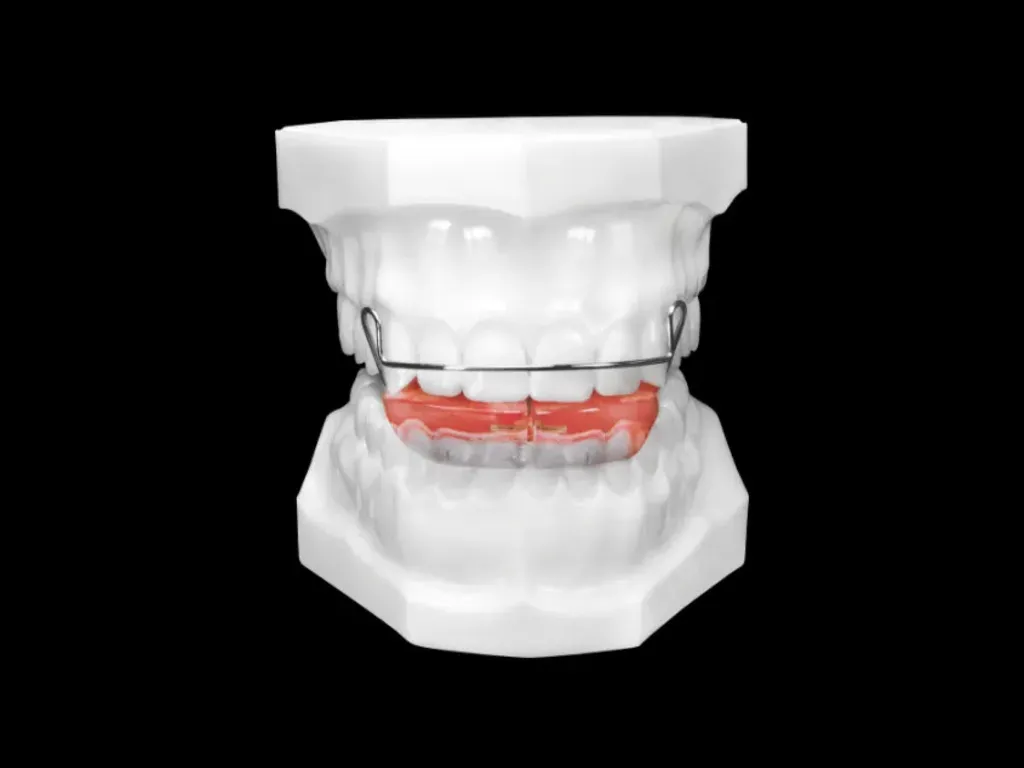
Bionator Appliance
The Bionator Appliance is a functional appliance that is used to treat bite issues and jaw development problems by modifying the growth and positioning of the upper and lower jaws. It is particularly effective for treating class II malocclusions and overbites by applying gentle forces to the teeth and jaw to encourage the lower jaw to grow forward.
-
Use Case:
The Bionator Appliance is commonly used in patients with class II malocclusions or overbites, especially those who need jaw growth modification. It is often used during the mixed dentition phase (when both baby and permanent teeth are present), making it ideal for children and young adolescents. -
Key Benefits:
-
Adjusts Jaw Growth: The appliance repositions the lower jaw, helping to correct class II malocclusions and improve bite alignment.
-
Promotes Balanced Bite: It helps align the upper and lower teeth and creates a balanced bite, improving both functionality and aesthetics.
-
Removable and Comfortable: The removable design makes it easier for patients to clean and maintain, while the custom fit ensures comfort.
-
Non-Invasive: The appliance provides a non-surgical, gradual solution to jaw alignment issues.
-
-
Recommended For:
-
Patients with class II malocclusions or overbites.
-
Growing children or adolescents who can benefit from jaw repositioning.
-
Patients seeking a non-invasive solution for improving bite and jaw alignment.
-
Custom Functional Appliances for Effective Orthodontic Solutions
Benefits
Functional Appliances are orthodontic devices designed to modify the growth and development of the jaw and bite alignment by influencing the position of the teeth and jaw. These appliances are commonly used to treat skeletal malocclusions, bite discrepancies, and jaw growth issues. Raytops Dental offers three main types of Functional Appliances: Frankel Appliance, Twin Block Appliance, and Bionator Appliance, each designed to address specific orthodontic needs for patients at different stages of growth.
User Benefits:
-
Jaw and Bite Correction:
-
Functional Appliances are effective in addressing jaw imbalances and bite misalignments by applying gentle pressure to modify the position of the jaw and teeth. They help correct issues such as overbites, underbites, and crossbites.
-
-
Custom Fit for Maximum Comfort:
-
Each Functional Appliance is custom-designed to fit the patient’s unique dental structure. The personalized fit ensures maximum comfort and effective treatment, minimizing discomfort and promoting compliance.
-
-
Improved Facial Aesthetics:
-
By guiding the growth of the jaw, Functional Appliances can help improve facial symmetry and overall aesthetic appearance. These appliances can positively influence the development of the face, leading to a more balanced and harmonious profile.
-
-
Non-Invasive and Non-Surgical Treatment:
-
Unlike surgical approaches, Functional Appliances provide a non-invasive solution for jaw correction. They gradually influence the growth and alignment of the jaws without the need for surgery, offering a more comfortable and less invasive treatment option.
-
-
Effective in Growing Patients:
-
These appliances are most effective in children and adolescents, as their jaws are still developing. Functional Appliances work by guiding the natural growth of the jaw, correcting misalignments and ensuring optimal development of the bite.
-
-
Long-Term Solutions:
-
When used properly, Functional Appliances provide long-term benefits by addressing root causes of jaw misalignment, reducing the need for more intensive treatments like braces or surgery later on.
-
Material Types & Comparison
Material Types & Comparison (Advantages, Comfort & Durability)
The materials used in Functional Appliances play a critical role in determining both comfort and effectiveness. At Raytops Dental, we use advanced, high-quality materials for each type of Functional Appliance to maximize performance and patient comfort. Below is a comparison of the materials used in Frankel Appliance, Twin Block Appliance, and Bionator Appliance, highlighting their key features, advantages, and benefits.
1. Frankel Appliance: Acrylic & Stainless Steel
-
Material Composition:
-
Acrylic Base: The Frankel Appliance uses a lightweight acrylic material for the base, which is molded to fit the patient’s palate and teeth. This ensures a comfortable and secure fit.
-
Stainless Steel Wires: The appliance features stainless steel wires that apply gentle pressure to the teeth and jaw, gradually guiding the jaw into the desired position.
-
-
Advantages:
-
Lightweight and Comfortable: The acrylic base is lightweight, ensuring comfort during use.
-
Customizable Fit: The acrylic base can be molded to each patient’s unique oral structure for a precise fit.
-
Durable Wires: Stainless steel wires provide strong support and are resistant to wear, ensuring the appliance lasts throughout treatment.
-
-
Comfort:
-
Acrylic is smooth, reducing irritation to the soft tissues of the mouth. The appliance is removable, making it easy to clean and maintain.
-
-
Durability:
-
The acrylic base is strong but can crack if dropped. The stainless steel wires are highly durable and resistant to bending.
-
-
Best For:
-
Children and adolescents who need gradual jaw repositioning.
-
Patients needing non-invasive treatment to correct class II or class III malocclusions.
-
2. Twin Block Appliance: Acrylic & Stainless Steel
-
Material Composition:
-
Acrylic Base: The Twin Block Appliance also uses a high-quality acrylic base that fits securely over the upper and lower teeth, promoting proper jaw alignment.
-
Stainless Steel Wires: The appliance features stainless steel components, including the framework and wires, which apply gentle force to the teeth and jaw to reposition them.
-
-
Advantages:
-
Effective Bite Correction: The Twin Block applies gentle, controlled force to the jaw, correcting class II malocclusions by repositioning the lower jaw forward.
-
Comfortable and Removable: Being removable, the appliance offers convenience and allows for easy cleaning.
-
Non-Invasive: Offers a non-surgical solution to jaw misalignment, making it suitable for younger patients.
-
-
Comfort:
-
Acrylic is soft and smooth, ensuring that the appliance is comfortable to wear. The removable nature also allows patients to remove the device when eating or cleaning, which improves overall comfort.
-
-
Durability:
-
The acrylic base is durable but can be susceptible to damage if mishandled. The stainless steel wires are robust and long-lasting, ensuring that the appliance will maintain its function throughout the treatment period.
-
-
Best For:
-
Adolescents and teenagers with class II malocclusions.
-
Patients who require gradual repositioning of the lower jaw without surgery.
-
3. Bionator Appliance: Acrylic & Stainless Steel
-
Material Composition:
-
Acrylic Base: The Bionator Appliance features a soft acrylic base that fits securely on the roof of the mouth. The appliance is molded to suit the unique shape of the patient’s teeth and palate.
-
Stainless Steel Wires: Stainless steel wires are used to apply gentle pressure to the teeth and jaw, adjusting their position for better alignment.
-
-
Advantages:
-
Jaw Repositioning: The Bionator is effective in repositioning the lower jaw forward and correcting class II malocclusions.
-
Removable and Comfortable: It is a removable appliance that can be easily taken out for cleaning and maintenance.
-
Gradual Adjustment: The appliance applies gentle, controlled force, making the treatment process comfortable and effective.
-
-
Comfort:
-
The acrylic base provides a smooth, comfortable fit, while the removable design adds convenience.
-
Some patients may experience minor discomfort at the beginning of treatment, but this typically subsides after a few days as they adjust to the appliance.
-
-
Durability:
-
Acrylic is strong but may crack if dropped or mishandled. The stainless steel components are durable, offering long-lasting performance during treatment.
-
-
Best For:
-
Children and adolescents with class II malocclusions or overbites.
-
Patients who need a non-invasive solution for jaw repositioning and bite correction.
-
Material Comparison Table
| Feature | Frankel Appliance | Twin Block Appliance | Bionator Appliance |
|---|---|---|---|
| Material | Acrylic + Stainless Steel Wire | Acrylic + Stainless Steel | Acrylic + Stainless Steel Wire |
| Comfort | Lightweight, removable, adjustable | Comfortable, removable | Comfortable, removable |
| Durability | Durable acrylic, strong stainless steel | Durable acrylic, long-lasting stainless steel | Durable acrylic, robust stainless steel |
| Adjustability | Adjustable wire for gradual expansion | Adjustable, controlled bite correction | Gradual repositioning of lower jaw |
| Maintenance | Requires regular cleaning, removable | Requires periodic check-ups | Regular cleaning, removable |
| Best For | Class II or III malocclusions, children | Class II malocclusions, adolescents | Class II malocclusions, adolescents |
| Longevity | Lasts throughout treatment | Long-lasting, suitable for growing patients | Lasts throughout treatment |
Dental lab Digital Workflow
Product Craftsmanship & Equipment Compatibility: Digital Workflows
At Raytops Dental, we integrate advanced digital technologies such as CAD/CAM design, 3D scanning, and 3D printing into the production of Functional Appliances. These technologies enable us to create highly customized, precise, and efficient appliances for each patient, ensuring that the appliances fit comfortably and deliver optimal treatment results.
1. CAD/CAM Technology: Precision Design for Functional Appliances
CAD (Computer-Aided Design) and CAM (Computer-Aided Manufacturing) technologies are central to our digital workflow. These technologies enable us to create highly accurate and customized designs for Functional Appliances, ensuring a perfect fit for each patient and maximizing treatment effectiveness.
-
How CAD/CAM Works for Functional Appliances:
-
CAD Software: The process begins with a digital scan of the patient’s mouth. The digital scan is then processed into a 3D model using CAD software, allowing for a detailed and customized design for each appliance.
-
CAM Manufacturing: Once the design is finalized, it is sent to a CAM system, where the appliance is manufactured using advanced tools such as 3D printers or milling machines, ensuring high precision.
-
-
Benefits of CAD/CAM for Functional Appliances:
-
Precision Fit: CAD/CAM ensures that each Functional Appliance is designed with extreme accuracy, creating a perfect fit that is tailored to the patient’s unique jaw and dental structure.
-
Faster Turnaround: Digital design speeds up the production process, allowing us to deliver appliances to patients faster.
-
Customization: The digital tools allow us to adjust the appliance design to meet the specific needs of each patient, ensuring the most effective treatment.
-
2. 3D Scanning and Printing: Advanced Customization and Efficient Production
3D scanning and 3D printing technologies play a crucial role in creating highly customized and precise Functional Appliances. These technologies allow us to quickly produce appliances that fit perfectly, reducing discomfort and ensuring the best possible treatment outcomes.
-
How 3D Scanning and Printing Work:
-
3D Scanning: Instead of traditional impressions, we use intraoral 3D scanners to capture highly accurate digital impressions of the patient’s teeth and jaw. This scan provides a detailed model that can be used to design the appliance.
-
3D Printing: Once the digital model is created, it is sent to a 3D printer, where the appliance is produced layer by layer using high-quality materials. This ensures the appliance is both precise and comfortable.
-
-
Benefits of 3D Printing for Functional Appliances:
-
Rapid Prototyping: 3D printing enables the quick creation of Functional Appliances, significantly reducing lead times and getting the product to the patient faster.
-
Customization: The appliance can be designed with specific features such as adjustable components to better meet the patient’s needs.
-
Reduced Material Waste: 3D printing uses only the required amount of material, making the process more eco-friendly and efficient.
-
3. Digital Adjustments and Real-Time Monitoring
Once a Functional Appliance is designed and manufactured, digital technology enables real-time adjustments throughout the treatment process. If necessary, orthodontists can adjust the appliance design during the treatment to ensure continued progress.
-
Digital Adjustments:
-
If the patient’s jaw or bite changes during treatment, CAD software allows orthodontists to make real-time adjustments to the appliance. This ensures that the appliance continues to fit well and provide the necessary pressure to move the jaw into the correct position.
-
-
Real-Time Monitoring:
-
Some Functional Appliances are equipped with smart sensors that monitor the treatment progress and send data to the orthodontist. This allows for remote monitoring and ensures that the appliance is performing optimally.
-
-
Benefits of Digital Adjustments and Monitoring:
-
Improved Accuracy: Digital adjustments help ensure that the appliance continues to meet the patient’s needs throughout the treatment.
-
Efficiency: Real-time monitoring allows orthodontists to make timely adjustments, improving the treatment timeline and reducing the need for in-office visits.
-
Patient Comfort: Adjustments can be made more efficiently, ensuring that the patient experiences less discomfort during the process.
-
4. Streamlined Workflow: From Consultation to Delivery
The digital workflow at Raytops Dental ensures that the entire process, from initial consultation to final delivery, is efficient and streamlined.
-
Consultation and Digital Scanning:
The patient visits the clinic, where an intraoral scan is taken to create an accurate digital model of their teeth and jaw. -
Design and Customization:
The digital scan is uploaded into CAD software, where the Functional Appliance is designed and customized based on the patient’s specific needs. -
Manufacturing:
The final design is sent to a 3D printer or milling machine, where the Functional Appliance is created with high precision. -
Delivery and Fitting:
The completed appliance is delivered to the patient, and orthodontists can fit it and ensure that it is positioned correctly, making any necessary final adjustments.
5. Ongoing Monitoring and Adjustments
With digital tools and the ability to adjust Functional Appliances digitally, patients can benefit from ongoing monitoring and adjustments throughout their treatment process.
-
Remote Monitoring:
Smart appliances can transmit data to orthodontists, allowing them to track the patient’s progress and adjust the treatment plan as needed, all without requiring the patient to come in for frequent appointments. -
Benefits:
-
Efficiency: Remote monitoring allows for more frequent updates and adjustments to the appliance, improving treatment times and ensuring that the appliance continues to work optimally.
-
Convenience: Patients and orthodontists can manage the treatment process with greater convenience, reducing the number of in-office visits and making the process easier for patients.
-
Customization – Product Fits Reference
Customization: Tailoring Functional Appliances for Optimal Results
Every patient’s orthodontic needs are unique, and Functional Appliances must be tailored to fit each patient’s specific jaw structure and treatment goals. At Raytops Dental, we use advanced digital tools and customization techniques to ensure that every appliance we provide delivers optimal comfort, effectiveness, and long-term results.
1. Digital Scanning and 3D Printing: Precision Customization
The customization process for Functional Appliances begins with a digital scan of the patient’s teeth and jaw. This scan allows us to create a highly accurate 3D model of the patient’s oral structure, which is then used to design a custom appliance that fits perfectly.
-
How Digital Scanning Works:
Instead of using traditional molds, we use intraoral 3D scanners to take precise digital impressions of the patient’s mouth. This process eliminates the discomfort associated with traditional molding techniques and provides highly accurate data to guide the design of the appliance. -
Benefits of Digital Customization:
-
Perfect Fit: The 3D model created from the digital scan ensures that the Functional Appliance fits perfectly in the patient’s mouth, making it comfortable to wear.
-
Highly Accurate Design: Digital tools allow for the precise adjustment of pressure points and jaw positioning to create the most effective appliance design.
-
Speed and Efficiency: 3D printing allows for faster production of custom Functional Appliances, reducing treatment time and ensuring quicker delivery.
-
2. Tailored Functional Appliance Design for Specific Treatment Needs
Each type of Functional Appliance (such as the Frankel Appliance, Twin Block Appliance, and Bionator Appliance) is designed for specific orthodontic needs. We tailor the design of the appliance based on the patient’s unique treatment goals, such as bite correction, jaw alignment, and jaw growth stimulation.
-
Frankel Appliance:
The Frankel Appliance is designed to guide the growth of the upper and lower jaws by applying gentle pressure. The design can be customized to apply the right amount of force to specific areas of the jaw, addressing class II or class III malocclusions. The acrylic base is molded to fit the patient’s palate, ensuring a secure and comfortable fit. -
Twin Block Appliance:
The Twin Block Appliance is customized to reposition the lower jaw forward to correct class II malocclusions. By using two separate blocks that fit the upper and lower teeth, the design is personalized to achieve the optimal jaw repositioning based on the patient’s unique bite and jaw structure. -
Bionator Appliance:
The Bionator Appliance helps reposition the lower jaw forward to correct bite issues. We customize the acrylic base and wire components to create an appliance that fits comfortably while applying controlled force to reposition the jaw.
3. Adjusting for Growth and Development
Functional Appliances are particularly effective for growing children and adolescents, as their jaw structures are still developing. Customizing the appliance to accommodate growth is essential to achieving the desired outcome without the need for invasive treatments.
-
Growth Monitoring:
We continuously monitor the patient’s growth during treatment, adjusting the Functional Appliance as needed to ensure it adapts to changes in the jaw structure. CAD software allows for quick adjustments to the appliance design as the jaw develops. -
Custom Adjustments:
As the patient’s treatment progresses, the Functional Appliance can be adjusted to apply gentler pressure or increase force as needed. Customizations ensure that the appliance continues to work effectively throughout the entire treatment process. -
Benefits:
-
Growth Adaptation: Customization allows the appliance to adapt to jaw growth, ensuring that the appliance continues to perform optimally as the patient’s mouth develops.
-
Effective and Safe Treatment: By adjusting the appliance during the treatment process, we ensure that the patient receives a safe and effective treatment that guides proper jaw growth without discomfort.
-
4. Personalized Aesthetic Considerations
While Functional Appliances are primarily designed for bite correction and jaw alignment, we also offer aesthetic options to ensure that the appliance is discreet and comfortable for the patient, particularly for teenagers and adults who may be self-conscious about wearing visible devices.
-
Clear Acrylic and Tooth-Colored Materials:
For patients who prefer a more discreet appearance, we offer clear acrylic or tooth-colored materials for removable appliances. These options make the appliance less noticeable while still providing effective treatment. -
Customization for Comfort:
We ensure that all Functional Appliances are tailored to fit comfortably, reducing irritation to the gums and soft tissues in the mouth. Smooth acrylic surfaces and precision fitting ensure that the appliance is comfortable for long-term wear.
5. Long-Term Effectiveness and Adjustments
Customization doesn’t end when the appliance is first created. Throughout the treatment process, adjustments can be made to ensure that the appliance continues to work effectively. With the help of digital tools, orthodontists can make real-time adjustments to the design of the appliance, ensuring that the treatment is progressing as planned.
-
Continuous Monitoring:
Digital tools and smart technology can track treatment progress, allowing orthodontists to make adjustments to the appliance and the treatment plan if needed. This helps to achieve the best possible outcome for each patient. -
Post-Treatment Customization:
After the main treatment phase is complete, Functional Appliances can be further customized for retention, ensuring that the newly aligned jaw and bite remain stable over time.
Clinical Applications & Indications
Application Scenarios: Real-World Use Cases and Indications
Functional Appliances are versatile orthodontic devices that help address various dental issues related to bite misalignments, jaw growth issues, and malocclusions. These appliances are designed to gradually modify the position of the jaw, helping correct overbites, underbites, and crossbites, while also improving facial aesthetics. Below are several real-world use cases and indications for Functional Appliances.
1. Case Study: Treatment for Class II Malocclusion in a Teenager
Client: A 14-year-old teenager with class II malocclusion (upper jaw too forward).
Challenge:
The teenager had a class II malocclusion, where the upper teeth protruded forward compared to the lower teeth, causing a significant overbite. The orthodontist recommended a Functional Appliance to guide the lower jaw forward and correct the bite.
Solution:
We recommended a Twin Block Appliance, which is designed to reposition the lower jaw forward and correct class II malocclusion. The Twin Block consists of two separate components that fit over the upper and lower teeth, helping to reposition the lower jaw in a natural and gradual manner.
Results:
-
The Twin Block Appliance effectively repositioned the lower jaw, aligning the upper and lower teeth into a more balanced bite.
-
After several months of treatment, the class II malocclusion was corrected, and the teenager could proceed with braces to further align the teeth.
Indications:
-
Ideal for adolescents with class II malocclusion and a retrusive lower jaw.
-
Recommended for patients who need jaw repositioning to correct bite misalignments.
2. Case Study: Correcting Overbite in a Child Using the Frankel Appliance
Client: A 9-year-old child with class II malocclusion and overbite.
Challenge:
The child had a significant overbite, where the upper teeth were positioned too far forward in relation to the lower teeth. The orthodontist recommended using a Functional Appliance to guide the growth of the jaw and correct the bite.
Solution:
We recommended a Frankel Appliance, which is effective in modifying the position of both the upper and lower jaws. This appliance applies gentle forces to reposition the lower jaw forward and move the upper jaw backward, correcting the overbite and improving the bite alignment.
Results:
-
After wearing the Frankel Appliance for several months, the child’s overbite was significantly reduced.
-
The child’s bite improved, and the lower jaw developed more forward growth, resulting in a more balanced profile.
Indications:
-
Best suited for children with class II malocclusion and a severe overbite.
-
Recommended for early intervention to guide jaw development in growing children.
3. Case Study: Treating Class III Malocclusion in an Adult Using Bionator Appliance
Client: A 28-year-old adult with class III malocclusion (lower jaw too forward).
Challenge:
The patient had a class III malocclusion, where the lower jaw was too forward, causing a crossbite. The patient’s orthodontist suggested using a Functional Appliance to reposition the jaw and correct the bite.
Solution:
We recommended a Bionator Appliance, which works by encouraging forward growth of the upper jaw and repositioning the lower jaw. The appliance gently adjusts the position of the teeth and jaw over time, making it an effective non-surgical solution for class III malocclusion.
Results:
-
The Bionator Appliance helped reposition the lower jaw, correcting the class III malocclusion and improving the bite alignment.
-
The patient experienced a noticeable improvement in their bite and facial aesthetics, as the appliance gradually guided the jaw into a more balanced position.
Indications:
-
Ideal for adults and older adolescents with class III malocclusions.
-
Best for patients seeking a non-surgical solution for jaw repositioning.
4. Case Study: Crossbite Correction in a Child Using the Twin Block Appliance
Client: A 7-year-old child with a crossbite.
Challenge:
The child had a crossbite, where the upper and lower teeth were not aligned properly. This condition could lead to tooth wear and difficulty chewing, so the orthodontist recommended a Functional Appliance to correct the bite.
Solution:
We recommended a Twin Block Appliance, which is effective for correcting crossbites by repositioning the lower jaw and encouraging forward growth. The appliance gradually helps in widening the upper jaw while aligning the lower jaw for improved bite and jaw function.
Results:
-
The Twin Block Appliance successfully corrected the crossbite by repositioning the lower jaw and expanding the upper jaw.
-
After a few months of use, the child’s bite was properly aligned, improving chewing efficiency and jaw function.
Indications:
-
Ideal for children with crossbites or narrow upper jaws.
-
Effective for early intervention to guide jaw growth and improve bite alignment.
5. Case Study: Post-Braces Retention Using Frankel Appliance
Client: A 24-year-old adult who had completed braces treatment and needed long-term retention.
Challenge:
After completing braces treatment, the patient’s bite alignment was good, but the upper and lower jaws were not fully aligned. The orthodontist recommended using a Functional Appliance to maintain the new alignment and ensure long-term bite stability.
Solution:
We recommended a Frankel Appliance for retention to ensure that the upper and lower jaws stayed in a balanced position after braces treatment. This appliance helped maintain the jaw position and kept the bite from shifting back.
Results:
-
The Frankel Appliance helped maintain the jaw’s position after braces treatment, ensuring that the patient’s bite remained stable.
-
The patient did not experience any relapse, and the appliance ensured that the jaw alignment remained intact.
Indications:
-
Ideal for adults who have completed orthodontic treatment and need long-term retention.
-
Recommended for patients seeking a non-invasive solution to maintain bite and jaw alignment.
Product & Material Selection Guide
Comparison & Selection Guide: Helping You Choose the Right Functional Appliance
Choosing the right Functional Appliance is crucial for effective treatment. The decision depends on factors such as the type of malocclusion, the patient’s age, and the specific treatment goals. Below is a comparison of the Frankel Appliance, Twin Block Appliance, and Bionator Appliance to help you select the best option based on your needs.
1. Frankel Appliance vs. Twin Block Appliance vs. Bionator Appliance: Comparison Overview
| Feature | Frankel Appliance | Twin Block Appliance | Bionator Appliance |
|---|---|---|---|
| Material | Acrylic + Stainless Steel | Acrylic + Stainless Steel | Acrylic + Stainless Steel |
| Comfort | Removable, lightweight, comfortable | Removable, can be bulky initially | Removable, comfortable after adjustment |
| Durability | Durable acrylic base, strong stainless steel | Durable acrylic base, robust stainless steel | Durable acrylic base, long-lasting wires |
| Adjustability | Adjustable for growth, gradually guides jaw | Adjustable, controlled repositioning of jaw | Gradual repositioning of lower jaw |
| Best For | Class II & III malocclusions, children | Class II malocclusions, adolescents, jaw repositioning | Class II malocclusions, older children, jaw repositioning |
| Maintenance | Requires regular cleaning, removable | Periodic check-ups, removable | Regular cleaning, removable |
| Ideal Age Group | Children and adolescents | Adolescents and teens | Adolescents and adults |
| Key Benefit | Guides jaw growth, non-invasive treatment | Corrects bite, improves facial aesthetics | Repositions lower jaw, non-surgical solution |
| Treatment Time | Moderate (4–6 months) | Moderate to long (6–12 months) | Moderate (6–12 months) |
| Aesthetic Consideration | Visible appliance, can be bulky | Visible appliance, may affect speech initially | Visible appliance, generally comfortable |
2. Choosing the Right Functional Appliance Based on Treatment Needs
-
Class II Malocclusion (Overbite):
-
Recommended Appliance: Frankel Appliance or Twin Block Appliance
-
Why: Both the Frankel and Twin Block Appliances are highly effective in correcting class II malocclusions, especially if the upper jaw is protruding and the lower jaw is underdeveloped. The Twin Block is especially beneficial for patients with more pronounced jaw alignment issues and is ideal for adolescents who are still growing. The Frankel Appliance is better for guiding growth in younger children.
-
-
Class III Malocclusion (Underbite):
-
Recommended Appliance: Bionator Appliance
-
Why: The Bionator Appliance is ideal for correcting class III malocclusions where the lower jaw is too far forward compared to the upper jaw. It encourages forward growth of the upper jaw and repositioning of the lower jaw. This appliance is particularly effective for both adolescents and adults who need jaw repositioning.
-
-
Crossbite or Narrow Upper Jaw:
-
Recommended Appliance: Twin Block Appliance
-
Why: The Twin Block is an effective solution for patients who have a narrow upper jaw and need to expand the upper jaw while correcting bite misalignments. It works well for both class II and crossbite patients, especially during the growth phase.
-
3. Comfort and Aesthetic Considerations
-
Removable Appliances:
-
All Functional Appliances in this category are removable, offering the advantage of easy cleaning and comfort during meals. However, patients must be diligent about wearing them as prescribed to ensure effective treatment.
-
-
Aesthetic Preferences:
-
Functional Appliances are generally visible, especially in the early stages of treatment. For patients who are concerned about appearance, the Bionator and Frankel Appliances are slightly less bulky, but the Twin Block Appliance is more noticeable due to its dual design.
-
Some patients may opt for clear acrylic or tooth-colored versions of the appliances for a more discreet appearance, particularly in Twin Block and Bionator designs.
-
-
Comfort Considerations:
-
Twin Block Appliances may feel bulky at first and can affect speech temporarily. However, they are highly effective in repositioning the lower jaw, especially in growing adolescents.
-
Frankel Appliances are generally considered comfortable but may feel restrictive during the early stages of treatment. Bionator Appliances may also require an initial adjustment period but become more comfortable as patients get used to them.
-
4. Best Age Groups for Each Appliance
-
Frankel Appliance:
-
Best suited for children and early adolescents who are still in the growth phase. This appliance is effective in guiding the development of both the upper and lower jaws, particularly in younger patients with class II or class III malocclusions.
-
-
Twin Block Appliance:
-
Most effective for adolescents and teens who are undergoing jaw development. It’s especially useful for class II malocclusions, where the lower jaw needs to be repositioned forward.
-
Can also be used in young adults with bite issues if no significant jaw growth is required.
-
-
Bionator Appliance:
-
Ideal for older children, adolescents, and adults who need jaw repositioning for correcting class III malocclusions or overbites. The appliance helps realign the lower jaw and adjust the bite over a period of time.
-
5. Treatment Duration and Effectiveness
-
Frankel Appliance:
-
Treatment Duration: Moderate (4–6 months).
-
Effectiveness: Great for gradual jaw growth correction and improving bite alignment, especially in children. Results are achieved with consistent use.
-
-
Twin Block Appliance:
-
Treatment Duration: Moderate to long (6–12 months).
-
Effectiveness: Highly effective for repositioning the lower jaw and improving bite for patients with class II malocclusions. Treatment duration depends on the severity of the malocclusion.
-
-
Bionator Appliance:
-
Treatment Duration: Moderate (6–12 months).
-
Effectiveness: Effective for correcting class III malocclusions by repositioning the lower jaw. It is suitable for both adults and adolescents with severe malocclusions.
-
Why Partner with Raytops?
Raytops Collaboration Advantages: Delivery, OEM, and Customer Support
At Raytops Dental, we understand that timely delivery, product quality, and exceptional customer service are critical to maintaining a strong relationship with our clients. We offer a range of services that make working with us an efficient and rewarding experience. Here’s a closer look at the key advantages of collaborating with Raytops Dental for your Functional Appliance needs.
1. Efficient Product Delivery
We prioritize quick and reliable delivery for all our products. Our digital manufacturing process and advanced logistics capabilities allow us to provide fast turnaround times for all Functional Appliances.
-
Fast Turnaround Time:
Thanks to our digital design and 3D printing technologies, we can produce Functional Appliances in a shorter time frame, reducing lead times and ensuring products are delivered quickly. -
Global Shipping:
We offer international shipping to various regions, including North America, Europe, Asia, and more. No matter where you are located, we ensure timely and reliable delivery of Functional Appliances. -
Trackable Shipments:
Once your order is shipped, we provide tracking numbers so you can monitor the status of your delivery and ensure it arrives on time. -
Packaging and Handling:
Our Functional Appliances are carefully packaged to ensure that they arrive in perfect condition. We use high-quality, eco-friendly packaging materials that are both durable and safe.
2. OEM Solutions: Customization for Your Brand and Needs
At Raytops Dental, we offer OEM (Original Equipment Manufacturer) solutions, allowing you to create customized Functional Appliances for your practice or brand. Whether you are a dental clinic, distributor, or orthodontic lab, we can tailor our Functional Appliances to meet your specific requirements.
-
Custom Branding:
We offer branding options for your Functional Appliances, allowing you to add your logo or practice name to the appliance. This ensures that your brand identity is visible, and patients can trust your services and products. -
Design Customization:
In addition to branding, we also provide design customization. We can adjust Functional Appliance designs to suit your needs, whether it’s changing the color of the appliance, modifying the size for specific patients, or adding other personalized features. -
Flexible Order Quantities:
Whether you need small batch orders for your clinic or bulk orders for a larger operation, we can accommodate any order quantity. Our scalable production capabilities ensure that you receive the right quantity at the right time. -
Private Label Solutions:
For businesses looking to develop their own line of Functional Appliances, we offer private label services. This allows you to offer high-quality products under your own brand while benefiting from our manufacturing expertise.
3. Exceptional Customer Support
We believe that excellent customer support is key to building strong, long-term partnerships. Our dedicated team is always available to assist you with any inquiries, technical support, or service needs.
-
Pre-Sales Support:
Our customer support team is here to help you choose the right Functional Appliance for your practice. Whether you need guidance on appliance selection or have specific treatment goals, we provide personalized assistance to help you make the right decision. -
Post-Sales Support:
Once your order is complete, our support team remains available to assist with any questions or issues regarding your Functional Appliances. If you need any adjustments, modifications, or replacements, we ensure that the process is smooth and hassle-free. -
Training and Educational Resources:
We offer training resources to help dental professionals understand how to use and adjust Functional Appliances properly. Our educational materials ensure that you can maximize the effectiveness of the appliances and deliver the best results for your patients. -
Dedicated Account Manager:
For larger orders or ongoing partnerships, we assign a dedicated account manager who will be your primary point of contact. This ensures a personalized experience and consistent communication for all your needs. -
Customer Feedback:
We value customer feedback and actively seek input to improve our products and services. If you have any suggestions or concerns, we are always open to making improvements to meet your needs.
4. Global Reach and Compliance
At Raytops Dental, we ensure that our Functional Appliances meet the regulatory standards of various countries and regions. Our products are manufactured to comply with the necessary medical device standards, allowing us to serve a global clientele.
-
ISO 13485 Certification:
We are certified under ISO 13485, which ensures that our Functional Appliances are manufactured under stringent quality control systems. This guarantees that our products are safe and effective for patients worldwide. -
CE Marking:
Our Functional Appliances are CE marked, ensuring compliance with European Union health and safety standards for medical devices. This allows us to distribute our products throughout the EU and other regions that require CE certification. -
FDA Approval:
Our Functional Appliances are approved by the U.S. Food and Drug Administration (FDA), meeting the rigorous safety and performance standards required for medical devices in the U.S. -
Global Regulatory Compliance:
We ensure that our products comply with the regulations of various global markets, including Health Canada, TGA (Australia), and KFDA (South Korea), so that our products are available for use in regions with strict regulatory standards.
Real Cases. Real Results.
Case Studies & Customer Testimonials: Building Trust with Real Stories
At Raytops Dental, we have helped numerous patients and dental professionals achieve their orthodontic goals with our high-quality Functional Appliances. Below are a few real-life case studies and customer testimonials that highlight the effectiveness and positive results of our appliances in treating different orthodontic needs.
1. Case Study: Overbite Correction in a 12-Year-Old Using the Twin Block Appliance
Client: A 12-year-old child with a class II malocclusion (overbite).
Challenge:
The child had a significant overbite, where the upper teeth were positioned too far forward compared to the lower teeth, resulting in an unbalanced bite and facial appearance. The orthodontist recommended using a Functional Appliance to correct the bite and guide the jaw into a more natural position.
Solution:
We recommended a Twin Block Appliance, which is designed to reposition the lower jaw forward, correcting the overbite by improving the alignment of the upper and lower teeth. The appliance applies gentle forces to gradually adjust the jaw position.
Results:
-
After several months of treatment, the Twin Block Appliance successfully corrected the overbite and class II malocclusion.
-
The child’s bite improved significantly, and their facial profile became more balanced.
Customer Testimonial:
“We were so impressed with how quickly the Twin Block Appliance worked for my child. The overbite was corrected, and the improvement in their smile and facial appearance was incredible. The treatment was non-invasive, and my child felt comfortable wearing it.”
— Laura, Parent
2. Case Study: Class III Malocclusion Treatment in an Adult Using the Bionator Appliance
Client: A 28-year-old adult with class III malocclusion (underbite).
Challenge:
The patient had a class III malocclusion, where the lower jaw protruded forward compared to the upper jaw, causing an unbalanced bite and facial appearance. The patient was looking for a non-surgical solution to reposition the jaw.
Solution:
We recommended a Bionator Appliance, which is designed to reposition the lower jaw and guide it into a more forward position while correcting the bite. This appliance is ideal for treating class III malocclusion and repositioning the lower jaw without surgery.
Results:
-
The Bionator Appliance successfully repositioned the lower jaw, correcting the class III malocclusion and improving the overall bite.
-
The patient’s facial profile became more balanced, and they experienced significant improvements in bite function.
Customer Testimonial:
“The Bionator Appliance made a huge difference in my bite and my appearance. I was concerned about surgery, but this appliance provided a non-invasive solution that worked perfectly for me. The results were amazing, and the appliance was comfortable to wear.”
— James, Adult Patient
3. Case Study: Crossbite Treatment in a 9-Year-Old Using the Twin Block Appliance
Client: A 9-year-old child with crossbite (upper teeth misaligned with lower teeth).
Challenge:
The child had a crossbite, where the upper and lower teeth did not align properly, leading to tooth wear and difficulty chewing. The child’s orthodontist recommended using a Functional Appliance to correct the bite and align the teeth.
Solution:
We recommended a Twin Block Appliance, which is effective for repositioning the lower jaw and widening the upper jaw to correct crossbite. The appliance gradually helps expand the upper jaw while aligning the lower jaw, improving bite and jaw function.
Results:
-
The Twin Block Appliance successfully corrected the crossbite, improving the alignment of both the upper and lower teeth.
-
The child’s chewing function improved significantly, and the bite was restored to a natural position.
Customer Testimonial:
“The Twin Block Appliance worked wonders for my child’s crossbite. We were able to avoid more invasive procedures, and the appliance corrected the bite efficiently. It was comfortable, and my child didn’t mind wearing it at all.”
— Karen, Parent
4. Case Study: Maintaining Post-Braces Alignment Using the Frankel Appliance
Client: A 24-year-old adult who had completed braces treatment and needed a retention solution.
Challenge:
After completing braces treatment, the patient’s bite was aligned, but the upper and lower jaws were still slightly misaligned, which could lead to a relapse over time. The patient was seeking a non-surgical solution to maintain jaw alignment and prevent further issues.
Solution:
We recommended a Frankel Appliance for post-braces retention. The appliance helps maintain the jaw position and bite alignment after braces treatment, ensuring long-term stability.
Results:
-
The Frankel Appliance effectively maintained the jaw position after braces treatment, preventing the bite from shifting back to its previous state.
-
The patient experienced no relapse in their bite or jaw alignment and maintained a stable, functional bite.
Customer Testimonial:
“I was worried about my bite shifting back after getting braces, but the Frankel Appliance really helped keep everything in place. It was easy to wear, and I’m so happy with the results. My bite has stayed stable, and I’m relieved that I didn’t need surgery.”
— Emily, Adult Patient
Certifications & Regulatory Assurance
Export Certifications & Testing Credentials: Authoritative Endorsements
At Raytops Dental, we are committed to providing high-quality and safe products for our customers worldwide. To ensure that our Functional Appliances meet the highest standards of safety, efficacy, and performance, we have obtained a range of international certifications and testing credentials. These endorsements give our clients confidence in the quality and reliability of our products.
1. ISO 13485: Medical Device Quality Management System Certification
ISO 13485 is an internationally recognized standard for the quality management systems of medical devices. This certification ensures that we follow strict guidelines to ensure our Functional Appliances are manufactured in compliance with the highest quality control standards.
-
Why It Matters:
-
ISO 13485 certification demonstrates that we adhere to the best practices in manufacturing and quality management.
-
It ensures that Raytops Dental’s Functional Appliances are safe and effective, meeting the regulatory requirements for medical devices in various markets.
-
This certification underscores our commitment to continuous improvement and customer satisfaction.
-
2. CE Marking: Compliance with European Health & Safety Standards
The CE Marking indicates that our Functional Appliances comply with the European Union’s health, safety, and environmental protection standards. This certification allows us to sell our products in the European Economic Area (EEA), ensuring they meet the required standards for medical devices.
-
Why It Matters:
-
The CE Marking assures that our Functional Appliances meet the EU’s strict health and safety regulations.
-
It reflects our commitment to providing high-quality products that are safe and effective for patients in the European market.
-
This certification builds trust and credibility for Raytops Dental in the European market.
-
3. FDA Approval: Compliance with U.S. Standards for Safety and Effectiveness
Our Functional Appliances are approved by the U.S. Food and Drug Administration (FDA), which is one of the most rigorous regulatory bodies for medical devices worldwide. This certification ensures that our products meet the highest safety and performance standards for use in the United States.
-
Why It Matters:
-
FDA approval means that our Functional Appliances have undergone thorough testing and meet the U.S. FDA’s stringent standards for safety and effectiveness.
-
This certification guarantees that our products are of the highest quality, and it reassures customers in the U.S. about their reliability and safety.
-
FDA approval enhances our ability to provide products to clients in the U.S. market, ensuring compliance with local regulations.
-
4. Biocompatibility Testing: Ensuring Safe Long-Term Use
We conduct biocompatibility testing on the materials used in our Functional Appliances to ensure they are safe for long-term use in the oral cavity. The testing ensures that the materials do not cause any adverse reactions such as allergies, irritation, or other health concerns.
-
Why It Matters:
-
Biocompatibility testing confirms that our Functional Appliances are safe for prolonged contact with the gums, teeth, and other oral tissues.
-
We use BPA-free and phthalate-free materials, ensuring that our products do not contain harmful chemicals that could negatively affect the patient’s health.
-
5. Global Compliance: Meeting International Regulatory Standards
At Raytops Dental, we take the responsibility of providing safe and effective products very seriously. We ensure that our Functional Appliances meet the regulatory requirements in various global markets, so we can serve customers worldwide with confidence.
-
Health Canada Compliance:
We comply with the Health Canada regulations for medical devices, ensuring that our Functional Appliances are safe and effective for the Canadian market. -
TGA Approval:
Our products have been approved by the Therapeutic Goods Administration (TGA) in Australia, meeting the stringent medical device standards required by Australian regulators. -
KFDA Approval:
Raytops Dental’s Functional Appliances have received approval from the Korean Food and Drug Administration (KFDA), ensuring that our products meet the high standards required in South Korea. -
Why It Matters:
-
These certifications allow us to serve a global clientele, ensuring that our Functional Appliances meet the regulatory standards in different regions.
-
Raytops Dental is committed to meeting the requirements of local markets while maintaining high levels of quality and safety.
-
Frequently Asked Questions
Here are the most frequently asked questions about Functional Appliances and their answers. These FAQs will help you understand how Functional Appliances work, how to use them effectively, and how to maintain them for the best results.
1. What are Functional Appliances?
Functional Appliances are orthodontic devices designed to modify the growth and alignment of the jaw and teeth. They are typically used to treat bite problems such as overbites, underbites, and crossbites. These appliances work by applying gentle pressure to the upper and lower jaws, encouraging proper growth and bite alignment. Raytops Dental offers several types of Functional Appliances, including the Frankel Appliance, Twin Block Appliance, and Bionator Appliance.
-
How it works: These appliances are worn in the mouth and gradually reposition the jaw, correcting bite issues over time.
2. How do Functional Appliances work?
Functional Appliances work by applying controlled and gentle forces to the upper and lower jaws, guiding their growth and positioning. Depending on the type of appliance, they can encourage forward growth of the lower jaw (for class II malocclusion) or reposition the lower jaw backward (for class III malocclusion).
-
Goal: To create a balanced, aligned bite and improve jaw function.
-
Design: These appliances may have acrylic bases and stainless steel wires that apply gentle pressure to the jaw and teeth.
3. How long do I need to wear a Functional Appliance?
The length of time you will need to wear your Functional Appliance depends on the severity of your bite problem and your individual treatment plan. Typically, the appliances are worn for several months to a year, but it may vary depending on your age and the type of malocclusion being treated.
-
General guideline: Functional Appliances are usually worn for 6 to 12 months, with some cases requiring longer treatment.
-
Consistency: To achieve the best results, it is important to wear the appliance as prescribed by your orthodontist, typically 24/7 except when eating or cleaning.
4. Are Functional Appliances painful to wear?
While Functional Appliances may cause some initial discomfort, particularly when the appliance is first placed or adjusted, they should not cause significant pain. It is common to experience a mild tight sensation or pressure as the appliance works to reposition the jaw.
-
Adjustment period: It typically takes a few days for your mouth to adjust to the appliance. Over-the-counter pain relievers can help manage any temporary discomfort.
-
Comfort improvements: As you get used to wearing the appliance, any discomfort will usually subside.
5. Can I eat with my Functional Appliance in?
If you are wearing a removable Functional Appliance (such as the Twin Block or Frankel Appliance), it is best to remove the appliance while eating to avoid damaging it and to prevent food from getting stuck in the appliance. After eating, clean the appliance thoroughly before reinserting it.
-
Fixed Appliances (such as Bionator): Since they are bonded to your teeth, they remain in place while eating, but you should avoid sticky or hard foods that could damage the appliance.
6. How do I clean my Functional Appliance?
Proper cleaning is essential to ensure the longevity and effectiveness of your Functional Appliance.
-
Removable appliances: Clean them with a soft toothbrush and mild soap or denture cleaner. You can also rinse them with water after meals to prevent food from accumulating.
-
Fixed appliances: Brush your teeth and appliance with fluoride toothpaste and a soft toothbrush. Be sure to clean the appliance regularly to prevent plaque buildup.
7. How can I maintain my Functional Appliance?
To keep your Functional Appliance in good condition, follow these tips:
-
Wear as prescribed: Ensure that you wear the appliance consistently, following your orthodontist’s instructions. Skipping wear time can delay progress.
-
Cleaning: Clean your appliance regularly to maintain oral hygiene. Use mild soap or denture cleaner for removable appliances.
-
Storage: When not in use, store your removable appliance in its protective case to avoid damage.
-
Check-ups: Visit your orthodontist regularly for adjustments and to monitor the progress of treatment.
8. Will a Functional Appliance affect my speech?
It is common to experience a slight change in speech when you first start wearing a Functional Appliance, especially if it affects the upper palate or lower jaw. Most patients develop better control over their speech as they get used to the appliance.
-
Adjusting to speech changes: It may take a few days to a week for your speech to return to normal as you adjust to the appliance.
-
Practice speaking: Practice speaking regularly, as this will help you adjust faster and improve speech clarity.
9. Can Functional Appliances be used for adults?
Yes, Functional Appliances can be used for adults, though they are most effective when the patient is still in the growth phase. For adults, the treatment may take longer compared to children, as their jaws are no longer growing.
-
Treatment duration for adults: Adult treatment may last longer (typically 12 to 18 months) compared to younger patients, but Functional Appliances can still be effective for jaw repositioning and bite correction in adults.
-
Customization: Appliances can be adjusted for adult jaw and bite needs, helping to achieve long-term results without surgery.
10. Can I continue wearing my Functional Appliance after my treatment is done?
After completing your treatment with a Functional Appliance, your orthodontist may recommend using the appliance as a retention device to maintain the jaw position and prevent relapse.
-
Retention phase: Some patients may need to wear a retainer or a modified Functional Appliance for a period after treatment to ensure the alignment is maintained.
-
Follow-up: Regular visits to your orthodontist will ensure the treatment is successful and stable.
Trends & Future Outlook in Implant Restorations
Industry Trends: The Future of Functional Appliances
The field of Functional Appliances is evolving rapidly, driven by advancements in materials, digital technologies, and a focus on personalized treatments. These innovations not only enhance the performance of Functional Appliances but also improve the comfort, effectiveness, and efficiency of orthodontic treatment. Below are some of the key trends shaping the future of Functional Appliances.
1. Material Innovation: Stronger, Lighter, and More Comfortable
Material science has come a long way, and the materials used in Functional Appliances have evolved to offer better comfort, durability, and aesthetic appeal.
-
Smart Materials:
Smart materials are being explored for their ability to adapt and change under different conditions. For example, thermoplastic materials can change their rigidity with temperature, becoming firmer during treatment to provide better pressure on the jaw and teeth. These materials are lightweight and biocompatible, making them comfortable for long-term wear. -
BPA-Free and Non-Toxic Materials:
As the demand for more eco-friendly and health-conscious products grows, many manufacturers are focusing on using BPA-free and non-toxic materials for Functional Appliances. This ensures safe long-term use and reduces the risk of harmful chemicals leaching into the patient’s body. -
Aesthetic Materials:
Clear acrylic and tooth-colored materials are becoming more common, allowing Functional Appliances to blend in better with the patient’s mouth, making them less noticeable, particularly for adults and teenagers. -
Benefits:
-
Enhanced comfort with lightweight materials.
-
Improved durability with advanced materials.
-
More aesthetically pleasing designs using clear or tooth-colored materials.
-
2. Digital Technologies: The Shift to Customization and Precision
Digital technologies such as CAD/CAM (Computer-Aided Design and Manufacturing), 3D scanning, and 3D printing are revolutionizing the design and production of Functional Appliances, allowing for highly customized and precise orthodontic devices.
-
CAD/CAM Design:
CAD software enables orthodontists to create a 3D digital model of a patient’s mouth, leading to a more accurate and customized design. This allows for a better fit and improved comfort, reducing discomfort and treatment time. -
3D Scanning & Printing:
3D scanning replaces traditional impressions with highly accurate digital scans, which are then used to create 3D printed models of the appliance. This precision ensures the appliance fits perfectly, minimizing the risk of fitting issues. -
Real-Time Monitoring and Adjustments:
In the future, smart technologies will be integrated into Functional Appliances to allow for remote monitoring. Orthodontists will be able to track the progress of treatment and make real-time adjustments without needing frequent in-office visits, improving efficiency and convenience. -
Benefits:
-
Highly personalized designs that fit each patient’s specific needs.
-
Improved accuracy in appliance creation, reducing the need for manual adjustments.
-
Faster production times, as digital tools and 3D printing streamline the process.
-
3. Smart Functional Appliances: Enhancing Treatment with IoT Integration
The future of Functional Appliances may include smart features that monitor the patient’s treatment progress and provide real-time data to the orthodontist.
-
Smart Sensors:
Smart sensors embedded in Functional Appliances could track jaw movement and pressure levels, providing orthodontists with accurate data on how well the appliance is working. This data could be sent directly to the orthodontist, allowing for real-time adjustments to ensure optimal treatment progress. -
Remote Monitoring:
As part of the Internet of Things (IoT), Functional Appliances could be connected to mobile apps that allow patients and orthodontists to monitor treatment progress from the comfort of their home. This telemedicine approach makes orthodontic treatment more convenient and accessible, especially for patients in remote areas. -
AI Integration:
Artificial Intelligence (AI) could be used to analyze data from Functional Appliances, identifying patterns in jaw growth and bite correction. This will help orthodontists make smarter decisions about treatment adjustments, further personalizing the approach for each patient. -
Benefits:
-
Real-time progress tracking for better treatment outcomes.
-
Remote monitoring reduces the need for frequent office visits.
-
AI-driven insights lead to more precise treatment and faster results.
-
4. Personalized and Aesthetic Solutions: Catering to Patient Preferences
As patients become more informed and aware of their treatment options, the demand for personalized and aesthetic solutions is growing.
-
Aesthetic Options:
Many patients, especially adults and teenagers, are looking for discreet appliances that don’t affect their appearance. Future Functional Appliances will be designed with clear, tooth-colored, or transparent materials, making them less visible while still providing effective treatment. -
Customization for Comfort:
Advances in material and design technologies will lead to even more comfortable appliances that are tailored to each patient’s mouth shape. For example, the use of soft materials that mold better to the gums and teeth will reduce irritation and enhance comfort. -
Aesthetic Design Features:
Functional Appliances may also include customizable features such as colors and shapes, allowing patients to personalize their appliance to fit their style or preferences. -
Benefits:
-
Discreet options for adults and teenagers who need orthodontic treatment.
-
More comfortable appliances with personalized designs.
-
Patient-driven customization that offers aesthetic choices.
-
5. Sustainable Practices: Eco-Friendly Materials and Manufacturing
As global concerns about the environment increase, the dental appliance industry is shifting toward more sustainable practices.
-
Sustainable Materials:
Raytops Dental is exploring eco-friendly materials for the production of Functional Appliances, such as biodegradable plastics and recyclable components, to reduce the environmental impact. -
Reducing Waste:
With 3D printing and digital manufacturing, we are able to reduce material waste during the production of Functional Appliances. This makes the production process more efficient and environmentally conscious. -
Eco-Friendly Packaging:
We are also moving toward eco-friendly packaging, using recyclable or biodegradable materials to package our products, reducing the environmental footprint of the packaging process. -
Benefits:
-
Reduced environmental impact with sustainable production processes.
-
Eco-friendly materials and packaging ensure a greener product lifecycle.
-
More responsible manufacturing practices align with global sustainability goals.
-
Functional Appliances are orthodontic devices designed to modify the growth and development of the jaw and bite alignment by influencing the position of the teeth and jaw. These appliances are commonly used to treat skeletal malocclusions, bite discrepancies, and jaw growth issues. Raytops Dental offers three main types of Functional Appliances: Frankel Appliance, Twin Block Appliance, and Bionator Appliance, each designed to address specific orthodontic needs for patients at different stages of growth.
User Benefits:
-
Jaw and Bite Correction:
-
Functional Appliances are effective in addressing jaw imbalances and bite misalignments by applying gentle pressure to modify the position of the jaw and teeth. They help correct issues such as overbites, underbites, and crossbites.
-
-
Custom Fit for Maximum Comfort:
-
Each Functional Appliance is custom-designed to fit the patient’s unique dental structure. The personalized fit ensures maximum comfort and effective treatment, minimizing discomfort and promoting compliance.
-
-
Improved Facial Aesthetics:
-
By guiding the growth of the jaw, Functional Appliances can help improve facial symmetry and overall aesthetic appearance. These appliances can positively influence the development of the face, leading to a more balanced and harmonious profile.
-
-
Non-Invasive and Non-Surgical Treatment:
-
Unlike surgical approaches, Functional Appliances provide a non-invasive solution for jaw correction. They gradually influence the growth and alignment of the jaws without the need for surgery, offering a more comfortable and less invasive treatment option.
-
-
Effective in Growing Patients:
-
These appliances are most effective in children and adolescents, as their jaws are still developing. Functional Appliances work by guiding the natural growth of the jaw, correcting misalignments and ensuring optimal development of the bite.
-
-
Long-Term Solutions:
-
When used properly, Functional Appliances provide long-term benefits by addressing root causes of jaw misalignment, reducing the need for more intensive treatments like braces or surgery later on.
-
Material Types & Comparison (Advantages, Comfort & Durability)
The materials used in Functional Appliances play a critical role in determining both comfort and effectiveness. At Raytops Dental, we use advanced, high-quality materials for each type of Functional Appliance to maximize performance and patient comfort. Below is a comparison of the materials used in Frankel Appliance, Twin Block Appliance, and Bionator Appliance, highlighting their key features, advantages, and benefits.
1. Frankel Appliance: Acrylic & Stainless Steel
-
Material Composition:
-
Acrylic Base: The Frankel Appliance uses a lightweight acrylic material for the base, which is molded to fit the patient’s palate and teeth. This ensures a comfortable and secure fit.
-
Stainless Steel Wires: The appliance features stainless steel wires that apply gentle pressure to the teeth and jaw, gradually guiding the jaw into the desired position.
-
-
Advantages:
-
Lightweight and Comfortable: The acrylic base is lightweight, ensuring comfort during use.
-
Customizable Fit: The acrylic base can be molded to each patient’s unique oral structure for a precise fit.
-
Durable Wires: Stainless steel wires provide strong support and are resistant to wear, ensuring the appliance lasts throughout treatment.
-
-
Comfort:
-
Acrylic is smooth, reducing irritation to the soft tissues of the mouth. The appliance is removable, making it easy to clean and maintain.
-
-
Durability:
-
The acrylic base is strong but can crack if dropped. The stainless steel wires are highly durable and resistant to bending.
-
-
Best For:
-
Children and adolescents who need gradual jaw repositioning.
-
Patients needing non-invasive treatment to correct class II or class III malocclusions.
-
2. Twin Block Appliance: Acrylic & Stainless Steel
-
Material Composition:
-
Acrylic Base: The Twin Block Appliance also uses a high-quality acrylic base that fits securely over the upper and lower teeth, promoting proper jaw alignment.
-
Stainless Steel Wires: The appliance features stainless steel components, including the framework and wires, which apply gentle force to the teeth and jaw to reposition them.
-
-
Advantages:
-
Effective Bite Correction: The Twin Block applies gentle, controlled force to the jaw, correcting class II malocclusions by repositioning the lower jaw forward.
-
Comfortable and Removable: Being removable, the appliance offers convenience and allows for easy cleaning.
-
Non-Invasive: Offers a non-surgical solution to jaw misalignment, making it suitable for younger patients.
-
-
Comfort:
-
Acrylic is soft and smooth, ensuring that the appliance is comfortable to wear. The removable nature also allows patients to remove the device when eating or cleaning, which improves overall comfort.
-
-
Durability:
-
The acrylic base is durable but can be susceptible to damage if mishandled. The stainless steel wires are robust and long-lasting, ensuring that the appliance will maintain its function throughout the treatment period.
-
-
Best For:
-
Adolescents and teenagers with class II malocclusions.
-
Patients who require gradual repositioning of the lower jaw without surgery.
-
3. Bionator Appliance: Acrylic & Stainless Steel
-
Material Composition:
-
Acrylic Base: The Bionator Appliance features a soft acrylic base that fits securely on the roof of the mouth. The appliance is molded to suit the unique shape of the patient’s teeth and palate.
-
Stainless Steel Wires: Stainless steel wires are used to apply gentle pressure to the teeth and jaw, adjusting their position for better alignment.
-
-
Advantages:
-
Jaw Repositioning: The Bionator is effective in repositioning the lower jaw forward and correcting class II malocclusions.
-
Removable and Comfortable: It is a removable appliance that can be easily taken out for cleaning and maintenance.
-
Gradual Adjustment: The appliance applies gentle, controlled force, making the treatment process comfortable and effective.
-
-
Comfort:
-
The acrylic base provides a smooth, comfortable fit, while the removable design adds convenience.
-
Some patients may experience minor discomfort at the beginning of treatment, but this typically subsides after a few days as they adjust to the appliance.
-
-
Durability:
-
Acrylic is strong but may crack if dropped or mishandled. The stainless steel components are durable, offering long-lasting performance during treatment.
-
-
Best For:
-
Children and adolescents with class II malocclusions or overbites.
-
Patients who need a non-invasive solution for jaw repositioning and bite correction.
-
Material Comparison Table
| Feature | Frankel Appliance | Twin Block Appliance | Bionator Appliance |
|---|---|---|---|
| Material | Acrylic + Stainless Steel Wire | Acrylic + Stainless Steel | Acrylic + Stainless Steel Wire |
| Comfort | Lightweight, removable, adjustable | Comfortable, removable | Comfortable, removable |
| Durability | Durable acrylic, strong stainless steel | Durable acrylic, long-lasting stainless steel | Durable acrylic, robust stainless steel |
| Adjustability | Adjustable wire for gradual expansion | Adjustable, controlled bite correction | Gradual repositioning of lower jaw |
| Maintenance | Requires regular cleaning, removable | Requires periodic check-ups | Regular cleaning, removable |
| Best For | Class II or III malocclusions, children | Class II malocclusions, adolescents | Class II malocclusions, adolescents |
| Longevity | Lasts throughout treatment | Long-lasting, suitable for growing patients | Lasts throughout treatment |
Product Craftsmanship & Equipment Compatibility: Digital Workflows
At Raytops Dental, we integrate advanced digital technologies such as CAD/CAM design, 3D scanning, and 3D printing into the production of Functional Appliances. These technologies enable us to create highly customized, precise, and efficient appliances for each patient, ensuring that the appliances fit comfortably and deliver optimal treatment results.
1. CAD/CAM Technology: Precision Design for Functional Appliances
CAD (Computer-Aided Design) and CAM (Computer-Aided Manufacturing) technologies are central to our digital workflow. These technologies enable us to create highly accurate and customized designs for Functional Appliances, ensuring a perfect fit for each patient and maximizing treatment effectiveness.
-
How CAD/CAM Works for Functional Appliances:
-
CAD Software: The process begins with a digital scan of the patient’s mouth. The digital scan is then processed into a 3D model using CAD software, allowing for a detailed and customized design for each appliance.
-
CAM Manufacturing: Once the design is finalized, it is sent to a CAM system, where the appliance is manufactured using advanced tools such as 3D printers or milling machines, ensuring high precision.
-
-
Benefits of CAD/CAM for Functional Appliances:
-
Precision Fit: CAD/CAM ensures that each Functional Appliance is designed with extreme accuracy, creating a perfect fit that is tailored to the patient’s unique jaw and dental structure.
-
Faster Turnaround: Digital design speeds up the production process, allowing us to deliver appliances to patients faster.
-
Customization: The digital tools allow us to adjust the appliance design to meet the specific needs of each patient, ensuring the most effective treatment.
-
2. 3D Scanning and Printing: Advanced Customization and Efficient Production
3D scanning and 3D printing technologies play a crucial role in creating highly customized and precise Functional Appliances. These technologies allow us to quickly produce appliances that fit perfectly, reducing discomfort and ensuring the best possible treatment outcomes.
-
How 3D Scanning and Printing Work:
-
3D Scanning: Instead of traditional impressions, we use intraoral 3D scanners to capture highly accurate digital impressions of the patient’s teeth and jaw. This scan provides a detailed model that can be used to design the appliance.
-
3D Printing: Once the digital model is created, it is sent to a 3D printer, where the appliance is produced layer by layer using high-quality materials. This ensures the appliance is both precise and comfortable.
-
-
Benefits of 3D Printing for Functional Appliances:
-
Rapid Prototyping: 3D printing enables the quick creation of Functional Appliances, significantly reducing lead times and getting the product to the patient faster.
-
Customization: The appliance can be designed with specific features such as adjustable components to better meet the patient’s needs.
-
Reduced Material Waste: 3D printing uses only the required amount of material, making the process more eco-friendly and efficient.
-
3. Digital Adjustments and Real-Time Monitoring
Once a Functional Appliance is designed and manufactured, digital technology enables real-time adjustments throughout the treatment process. If necessary, orthodontists can adjust the appliance design during the treatment to ensure continued progress.
-
Digital Adjustments:
-
If the patient’s jaw or bite changes during treatment, CAD software allows orthodontists to make real-time adjustments to the appliance. This ensures that the appliance continues to fit well and provide the necessary pressure to move the jaw into the correct position.
-
-
Real-Time Monitoring:
-
Some Functional Appliances are equipped with smart sensors that monitor the treatment progress and send data to the orthodontist. This allows for remote monitoring and ensures that the appliance is performing optimally.
-
-
Benefits of Digital Adjustments and Monitoring:
-
Improved Accuracy: Digital adjustments help ensure that the appliance continues to meet the patient’s needs throughout the treatment.
-
Efficiency: Real-time monitoring allows orthodontists to make timely adjustments, improving the treatment timeline and reducing the need for in-office visits.
-
Patient Comfort: Adjustments can be made more efficiently, ensuring that the patient experiences less discomfort during the process.
-
4. Streamlined Workflow: From Consultation to Delivery
The digital workflow at Raytops Dental ensures that the entire process, from initial consultation to final delivery, is efficient and streamlined.
-
Consultation and Digital Scanning:
The patient visits the clinic, where an intraoral scan is taken to create an accurate digital model of their teeth and jaw. -
Design and Customization:
The digital scan is uploaded into CAD software, where the Functional Appliance is designed and customized based on the patient’s specific needs. -
Manufacturing:
The final design is sent to a 3D printer or milling machine, where the Functional Appliance is created with high precision. -
Delivery and Fitting:
The completed appliance is delivered to the patient, and orthodontists can fit it and ensure that it is positioned correctly, making any necessary final adjustments.
5. Ongoing Monitoring and Adjustments
With digital tools and the ability to adjust Functional Appliances digitally, patients can benefit from ongoing monitoring and adjustments throughout their treatment process.
-
Remote Monitoring:
Smart appliances can transmit data to orthodontists, allowing them to track the patient’s progress and adjust the treatment plan as needed, all without requiring the patient to come in for frequent appointments. -
Benefits:
-
Efficiency: Remote monitoring allows for more frequent updates and adjustments to the appliance, improving treatment times and ensuring that the appliance continues to work optimally.
-
Convenience: Patients and orthodontists can manage the treatment process with greater convenience, reducing the number of in-office visits and making the process easier for patients.
-
Customization: Tailoring Functional Appliances for Optimal Results
Every patient’s orthodontic needs are unique, and Functional Appliances must be tailored to fit each patient’s specific jaw structure and treatment goals. At Raytops Dental, we use advanced digital tools and customization techniques to ensure that every appliance we provide delivers optimal comfort, effectiveness, and long-term results.
1. Digital Scanning and 3D Printing: Precision Customization
The customization process for Functional Appliances begins with a digital scan of the patient’s teeth and jaw. This scan allows us to create a highly accurate 3D model of the patient’s oral structure, which is then used to design a custom appliance that fits perfectly.
-
How Digital Scanning Works:
Instead of using traditional molds, we use intraoral 3D scanners to take precise digital impressions of the patient’s mouth. This process eliminates the discomfort associated with traditional molding techniques and provides highly accurate data to guide the design of the appliance. -
Benefits of Digital Customization:
-
Perfect Fit: The 3D model created from the digital scan ensures that the Functional Appliance fits perfectly in the patient’s mouth, making it comfortable to wear.
-
Highly Accurate Design: Digital tools allow for the precise adjustment of pressure points and jaw positioning to create the most effective appliance design.
-
Speed and Efficiency: 3D printing allows for faster production of custom Functional Appliances, reducing treatment time and ensuring quicker delivery.
-
2. Tailored Functional Appliance Design for Specific Treatment Needs
Each type of Functional Appliance (such as the Frankel Appliance, Twin Block Appliance, and Bionator Appliance) is designed for specific orthodontic needs. We tailor the design of the appliance based on the patient’s unique treatment goals, such as bite correction, jaw alignment, and jaw growth stimulation.
-
Frankel Appliance:
The Frankel Appliance is designed to guide the growth of the upper and lower jaws by applying gentle pressure. The design can be customized to apply the right amount of force to specific areas of the jaw, addressing class II or class III malocclusions. The acrylic base is molded to fit the patient’s palate, ensuring a secure and comfortable fit. -
Twin Block Appliance:
The Twin Block Appliance is customized to reposition the lower jaw forward to correct class II malocclusions. By using two separate blocks that fit the upper and lower teeth, the design is personalized to achieve the optimal jaw repositioning based on the patient’s unique bite and jaw structure. -
Bionator Appliance:
The Bionator Appliance helps reposition the lower jaw forward to correct bite issues. We customize the acrylic base and wire components to create an appliance that fits comfortably while applying controlled force to reposition the jaw.
3. Adjusting for Growth and Development
Functional Appliances are particularly effective for growing children and adolescents, as their jaw structures are still developing. Customizing the appliance to accommodate growth is essential to achieving the desired outcome without the need for invasive treatments.
-
Growth Monitoring:
We continuously monitor the patient’s growth during treatment, adjusting the Functional Appliance as needed to ensure it adapts to changes in the jaw structure. CAD software allows for quick adjustments to the appliance design as the jaw develops. -
Custom Adjustments:
As the patient’s treatment progresses, the Functional Appliance can be adjusted to apply gentler pressure or increase force as needed. Customizations ensure that the appliance continues to work effectively throughout the entire treatment process. -
Benefits:
-
Growth Adaptation: Customization allows the appliance to adapt to jaw growth, ensuring that the appliance continues to perform optimally as the patient’s mouth develops.
-
Effective and Safe Treatment: By adjusting the appliance during the treatment process, we ensure that the patient receives a safe and effective treatment that guides proper jaw growth without discomfort.
-
4. Personalized Aesthetic Considerations
While Functional Appliances are primarily designed for bite correction and jaw alignment, we also offer aesthetic options to ensure that the appliance is discreet and comfortable for the patient, particularly for teenagers and adults who may be self-conscious about wearing visible devices.
-
Clear Acrylic and Tooth-Colored Materials:
For patients who prefer a more discreet appearance, we offer clear acrylic or tooth-colored materials for removable appliances. These options make the appliance less noticeable while still providing effective treatment. -
Customization for Comfort:
We ensure that all Functional Appliances are tailored to fit comfortably, reducing irritation to the gums and soft tissues in the mouth. Smooth acrylic surfaces and precision fitting ensure that the appliance is comfortable for long-term wear.
5. Long-Term Effectiveness and Adjustments
Customization doesn’t end when the appliance is first created. Throughout the treatment process, adjustments can be made to ensure that the appliance continues to work effectively. With the help of digital tools, orthodontists can make real-time adjustments to the design of the appliance, ensuring that the treatment is progressing as planned.
-
Continuous Monitoring:
Digital tools and smart technology can track treatment progress, allowing orthodontists to make adjustments to the appliance and the treatment plan if needed. This helps to achieve the best possible outcome for each patient. -
Post-Treatment Customization:
After the main treatment phase is complete, Functional Appliances can be further customized for retention, ensuring that the newly aligned jaw and bite remain stable over time.
Application Scenarios: Real-World Use Cases and Indications
Functional Appliances are versatile orthodontic devices that help address various dental issues related to bite misalignments, jaw growth issues, and malocclusions. These appliances are designed to gradually modify the position of the jaw, helping correct overbites, underbites, and crossbites, while also improving facial aesthetics. Below are several real-world use cases and indications for Functional Appliances.
1. Case Study: Treatment for Class II Malocclusion in a Teenager
Client: A 14-year-old teenager with class II malocclusion (upper jaw too forward).
Challenge:
The teenager had a class II malocclusion, where the upper teeth protruded forward compared to the lower teeth, causing a significant overbite. The orthodontist recommended a Functional Appliance to guide the lower jaw forward and correct the bite.
Solution:
We recommended a Twin Block Appliance, which is designed to reposition the lower jaw forward and correct class II malocclusion. The Twin Block consists of two separate components that fit over the upper and lower teeth, helping to reposition the lower jaw in a natural and gradual manner.
Results:
-
The Twin Block Appliance effectively repositioned the lower jaw, aligning the upper and lower teeth into a more balanced bite.
-
After several months of treatment, the class II malocclusion was corrected, and the teenager could proceed with braces to further align the teeth.
Indications:
-
Ideal for adolescents with class II malocclusion and a retrusive lower jaw.
-
Recommended for patients who need jaw repositioning to correct bite misalignments.
2. Case Study: Correcting Overbite in a Child Using the Frankel Appliance
Client: A 9-year-old child with class II malocclusion and overbite.
Challenge:
The child had a significant overbite, where the upper teeth were positioned too far forward in relation to the lower teeth. The orthodontist recommended using a Functional Appliance to guide the growth of the jaw and correct the bite.
Solution:
We recommended a Frankel Appliance, which is effective in modifying the position of both the upper and lower jaws. This appliance applies gentle forces to reposition the lower jaw forward and move the upper jaw backward, correcting the overbite and improving the bite alignment.
Results:
-
After wearing the Frankel Appliance for several months, the child’s overbite was significantly reduced.
-
The child’s bite improved, and the lower jaw developed more forward growth, resulting in a more balanced profile.
Indications:
-
Best suited for children with class II malocclusion and a severe overbite.
-
Recommended for early intervention to guide jaw development in growing children.
3. Case Study: Treating Class III Malocclusion in an Adult Using Bionator Appliance
Client: A 28-year-old adult with class III malocclusion (lower jaw too forward).
Challenge:
The patient had a class III malocclusion, where the lower jaw was too forward, causing a crossbite. The patient’s orthodontist suggested using a Functional Appliance to reposition the jaw and correct the bite.
Solution:
We recommended a Bionator Appliance, which works by encouraging forward growth of the upper jaw and repositioning the lower jaw. The appliance gently adjusts the position of the teeth and jaw over time, making it an effective non-surgical solution for class III malocclusion.
Results:
-
The Bionator Appliance helped reposition the lower jaw, correcting the class III malocclusion and improving the bite alignment.
-
The patient experienced a noticeable improvement in their bite and facial aesthetics, as the appliance gradually guided the jaw into a more balanced position.
Indications:
-
Ideal for adults and older adolescents with class III malocclusions.
-
Best for patients seeking a non-surgical solution for jaw repositioning.
4. Case Study: Crossbite Correction in a Child Using the Twin Block Appliance
Client: A 7-year-old child with a crossbite.
Challenge:
The child had a crossbite, where the upper and lower teeth were not aligned properly. This condition could lead to tooth wear and difficulty chewing, so the orthodontist recommended a Functional Appliance to correct the bite.
Solution:
We recommended a Twin Block Appliance, which is effective for correcting crossbites by repositioning the lower jaw and encouraging forward growth. The appliance gradually helps in widening the upper jaw while aligning the lower jaw for improved bite and jaw function.
Results:
-
The Twin Block Appliance successfully corrected the crossbite by repositioning the lower jaw and expanding the upper jaw.
-
After a few months of use, the child’s bite was properly aligned, improving chewing efficiency and jaw function.
Indications:
-
Ideal for children with crossbites or narrow upper jaws.
-
Effective for early intervention to guide jaw growth and improve bite alignment.
5. Case Study: Post-Braces Retention Using Frankel Appliance
Client: A 24-year-old adult who had completed braces treatment and needed long-term retention.
Challenge:
After completing braces treatment, the patient’s bite alignment was good, but the upper and lower jaws were not fully aligned. The orthodontist recommended using a Functional Appliance to maintain the new alignment and ensure long-term bite stability.
Solution:
We recommended a Frankel Appliance for retention to ensure that the upper and lower jaws stayed in a balanced position after braces treatment. This appliance helped maintain the jaw position and kept the bite from shifting back.
Results:
-
The Frankel Appliance helped maintain the jaw’s position after braces treatment, ensuring that the patient’s bite remained stable.
-
The patient did not experience any relapse, and the appliance ensured that the jaw alignment remained intact.
Indications:
-
Ideal for adults who have completed orthodontic treatment and need long-term retention.
-
Recommended for patients seeking a non-invasive solution to maintain bite and jaw alignment.
Comparison & Selection Guide: Helping You Choose the Right Functional Appliance
Choosing the right Functional Appliance is crucial for effective treatment. The decision depends on factors such as the type of malocclusion, the patient’s age, and the specific treatment goals. Below is a comparison of the Frankel Appliance, Twin Block Appliance, and Bionator Appliance to help you select the best option based on your needs.
1. Frankel Appliance vs. Twin Block Appliance vs. Bionator Appliance: Comparison Overview
| Feature | Frankel Appliance | Twin Block Appliance | Bionator Appliance |
|---|---|---|---|
| Material | Acrylic + Stainless Steel | Acrylic + Stainless Steel | Acrylic + Stainless Steel |
| Comfort | Removable, lightweight, comfortable | Removable, can be bulky initially | Removable, comfortable after adjustment |
| Durability | Durable acrylic base, strong stainless steel | Durable acrylic base, robust stainless steel | Durable acrylic base, long-lasting wires |
| Adjustability | Adjustable for growth, gradually guides jaw | Adjustable, controlled repositioning of jaw | Gradual repositioning of lower jaw |
| Best For | Class II & III malocclusions, children | Class II malocclusions, adolescents, jaw repositioning | Class II malocclusions, older children, jaw repositioning |
| Maintenance | Requires regular cleaning, removable | Periodic check-ups, removable | Regular cleaning, removable |
| Ideal Age Group | Children and adolescents | Adolescents and teens | Adolescents and adults |
| Key Benefit | Guides jaw growth, non-invasive treatment | Corrects bite, improves facial aesthetics | Repositions lower jaw, non-surgical solution |
| Treatment Time | Moderate (4–6 months) | Moderate to long (6–12 months) | Moderate (6–12 months) |
| Aesthetic Consideration | Visible appliance, can be bulky | Visible appliance, may affect speech initially | Visible appliance, generally comfortable |
2. Choosing the Right Functional Appliance Based on Treatment Needs
-
Class II Malocclusion (Overbite):
-
Recommended Appliance: Frankel Appliance or Twin Block Appliance
-
Why: Both the Frankel and Twin Block Appliances are highly effective in correcting class II malocclusions, especially if the upper jaw is protruding and the lower jaw is underdeveloped. The Twin Block is especially beneficial for patients with more pronounced jaw alignment issues and is ideal for adolescents who are still growing. The Frankel Appliance is better for guiding growth in younger children.
-
-
Class III Malocclusion (Underbite):
-
Recommended Appliance: Bionator Appliance
-
Why: The Bionator Appliance is ideal for correcting class III malocclusions where the lower jaw is too far forward compared to the upper jaw. It encourages forward growth of the upper jaw and repositioning of the lower jaw. This appliance is particularly effective for both adolescents and adults who need jaw repositioning.
-
-
Crossbite or Narrow Upper Jaw:
-
Recommended Appliance: Twin Block Appliance
-
Why: The Twin Block is an effective solution for patients who have a narrow upper jaw and need to expand the upper jaw while correcting bite misalignments. It works well for both class II and crossbite patients, especially during the growth phase.
-
3. Comfort and Aesthetic Considerations
-
Removable Appliances:
-
All Functional Appliances in this category are removable, offering the advantage of easy cleaning and comfort during meals. However, patients must be diligent about wearing them as prescribed to ensure effective treatment.
-
-
Aesthetic Preferences:
-
Functional Appliances are generally visible, especially in the early stages of treatment. For patients who are concerned about appearance, the Bionator and Frankel Appliances are slightly less bulky, but the Twin Block Appliance is more noticeable due to its dual design.
-
Some patients may opt for clear acrylic or tooth-colored versions of the appliances for a more discreet appearance, particularly in Twin Block and Bionator designs.
-
-
Comfort Considerations:
-
Twin Block Appliances may feel bulky at first and can affect speech temporarily. However, they are highly effective in repositioning the lower jaw, especially in growing adolescents.
-
Frankel Appliances are generally considered comfortable but may feel restrictive during the early stages of treatment. Bionator Appliances may also require an initial adjustment period but become more comfortable as patients get used to them.
-
4. Best Age Groups for Each Appliance
-
Frankel Appliance:
-
Best suited for children and early adolescents who are still in the growth phase. This appliance is effective in guiding the development of both the upper and lower jaws, particularly in younger patients with class II or class III malocclusions.
-
-
Twin Block Appliance:
-
Most effective for adolescents and teens who are undergoing jaw development. It’s especially useful for class II malocclusions, where the lower jaw needs to be repositioned forward.
-
Can also be used in young adults with bite issues if no significant jaw growth is required.
-
-
Bionator Appliance:
-
Ideal for older children, adolescents, and adults who need jaw repositioning for correcting class III malocclusions or overbites. The appliance helps realign the lower jaw and adjust the bite over a period of time.
-
5. Treatment Duration and Effectiveness
-
Frankel Appliance:
-
Treatment Duration: Moderate (4–6 months).
-
Effectiveness: Great for gradual jaw growth correction and improving bite alignment, especially in children. Results are achieved with consistent use.
-
-
Twin Block Appliance:
-
Treatment Duration: Moderate to long (6–12 months).
-
Effectiveness: Highly effective for repositioning the lower jaw and improving bite for patients with class II malocclusions. Treatment duration depends on the severity of the malocclusion.
-
-
Bionator Appliance:
-
Treatment Duration: Moderate (6–12 months).
-
Effectiveness: Effective for correcting class III malocclusions by repositioning the lower jaw. It is suitable for both adults and adolescents with severe malocclusions.
-
Raytops Collaboration Advantages: Delivery, OEM, and Customer Support
At Raytops Dental, we understand that timely delivery, product quality, and exceptional customer service are critical to maintaining a strong relationship with our clients. We offer a range of services that make working with us an efficient and rewarding experience. Here’s a closer look at the key advantages of collaborating with Raytops Dental for your Functional Appliance needs.
1. Efficient Product Delivery
We prioritize quick and reliable delivery for all our products. Our digital manufacturing process and advanced logistics capabilities allow us to provide fast turnaround times for all Functional Appliances.
-
Fast Turnaround Time:
Thanks to our digital design and 3D printing technologies, we can produce Functional Appliances in a shorter time frame, reducing lead times and ensuring products are delivered quickly. -
Global Shipping:
We offer international shipping to various regions, including North America, Europe, Asia, and more. No matter where you are located, we ensure timely and reliable delivery of Functional Appliances. -
Trackable Shipments:
Once your order is shipped, we provide tracking numbers so you can monitor the status of your delivery and ensure it arrives on time. -
Packaging and Handling:
Our Functional Appliances are carefully packaged to ensure that they arrive in perfect condition. We use high-quality, eco-friendly packaging materials that are both durable and safe.
2. OEM Solutions: Customization for Your Brand and Needs
At Raytops Dental, we offer OEM (Original Equipment Manufacturer) solutions, allowing you to create customized Functional Appliances for your practice or brand. Whether you are a dental clinic, distributor, or orthodontic lab, we can tailor our Functional Appliances to meet your specific requirements.
-
Custom Branding:
We offer branding options for your Functional Appliances, allowing you to add your logo or practice name to the appliance. This ensures that your brand identity is visible, and patients can trust your services and products. -
Design Customization:
In addition to branding, we also provide design customization. We can adjust Functional Appliance designs to suit your needs, whether it’s changing the color of the appliance, modifying the size for specific patients, or adding other personalized features. -
Flexible Order Quantities:
Whether you need small batch orders for your clinic or bulk orders for a larger operation, we can accommodate any order quantity. Our scalable production capabilities ensure that you receive the right quantity at the right time. -
Private Label Solutions:
For businesses looking to develop their own line of Functional Appliances, we offer private label services. This allows you to offer high-quality products under your own brand while benefiting from our manufacturing expertise.
3. Exceptional Customer Support
We believe that excellent customer support is key to building strong, long-term partnerships. Our dedicated team is always available to assist you with any inquiries, technical support, or service needs.
-
Pre-Sales Support:
Our customer support team is here to help you choose the right Functional Appliance for your practice. Whether you need guidance on appliance selection or have specific treatment goals, we provide personalized assistance to help you make the right decision. -
Post-Sales Support:
Once your order is complete, our support team remains available to assist with any questions or issues regarding your Functional Appliances. If you need any adjustments, modifications, or replacements, we ensure that the process is smooth and hassle-free. -
Training and Educational Resources:
We offer training resources to help dental professionals understand how to use and adjust Functional Appliances properly. Our educational materials ensure that you can maximize the effectiveness of the appliances and deliver the best results for your patients. -
Dedicated Account Manager:
For larger orders or ongoing partnerships, we assign a dedicated account manager who will be your primary point of contact. This ensures a personalized experience and consistent communication for all your needs. -
Customer Feedback:
We value customer feedback and actively seek input to improve our products and services. If you have any suggestions or concerns, we are always open to making improvements to meet your needs.
4. Global Reach and Compliance
At Raytops Dental, we ensure that our Functional Appliances meet the regulatory standards of various countries and regions. Our products are manufactured to comply with the necessary medical device standards, allowing us to serve a global clientele.
-
ISO 13485 Certification:
We are certified under ISO 13485, which ensures that our Functional Appliances are manufactured under stringent quality control systems. This guarantees that our products are safe and effective for patients worldwide. -
CE Marking:
Our Functional Appliances are CE marked, ensuring compliance with European Union health and safety standards for medical devices. This allows us to distribute our products throughout the EU and other regions that require CE certification. -
FDA Approval:
Our Functional Appliances are approved by the U.S. Food and Drug Administration (FDA), meeting the rigorous safety and performance standards required for medical devices in the U.S. -
Global Regulatory Compliance:
We ensure that our products comply with the regulations of various global markets, including Health Canada, TGA (Australia), and KFDA (South Korea), so that our products are available for use in regions with strict regulatory standards.
Case Studies & Customer Testimonials: Building Trust with Real Stories
At Raytops Dental, we have helped numerous patients and dental professionals achieve their orthodontic goals with our high-quality Functional Appliances. Below are a few real-life case studies and customer testimonials that highlight the effectiveness and positive results of our appliances in treating different orthodontic needs.
1. Case Study: Overbite Correction in a 12-Year-Old Using the Twin Block Appliance
Client: A 12-year-old child with a class II malocclusion (overbite).
Challenge:
The child had a significant overbite, where the upper teeth were positioned too far forward compared to the lower teeth, resulting in an unbalanced bite and facial appearance. The orthodontist recommended using a Functional Appliance to correct the bite and guide the jaw into a more natural position.
Solution:
We recommended a Twin Block Appliance, which is designed to reposition the lower jaw forward, correcting the overbite by improving the alignment of the upper and lower teeth. The appliance applies gentle forces to gradually adjust the jaw position.
Results:
-
After several months of treatment, the Twin Block Appliance successfully corrected the overbite and class II malocclusion.
-
The child’s bite improved significantly, and their facial profile became more balanced.
Customer Testimonial:
“We were so impressed with how quickly the Twin Block Appliance worked for my child. The overbite was corrected, and the improvement in their smile and facial appearance was incredible. The treatment was non-invasive, and my child felt comfortable wearing it.”
— Laura, Parent
2. Case Study: Class III Malocclusion Treatment in an Adult Using the Bionator Appliance
Client: A 28-year-old adult with class III malocclusion (underbite).
Challenge:
The patient had a class III malocclusion, where the lower jaw protruded forward compared to the upper jaw, causing an unbalanced bite and facial appearance. The patient was looking for a non-surgical solution to reposition the jaw.
Solution:
We recommended a Bionator Appliance, which is designed to reposition the lower jaw and guide it into a more forward position while correcting the bite. This appliance is ideal for treating class III malocclusion and repositioning the lower jaw without surgery.
Results:
-
The Bionator Appliance successfully repositioned the lower jaw, correcting the class III malocclusion and improving the overall bite.
-
The patient’s facial profile became more balanced, and they experienced significant improvements in bite function.
Customer Testimonial:
“The Bionator Appliance made a huge difference in my bite and my appearance. I was concerned about surgery, but this appliance provided a non-invasive solution that worked perfectly for me. The results were amazing, and the appliance was comfortable to wear.”
— James, Adult Patient
3. Case Study: Crossbite Treatment in a 9-Year-Old Using the Twin Block Appliance
Client: A 9-year-old child with crossbite (upper teeth misaligned with lower teeth).
Challenge:
The child had a crossbite, where the upper and lower teeth did not align properly, leading to tooth wear and difficulty chewing. The child’s orthodontist recommended using a Functional Appliance to correct the bite and align the teeth.
Solution:
We recommended a Twin Block Appliance, which is effective for repositioning the lower jaw and widening the upper jaw to correct crossbite. The appliance gradually helps expand the upper jaw while aligning the lower jaw, improving bite and jaw function.
Results:
-
The Twin Block Appliance successfully corrected the crossbite, improving the alignment of both the upper and lower teeth.
-
The child’s chewing function improved significantly, and the bite was restored to a natural position.
Customer Testimonial:
“The Twin Block Appliance worked wonders for my child’s crossbite. We were able to avoid more invasive procedures, and the appliance corrected the bite efficiently. It was comfortable, and my child didn’t mind wearing it at all.”
— Karen, Parent
4. Case Study: Maintaining Post-Braces Alignment Using the Frankel Appliance
Client: A 24-year-old adult who had completed braces treatment and needed a retention solution.
Challenge:
After completing braces treatment, the patient’s bite was aligned, but the upper and lower jaws were still slightly misaligned, which could lead to a relapse over time. The patient was seeking a non-surgical solution to maintain jaw alignment and prevent further issues.
Solution:
We recommended a Frankel Appliance for post-braces retention. The appliance helps maintain the jaw position and bite alignment after braces treatment, ensuring long-term stability.
Results:
-
The Frankel Appliance effectively maintained the jaw position after braces treatment, preventing the bite from shifting back to its previous state.
-
The patient experienced no relapse in their bite or jaw alignment and maintained a stable, functional bite.
Customer Testimonial:
“I was worried about my bite shifting back after getting braces, but the Frankel Appliance really helped keep everything in place. It was easy to wear, and I’m so happy with the results. My bite has stayed stable, and I’m relieved that I didn’t need surgery.”
— Emily, Adult Patient
Export Certifications & Testing Credentials: Authoritative Endorsements
At Raytops Dental, we are committed to providing high-quality and safe products for our customers worldwide. To ensure that our Functional Appliances meet the highest standards of safety, efficacy, and performance, we have obtained a range of international certifications and testing credentials. These endorsements give our clients confidence in the quality and reliability of our products.
1. ISO 13485: Medical Device Quality Management System Certification
ISO 13485 is an internationally recognized standard for the quality management systems of medical devices. This certification ensures that we follow strict guidelines to ensure our Functional Appliances are manufactured in compliance with the highest quality control standards.
-
Why It Matters:
-
ISO 13485 certification demonstrates that we adhere to the best practices in manufacturing and quality management.
-
It ensures that Raytops Dental’s Functional Appliances are safe and effective, meeting the regulatory requirements for medical devices in various markets.
-
This certification underscores our commitment to continuous improvement and customer satisfaction.
-
2. CE Marking: Compliance with European Health & Safety Standards
The CE Marking indicates that our Functional Appliances comply with the European Union’s health, safety, and environmental protection standards. This certification allows us to sell our products in the European Economic Area (EEA), ensuring they meet the required standards for medical devices.
-
Why It Matters:
-
The CE Marking assures that our Functional Appliances meet the EU’s strict health and safety regulations.
-
It reflects our commitment to providing high-quality products that are safe and effective for patients in the European market.
-
This certification builds trust and credibility for Raytops Dental in the European market.
-
3. FDA Approval: Compliance with U.S. Standards for Safety and Effectiveness
Our Functional Appliances are approved by the U.S. Food and Drug Administration (FDA), which is one of the most rigorous regulatory bodies for medical devices worldwide. This certification ensures that our products meet the highest safety and performance standards for use in the United States.
-
Why It Matters:
-
FDA approval means that our Functional Appliances have undergone thorough testing and meet the U.S. FDA’s stringent standards for safety and effectiveness.
-
This certification guarantees that our products are of the highest quality, and it reassures customers in the U.S. about their reliability and safety.
-
FDA approval enhances our ability to provide products to clients in the U.S. market, ensuring compliance with local regulations.
-
4. Biocompatibility Testing: Ensuring Safe Long-Term Use
We conduct biocompatibility testing on the materials used in our Functional Appliances to ensure they are safe for long-term use in the oral cavity. The testing ensures that the materials do not cause any adverse reactions such as allergies, irritation, or other health concerns.
-
Why It Matters:
-
Biocompatibility testing confirms that our Functional Appliances are safe for prolonged contact with the gums, teeth, and other oral tissues.
-
We use BPA-free and phthalate-free materials, ensuring that our products do not contain harmful chemicals that could negatively affect the patient’s health.
-
5. Global Compliance: Meeting International Regulatory Standards
At Raytops Dental, we take the responsibility of providing safe and effective products very seriously. We ensure that our Functional Appliances meet the regulatory requirements in various global markets, so we can serve customers worldwide with confidence.
-
Health Canada Compliance:
We comply with the Health Canada regulations for medical devices, ensuring that our Functional Appliances are safe and effective for the Canadian market. -
TGA Approval:
Our products have been approved by the Therapeutic Goods Administration (TGA) in Australia, meeting the stringent medical device standards required by Australian regulators. -
KFDA Approval:
Raytops Dental’s Functional Appliances have received approval from the Korean Food and Drug Administration (KFDA), ensuring that our products meet the high standards required in South Korea. -
Why It Matters:
-
These certifications allow us to serve a global clientele, ensuring that our Functional Appliances meet the regulatory standards in different regions.
-
Raytops Dental is committed to meeting the requirements of local markets while maintaining high levels of quality and safety.
-
Here are the most frequently asked questions about Functional Appliances and their answers. These FAQs will help you understand how Functional Appliances work, how to use them effectively, and how to maintain them for the best results.
1. What are Functional Appliances?
Functional Appliances are orthodontic devices designed to modify the growth and alignment of the jaw and teeth. They are typically used to treat bite problems such as overbites, underbites, and crossbites. These appliances work by applying gentle pressure to the upper and lower jaws, encouraging proper growth and bite alignment. Raytops Dental offers several types of Functional Appliances, including the Frankel Appliance, Twin Block Appliance, and Bionator Appliance.
-
How it works: These appliances are worn in the mouth and gradually reposition the jaw, correcting bite issues over time.
2. How do Functional Appliances work?
Functional Appliances work by applying controlled and gentle forces to the upper and lower jaws, guiding their growth and positioning. Depending on the type of appliance, they can encourage forward growth of the lower jaw (for class II malocclusion) or reposition the lower jaw backward (for class III malocclusion).
-
Goal: To create a balanced, aligned bite and improve jaw function.
-
Design: These appliances may have acrylic bases and stainless steel wires that apply gentle pressure to the jaw and teeth.
3. How long do I need to wear a Functional Appliance?
The length of time you will need to wear your Functional Appliance depends on the severity of your bite problem and your individual treatment plan. Typically, the appliances are worn for several months to a year, but it may vary depending on your age and the type of malocclusion being treated.
-
General guideline: Functional Appliances are usually worn for 6 to 12 months, with some cases requiring longer treatment.
-
Consistency: To achieve the best results, it is important to wear the appliance as prescribed by your orthodontist, typically 24/7 except when eating or cleaning.
4. Are Functional Appliances painful to wear?
While Functional Appliances may cause some initial discomfort, particularly when the appliance is first placed or adjusted, they should not cause significant pain. It is common to experience a mild tight sensation or pressure as the appliance works to reposition the jaw.
-
Adjustment period: It typically takes a few days for your mouth to adjust to the appliance. Over-the-counter pain relievers can help manage any temporary discomfort.
-
Comfort improvements: As you get used to wearing the appliance, any discomfort will usually subside.
5. Can I eat with my Functional Appliance in?
If you are wearing a removable Functional Appliance (such as the Twin Block or Frankel Appliance), it is best to remove the appliance while eating to avoid damaging it and to prevent food from getting stuck in the appliance. After eating, clean the appliance thoroughly before reinserting it.
-
Fixed Appliances (such as Bionator): Since they are bonded to your teeth, they remain in place while eating, but you should avoid sticky or hard foods that could damage the appliance.
6. How do I clean my Functional Appliance?
Proper cleaning is essential to ensure the longevity and effectiveness of your Functional Appliance.
-
Removable appliances: Clean them with a soft toothbrush and mild soap or denture cleaner. You can also rinse them with water after meals to prevent food from accumulating.
-
Fixed appliances: Brush your teeth and appliance with fluoride toothpaste and a soft toothbrush. Be sure to clean the appliance regularly to prevent plaque buildup.
7. How can I maintain my Functional Appliance?
To keep your Functional Appliance in good condition, follow these tips:
-
Wear as prescribed: Ensure that you wear the appliance consistently, following your orthodontist’s instructions. Skipping wear time can delay progress.
-
Cleaning: Clean your appliance regularly to maintain oral hygiene. Use mild soap or denture cleaner for removable appliances.
-
Storage: When not in use, store your removable appliance in its protective case to avoid damage.
-
Check-ups: Visit your orthodontist regularly for adjustments and to monitor the progress of treatment.
8. Will a Functional Appliance affect my speech?
It is common to experience a slight change in speech when you first start wearing a Functional Appliance, especially if it affects the upper palate or lower jaw. Most patients develop better control over their speech as they get used to the appliance.
-
Adjusting to speech changes: It may take a few days to a week for your speech to return to normal as you adjust to the appliance.
-
Practice speaking: Practice speaking regularly, as this will help you adjust faster and improve speech clarity.
9. Can Functional Appliances be used for adults?
Yes, Functional Appliances can be used for adults, though they are most effective when the patient is still in the growth phase. For adults, the treatment may take longer compared to children, as their jaws are no longer growing.
-
Treatment duration for adults: Adult treatment may last longer (typically 12 to 18 months) compared to younger patients, but Functional Appliances can still be effective for jaw repositioning and bite correction in adults.
-
Customization: Appliances can be adjusted for adult jaw and bite needs, helping to achieve long-term results without surgery.
10. Can I continue wearing my Functional Appliance after my treatment is done?
After completing your treatment with a Functional Appliance, your orthodontist may recommend using the appliance as a retention device to maintain the jaw position and prevent relapse.
-
Retention phase: Some patients may need to wear a retainer or a modified Functional Appliance for a period after treatment to ensure the alignment is maintained.
-
Follow-up: Regular visits to your orthodontist will ensure the treatment is successful and stable.
Industry Trends: The Future of Functional Appliances
The field of Functional Appliances is evolving rapidly, driven by advancements in materials, digital technologies, and a focus on personalized treatments. These innovations not only enhance the performance of Functional Appliances but also improve the comfort, effectiveness, and efficiency of orthodontic treatment. Below are some of the key trends shaping the future of Functional Appliances.
1. Material Innovation: Stronger, Lighter, and More Comfortable
Material science has come a long way, and the materials used in Functional Appliances have evolved to offer better comfort, durability, and aesthetic appeal.
-
Smart Materials:
Smart materials are being explored for their ability to adapt and change under different conditions. For example, thermoplastic materials can change their rigidity with temperature, becoming firmer during treatment to provide better pressure on the jaw and teeth. These materials are lightweight and biocompatible, making them comfortable for long-term wear. -
BPA-Free and Non-Toxic Materials:
As the demand for more eco-friendly and health-conscious products grows, many manufacturers are focusing on using BPA-free and non-toxic materials for Functional Appliances. This ensures safe long-term use and reduces the risk of harmful chemicals leaching into the patient’s body. -
Aesthetic Materials:
Clear acrylic and tooth-colored materials are becoming more common, allowing Functional Appliances to blend in better with the patient’s mouth, making them less noticeable, particularly for adults and teenagers. -
Benefits:
-
Enhanced comfort with lightweight materials.
-
Improved durability with advanced materials.
-
More aesthetically pleasing designs using clear or tooth-colored materials.
-
2. Digital Technologies: The Shift to Customization and Precision
Digital technologies such as CAD/CAM (Computer-Aided Design and Manufacturing), 3D scanning, and 3D printing are revolutionizing the design and production of Functional Appliances, allowing for highly customized and precise orthodontic devices.
-
CAD/CAM Design:
CAD software enables orthodontists to create a 3D digital model of a patient’s mouth, leading to a more accurate and customized design. This allows for a better fit and improved comfort, reducing discomfort and treatment time. -
3D Scanning & Printing:
3D scanning replaces traditional impressions with highly accurate digital scans, which are then used to create 3D printed models of the appliance. This precision ensures the appliance fits perfectly, minimizing the risk of fitting issues. -
Real-Time Monitoring and Adjustments:
In the future, smart technologies will be integrated into Functional Appliances to allow for remote monitoring. Orthodontists will be able to track the progress of treatment and make real-time adjustments without needing frequent in-office visits, improving efficiency and convenience. -
Benefits:
-
Highly personalized designs that fit each patient’s specific needs.
-
Improved accuracy in appliance creation, reducing the need for manual adjustments.
-
Faster production times, as digital tools and 3D printing streamline the process.
-
3. Smart Functional Appliances: Enhancing Treatment with IoT Integration
The future of Functional Appliances may include smart features that monitor the patient’s treatment progress and provide real-time data to the orthodontist.
-
Smart Sensors:
Smart sensors embedded in Functional Appliances could track jaw movement and pressure levels, providing orthodontists with accurate data on how well the appliance is working. This data could be sent directly to the orthodontist, allowing for real-time adjustments to ensure optimal treatment progress. -
Remote Monitoring:
As part of the Internet of Things (IoT), Functional Appliances could be connected to mobile apps that allow patients and orthodontists to monitor treatment progress from the comfort of their home. This telemedicine approach makes orthodontic treatment more convenient and accessible, especially for patients in remote areas. -
AI Integration:
Artificial Intelligence (AI) could be used to analyze data from Functional Appliances, identifying patterns in jaw growth and bite correction. This will help orthodontists make smarter decisions about treatment adjustments, further personalizing the approach for each patient. -
Benefits:
-
Real-time progress tracking for better treatment outcomes.
-
Remote monitoring reduces the need for frequent office visits.
-
AI-driven insights lead to more precise treatment and faster results.
-
4. Personalized and Aesthetic Solutions: Catering to Patient Preferences
As patients become more informed and aware of their treatment options, the demand for personalized and aesthetic solutions is growing.
-
Aesthetic Options:
Many patients, especially adults and teenagers, are looking for discreet appliances that don’t affect their appearance. Future Functional Appliances will be designed with clear, tooth-colored, or transparent materials, making them less visible while still providing effective treatment. -
Customization for Comfort:
Advances in material and design technologies will lead to even more comfortable appliances that are tailored to each patient’s mouth shape. For example, the use of soft materials that mold better to the gums and teeth will reduce irritation and enhance comfort. -
Aesthetic Design Features:
Functional Appliances may also include customizable features such as colors and shapes, allowing patients to personalize their appliance to fit their style or preferences. -
Benefits:
-
Discreet options for adults and teenagers who need orthodontic treatment.
-
More comfortable appliances with personalized designs.
-
Patient-driven customization that offers aesthetic choices.
-
5. Sustainable Practices: Eco-Friendly Materials and Manufacturing
As global concerns about the environment increase, the dental appliance industry is shifting toward more sustainable practices.
-
Sustainable Materials:
Raytops Dental is exploring eco-friendly materials for the production of Functional Appliances, such as biodegradable plastics and recyclable components, to reduce the environmental impact. -
Reducing Waste:
With 3D printing and digital manufacturing, we are able to reduce material waste during the production of Functional Appliances. This makes the production process more efficient and environmentally conscious. -
Eco-Friendly Packaging:
We are also moving toward eco-friendly packaging, using recyclable or biodegradable materials to package our products, reducing the environmental footprint of the packaging process. -
Benefits:
-
Reduced environmental impact with sustainable production processes.
-
Eco-friendly materials and packaging ensure a greener product lifecycle.
-
More responsible manufacturing practices align with global sustainability goals.
-