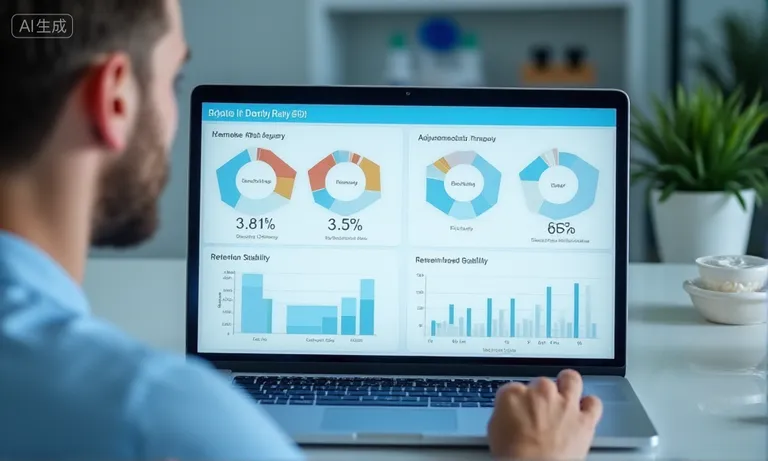
Price comes first – Price is the most visible part of total cost and the first thing everyone checks—so here are the ranges before we talk about value.
Price ranges from Raytops Dental Lab (budgeting only)
Currency: USD | Updated: 2025-11 | Region: global suppliers (normalized)
Crowns & Bridges
- Zirconia crown: $22–$48
- PFM crown: $14–$23
- E.max veneer: $40–$55
- Custom abutment: $50–$70
Implants
- Abutment: $55–$125
- Implant crown: $22–$48
- Lab fees (bundled/itemized, per single crown): $25–$65+ (scope/complexity dependent)
Removables
- Partial denture: from $20 → $120 (acrylic → metal framework)
- Valplast partial: ~$80
- Flipper / single-tooth: $15–$40
- Full denture: Immediate ~ $25 / Premium ~ $60
Night guard & others
- Simple night guard: $25–$45
What moves price: material grade/finishing, case complexity, included services (design/scanning/finishing), logistics (shipping/customs), turnaround & rush.
Why price ≠ total cost
Sticker price is the tip of the iceberg. The real cost sits beneath the surface in factors like remake rates, shipping costs, turnaround time consistency, communication overhead, and clinical fit for each case. Ignore these “underwater” elements and the initial price can be misleading. Total Cost of Ownership (TCO) is driven by:
- Remake % (every +1% lifts effective cost with freight & rework),
- Chairside minutes (+5–10 min often costs more than a few dollars of unit price),
- Scope & policies (itemized quote + written SLA/rush triggers/remake & freight ownership reduce surprises).
Per-case TCO (same-basis comparison):
TCO = Lab fee + Shipping/Customs + Expected Rush + (Remake% × (Lab fee + Shipping)) + (Chairside mins ÷ 60 × $/chair-hour)
Send case details & monthly volume → get an itemized, case-specific quote + SLA + remake/freight policy so you can compare price and TCO on the same basis.
Because prosthetics are highly customized, please contact us with case details for a case-by-case quote—the most accurate way to control TCO and avoid paying for services you don’t need.
What Are the Main Dental Lab Pricing Models and How Do They Differ?
Among dental lab pricing models, there is no one “best” option. Choose per-unit, bundled, or tiered based on your case mix and compare them on the same per-case TCO basis: per-unit pricing is flexible but add-on sensitive, bundled pricing is predictable if the scope is itemized with SLAs, and tiered pricing works for volume only when thresholds and exclusions are published.
Models at a glance
| Model | How it charges | Best for | Key risks | How to control |
|---|---|---|---|---|
| Per-unit pricing | Each restoration priced separately (e.g., zirconia crown price, PFM crown) | Low–medium volume; customized cases | Add-ons stack up; no cap on remake rate | Request an itemized quote; write a remake policy with a % cap and freight ownership; compare by TCO |
| Bundled pricing | One flat fee covering design/scanning/finishing/logistics | Teams needing predictable invoices | Vague scope hides trade-offs | Itemize the bundle; define turnaround/CAD response SLAs; reject lump-sum only quotes |
| Tiered pricing | Price varies by volume/complexity thresholds | DSOs / high-volume buyers | Blurry thresholds; exclusions erase discounts | Publish a clear tier table and exclusions; add audit rights & quarterly true-up |
Mini TCO example (clear conclusion)
Scenario (zirconia crown):
- Lab A: fee $28, shipping $12, remake 6%, chairside 25 min
- Lab B: fee $34, shipping $10, remake 2%, chairside 15 min
- Chair time value $300/hour; remake base = fee + shipping
Without chairside: A $42.40 vs B $44.88 (A looks cheaper)
Including chairside: A $167.40 vs B $119.88 → Winner: Lab B (lower by ≈ $47.52 per case)
Per-case TCO formula:
TCO = Lab fee + Shipping/Customs + Expected Rush + (Remake% × (Lab fee + Shipping)) + (Chairside mins ÷ 60 × $/chair-hour)
Apply the same lens to implant abutment price, implant crown pricing, and removable dentures pricing to minimize dental lab costs.
Reviewing an ADA dental lab fee schedule can help clarify average lab charges. Some organizations like the National Association of Dental Laboratories (NADL) also provide guidance on transparent pricing models and industry best practices.
Hidden fees to surface before you compare “price”
- Redesigns / second scans
- Rush fee trigger (define the exact SLA window)
- International shipping & customs; model pour / special finishing not in base quotes
- Remake policy (eligibility, % cap, freight ownership inbound/outbound)
- FX band & currency terms for overseas orders
- Out-of-scope changes require written approval
Request an itemized quote—that’s real dental lab fee transparency.
Targeted answers for high-intent queries
Which dental labs have the lowest remake rate?
There isn’t an “always lowest” lab. Compare remake % by indication under a written SLA, require first-time fit %, and set a quarterly remake cap (e.g., ≤3%) with explicit freight ownership. Decide by per-case TCO, not sticker price.
How to compare dental lab discount offers for quality and value
Treat discounts as scope tests. Bundled offers must list inclusions; per-unit/tiered must publish thresholds and exclusions. Reject lump-sum only quotes; require itemized lines (design/scanning/finishing/shipping/customs/rush) and write rush triggers and FX bands into the quote.
How to minimize/reduce your dental lab costs (checklist)
- Cap remake % by indication; track first-time fit %
- Track chairside minutes per procedure
- Lock turnaround SLAs and rush triggers; define freight ownership
- Use tiered pricing only when thresholds/exclusions are published and auditable
- Standardize file formats & iteration limits to cut rescans
Send case details & monthly volume → get an itemized, case-specific quote with SLA + remake/freight policy, so you can compare per-unit vs bundled vs tiered on the same TCO basis and win on cost and outcomes.
How to Evaluate Cost vs. Long-Term Value in Lab Pricing
Don’t pick by the lowest unit price: evaluate long-term value on the same per-case TCO basis—labs with lower remake rate, higher first-time fit, documented QA, and written SLAs/remake policy/freight ownership reliably minimize dental lab costs over time.
What remake rate and consistency really do to cost
- A low sticker price loses meaning if remakes are frequent.
- Every +1% remake rate raises effective cost once freight & chairside minutes are included.
- Inconsistent quality inflates chairside adjustments and kills schedule predictability.
Quick sensitivity (zirconia crown price example):
Assume fee $32, shipping $10, chair time $300/hour, chairside 18 min baseline.
- At 2% remakes → extra cost ≈ 0.02 × ($32+$10) = $0.84 per case (before chairside).
- At 6% remakes → $2.52 per case (+ $1.68 vs 2%).
Add just +5 minutes chairside = 5/60 × $300 = $25 more—often swamps a few dollars of unit price.
Conclusion: chasing the lowest remake rate and shorter chairside time usually beats chasing the lowest unit price.
How technician skill and QA drive ROI
- Skilled technicians improve anatomy/occlusion, cutting re-adjustments.
- Digital QA (margin visualization; contacts/occlusion checks) catches issues pre-ship.
- A structured final review stabilizes turnaround time → higher first-time fit % (critical for multi-site clinics/DSOs).
Calculate Total Cost of Ownership (beyond “price”)
Per-case TCO = Lab fee + Shipping/Customs + Expected Rush + (Remake% × (Lab fee + Shipping)) + (Chairside mins ÷ 60 × $/chair-hour)
Monthly TCO = Per-case TCO × monthly cases
According to Dentistry Today, even a 5% remake rate can lead to significant margin erosion over hundreds of cases annually.
Optimization levers
- Lower remake % (set caps by indication).
- Reduce chairside minutes (design standards, occlusion checks).
- Trim add-ons with an itemized quote (design/scanning/finishing/shipping/customs/rush).
- Lock turnaround SLAs and rush triggers to avoid surprises.
- Match material ↔ indication (e.g., zirconia vs PFM) to prevent rework.
Quick checklist before you compare “price”
- Remake policy: eligibility, % cap, and freight ownership (inbound/outbound).
- SLA: turnaround windows per procedure; CAD response time; on-time % target.
- Itemized quote: design, scanning, finishing, shipping, customs, rush—no lump-sum only.
- Case mix fit: align to your procedures, not a generic rate card.
- Track: first-time fit %, remake %, chairside minutes, and per-case TCO
Long-term value = predictable first-time fit, controlled remake %, tight SLA, and transparent scope. That’s how dental lab pricing models translate into lower TCO and better ROI—not shaving $2 off unit price.
What Pricing Signals Reveal Mature vs. Risky Lab Collaborations
Choose labs that make dental lab fee transparency tangible: an itemized quote, written SLAs, a clear remake policy with freight ownership, disclosed first-time fit and remake rate by indication, and traceable price changes. Avoid lump-sum quotes, vague rush rules, and tiered discounts without thresholds or audit rights.
Signals of a mature, low-risk pricing model
- Itemized quote (not totals): separate lines for materials, design, scanning, finishing, shipping, customs/taxes, rush.
- Defined scope & terms: validity dates, change control, who pays freight on remakes, and how out-of-scope work is approved.
- Documented QA metrics: first-time fit %, remake % by indication (e.g., zirconia crown pricing vs PFM crown pricing) plus pre-ship checks (margins, contacts, occlusion).
- Pilot pricing & acceptance: 20–50 case pilot, pass/fail criteria, feedback loop, and post-pilot review.
- Traceable price changes: adjustments mapped to materials/logistics/FX with memos and effective dates; FX band defined.
- Tiered pricing that scales: public tier table, eligible case types, rebate math, payout cadence, and audit rights.
- Operational SLAs: turnaround windows per indication; CAD response ≤24h; on-time % target.
Red flags that predict cost overruns
- “All-in” lump-sum with no line items or “we’ll confirm later.”
- Ambiguous remake policy: no eligibility rules, no % cap, no freight ownership.
- Refusal to share QA metrics or to offer pilot pricing.
- Surprise surcharges: rush tied to vague “capacity”; undefined SLA window.
- Unexplained price hikes not linked to material grade, logistics, or FX.
- Scope creep billed as routine “exceptions” (redesigns, second scans, model pours).
- Tiered pricing with blurry thresholds/exclusions; no quarterly true-up.
Copy-and-paste checklist (before you commit)
- Itemized quote: “Separate design/scanning, finishing, shipping, customs, rush—no lump-sum only.”
- SLA: “Turnaround by indication + rush triggers in writing; CAD response ≤24h.”
- Remake policy: “Eligibility, % cap per period, inbound/outbound freight ownership.”
- QA metrics: “Share first-time fit % and remake % by indication with pre-ship checks.”
- Tiered pricing & rebates: “Publish thresholds, exclusions, rebate formula, payout timing, audit rights.”
- Price-review triggers: “FX beyond band, material index change, or volume delta → review.”
- Trade terms (overseas): Incoterms, duties/brokerage ownership, FX band.
- Pilot pricing: “20–50 cases with acceptance criteria and post-pilot review.”
Sample RFP language (short form)
“Please submit a 3-month pilot proposal with itemized dental lab fees for zirconia crowns, PFM crowns, implant abutment + crown, and removable dentures. Include: (1) scope inclusions/exclusions and change control; (2) turnaround SLAs and rush triggers; (3) remake policy with % cap and freight ownership; (4) QA metrics (first-time fit %, remake % by indication) and acceptance criteria; (5) tiered pricing thresholds, rebate mechanics, and audit rights; (6) price-review triggers (materials, logistics, FX band), with rationale and effective dates; (7) Incoterms and duties/customs ownership for overseas shipments.”
Reliable labs proactively help clients quantify and lower their TCO by improving first-time fit rates and reducing remake frequency. Exocad’s documentation illustrates how digital workflows also reduce these coordination burdens. Labs that hide details risk scope creep. Refer to the NADL pricing transparency page for industry guidance.
Why these signals improve ROI and TCO
Itemization + QA metrics let you compare by outcomes, not sticker price. Mature pricing models align cost with predictable first-time fit and lower remake rate, cutting chairside time, rush fees, and logistics waste—consistently minimizing dental lab costs
Send your target procedures and monthly volumes → get an itemized, pilot-ready quote with QA metrics and clear SLAs/remake-freight terms, so you can evaluate partners on fee transparency and long-term value, not just unit price.evaluate value—not just price.
How to Compare Local vs. Overseas Dental Lab Pricing Effectively
Compare local vs overseas dental lab pricing on the same per-case TCO basis: normalize currency/FX, Incoterms (DDP/DAP), shipping & customs, SLA/rush triggers, and remake policy/freight ownership. If first-time fit and turnaround match, China dental lab prices often deliver lower TCO despite freight.
What to normalize before you compare (apples-to-apples)
- Currency & FX band: quote in USD (or home currency) with an agreed FX band (e.g., ±3%) and review triggers.
- Incoterms & duties: define DDP/DAP, who pays customs/duties/brokerage, and how remake freight is handled.
- Scope line items: itemize design/scanning, finishing, shipping, customs, rush (no lump-sum only).
- Procedure match: use the same indications for zirconia crown price, PFM crown pricing, implant abutment + crown, removables.
- Quality signals: disclose first-time fit % and remake % by indication, plus pre-ship QA (margins, contacts, occlusion).
- Operational SLAs: turnaround windows per procedure; CAD response ≤24h; on-time % target.
- Chairside minutes: track by procedure—often a bigger driver than a small unit-price gap.
Local vs overseas — cost drivers at a glance
| Driver | Local lab | Overseas lab (e.g., China) | What to write down |
|---|---|---|---|
| Unit price | Higher | Lower (often ½–⅓ of local) | Exact rate card by indication |
| Shipping & customs | Lower/simple | Higher/variable | Incoterms + duties/brokerage ownership |
| Turnaround window | Shorter | Longer unless expedited | SLA with rush trigger & fee |
| Remake freight | Lower impact | Higher if cross-border | Inbound/outbound freight ownership |
| Quality metrics | Varies | Varies | First-time fit %, remake %, QA checklist |
| FX risk | Minimal | Present | FX band and review triggers |
Mini TCO example (clear conclusion)
Scenario (zirconia crown): compare a local quote vs an overseas quote (China) for the same indication.
- Local: fee $42, ship $6, remake 3%, chairside 16 min
- Overseas: fee $28, ship+customs $12, remake 2%, chairside 15 min
- Chair time value $300/hour; remake base = fee + shipping
Local TCO = 42 + 6 + (0.03 × 48) + (16/60 × 300) = $42 + $6 + $1.44 + $80 = $129.44
Overseas TCO = 28 + 12 + (0.02 × 40) + (15/60 × 300) = $28 + $12 + $0.80 + $75 = $115.80
→ Winner: Overseas (lower by ≈ $13.64 per case). If first-time fit or turnaround were worse, the result could reverse—hence the need to fix SLA and QA in writing.
Per-case TCO = Lab fee + Shipping/Customs + Expected Rush + (Remake% × (Lab fee + Shipping)) + (Chairside mins ÷ 60 × $/chair-hour)
Practical conclusion
When scope is itemized, SLA is enforceable, and QA keeps first-time fit high, overseas (China) quotes typically win on TCO/ROI. Without those controls, a lower sticker price can be more expensive in practice.
Service bundles vary; deconstruct quotes via itemization to compare accurately. Use industry frameworks such as the NADL resource hub to guide breakdown standards.
Low-risk pilot (copy-and-paste checklist)
- Itemized quote for your set (zirconia crowns, PFM crowns, implant abutment + crown, removables).
- QA metrics and a written remake policy (eligibility, % cap, freight ownership).
- Turnaround SLAs per indication + explicit rush triggers/prices.
- Scope alignment: what’s included vs add-ons; number of design iterations.
- Track during pilot: first-time fit %, remake %, chairside minutes, on-time %, per-case TCO.
- Review after 20–50 cases: expand only if metrics hit targets; otherwise issue a corrective plan.
Send your case mix and monthly volumes → get an itemized, pilot-ready quote with QA metrics, SLAs, and clear Incoterms/FX terms, so you can compare dental lab quotes on the same TCO basis—local vs overseas—and choose the option that truly lowers cost.
What Contract Terms Help Avoid Unexpected Cost Traps?
Lock cost predictability by putting itemized quotes, procedure-level SLAs, a specific remake policy with freight ownership, and transparent tiered pricing/rebates into the contract—plus clear price review triggers and change control. That’s how you turn dental lab fee transparency into real, stable TCO.
When to use volume-based pricing or rebates
- Predictable demand or DSOs with centralized purchasing
- Long-term cooperation where economies of scale apply
- Quarterly/annual rebate reconciliation with audit rights
- Published volume thresholds, eligible indications, and exclusions
Tip: keep a public rate card and a private tier table tied to monthly/quarterly case counts.
Define and enforce scope (to prevent extra fees)
- Inclusions: # of design iterations, covered case types (e.g., zirconia crowns, PFM bridges), standard turnaround per indication
- Add-ons: explicit rush triggers, second scans/redesigns, model pour/finishing, shipping & customs ownership
- Remake policy: eligibility rules, % caps per period, required photo/CAD evidence, freight ownership (inbound/outbound)
- Change control: any out-of-scope work must be quoted & approved in writing before processing
When to reopen pricing (price review triggers)
- Material index changes (e.g., zirconia inputs) beyond a defined band
- Volume delta ±X% over Y months vs forecast
- Scope shift (new indications, extra QA steps, added finishing)
- FX volatility beyond threshold for overseas orders
- Quality drift: remake rate or first-time fit % outside control limits
Short, practical clauses (copy & paste)
Itemized Quote Requirement
“Supplier will provide itemized quotes separating design/scanning, finishing, shipping, customs, and rush charges. Non-itemized charges are not payable.”
Turnaround & Rush SLA
“Standard turnaround: X business days per indication. Rush fee applies only when Purchaser requests delivery faster than SLA and must be quoted and approved in writing before work begins.”
Remake Policy
“Remake is eligible when supplied files/instructions were followed and the prosthesis fails fit/function. Remake cap: up to Y% per quarter. Freight on remakes is owned by [Supplier/Purchaser]; exceptions require written approval.”
Volume Tiers & Rebates
“Unit pricing follows the attached tier table. Rebates reconcile quarterly against shipped, accepted cases; credit notes issued within 15 days post-reconciliation. Purchaser has audit rights.”
Price Review Triggers
“Either party may request a review if FX > Z%, the zirconia/material index > W%, or case volume deviates > ±V% for two consecutive months.”
Change Control
“Any out-of-scope work (extra design iterations, special finishing, non-standard materials) must be quoted and approved in writing. Unapproved charges are not payable.”
Quick pre-sign checklist
- Do we have an itemized rate card per procedure (zirconia crown, PFM crown, implants, removable dentures)?
- Are turnaround SLAs and rush triggers written?
- Is the remake policy specific (eligibility, % cap, freight ownership, evidence)?
- Are volume tiers/rebates and reconciliation rules attached with audit rights?
- Are FX/material review triggers defined with caps and effective dates?
- Is there a change-control step to block surprise add-ons?
Contracts that specify scope, remake policy, freight ownership, and tiered pricing + review triggers reduce disputes and stabilize total cost.
Conclusion: Choose Labs That Price Transparently and Perform Consistently
The right choice isn’t the lowest sticker price—it’s the partner with real dental lab fee transparency and repeatable outcomes. Compare per-unit, bundled, and tiered models on the same per-case TCO basis, surface hidden fees, and lock in contracts that specify itemized scope, turnaround SLAs, a clear remake policy (with freight ownership), and audit-ready tier terms. That’s how you avoid cost traps and protect quality.
A reliable partner shows its work: itemized quotes, documented first-time fit % and remake rate by indication (not just a rate card), predictable turnaround time, and price-review triggers that keep TCO and ROI on track. Those signals are the foundation of a predictable, scalable supply chain for single clinics and DSOs.
Raytops Dental Lab co-develops fair, stable dental lab pricing aligned to your materials, indications, and volume tiers. We back every quote with measurable QA, clear SLAs, and responsive communication—so you can consistently minimize dental lab costs without sacrificing outcomes.
Next step → Send your target procedures (zirconia crowns, PFM crowns, implants, removable dentures) and monthly volumes. We’ll return an itemized, contract-ready quote with SLAs, QA metrics, and tier options, so you can evaluate value—not just price.