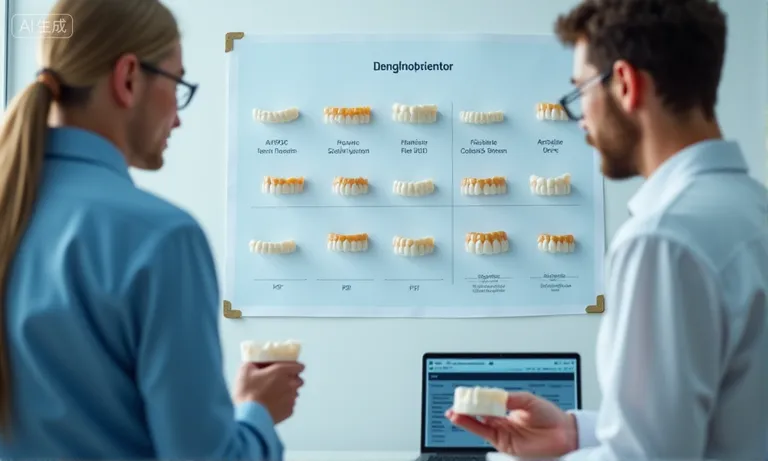
Effective collaboration with 3D printing dental labs is essential for achieving predictable implant outcomes and maximizing the value of digital dentistry. When clinics and labs align on communication, workflow, and quality control, they reduce risks such as delays, remakes, and misaligned expectations, while enabling more consistent and scalable implant restorations.
Several dimensions define strong collaboration in this context:
- File & Workflow Compatibility: Seamless STL/CAD exchange and integrated case management systems minimize errors.
- Digital Platforms & Communication: Real-time updates and structured feedback loops build transparency and trust.
- Turnaround & Logistics: Predictable delivery times and reliable shipping keep implant case schedules on track.
- Quality Assurance: Defined QA checkpoints and low remake rates ensure consistency in restorations.
- Scalability: Standardized processes and resource planning support DSOs and clinics handling higher case volumes.
By addressing these areas, procurement teams and dental organizations can secure partnerships with labs that not only deliver high-quality implant restorations today, but also scale effectively with evolving digital workflows. This creates long-term confidence, reduces operational risks, and strengthens the overall efficiency of the supply chain.
Why Does Collaboration Matter in Dental Implant Restorations?
Strong collaboration between clinics and dental labs is the foundation for predictable implant outcomes. When both sides align on goals, share data transparently, and manage risks together, the result is fewer remakes, smoother chairside experiences, and stronger patient satisfaction. Conversely, weak collaboration often shows up as delays, mismatched restorations, or hidden costs that undermine trust.
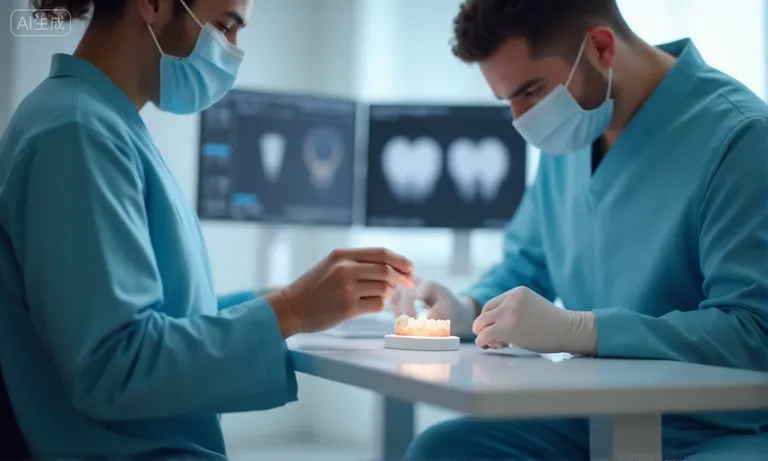
Dental-Lab-Implant-Collaboration
How Do Shared Goals Between Clinics and Labs Improve Implant Outcomes?
Shared goals align priorities between clinical teams and dental labs. When both parties define the success of an implant restoration as achieving precision fit and longevity rather than just speed, workflows are adjusted to support quality.
- Clinics benefit from restorations that reduce chairside adjustments.
- Labs gain efficiency by reducing remakes and rework.
- Patients receive more predictable treatment timelines.
For example, in one collaboration with an independent clinic in Sydney, aligning expectations on abutment fit reduced remake frequency by 18% across three months. This demonstrates that outcome-based alignment, rather than transactional communication, directly improves clinical results.
How Does Data Transparency Build Trust in Implant Cases?
Data transparency is a critical enabler of accountability. When clinics can track case progress through shared dashboards or update reports, they gain visibility into milestones and can anticipate delivery dates. Transparency prevents last-minute surprises, such as unexpected material shortages or delays in scanning data.
- Procurement managers appreciate traceability.
- Clinicians can adjust chair schedules with confidence.
- Labs demonstrate accountability through documented updates.
An overseas dental lab that integrated a simple case progress tracker with one DSO partner saw fewer urgent status calls and a 12% increase in on-time delivery. This shows how visibility reinforces long-term trust.
What Risks Arise When Collaboration Is Weak in Implant Projects?
Poor collaboration creates hidden costs and risks:
- Mismatched margins from incomplete file transfer.
- Delays in scheduling due to unclear turnaround commitments.
- Increased remakes when feedback loops are absent.
- Strained trust when problems are communicated too late.
One U.S. distributor shared that working with fragmented lab partners often led to duplicated shipping costs and extended chair time for patients, ultimately increasing operational expenses. These risks highlight why procurement and clinical managers increasingly favor labs with structured collaboration models.
In practice, effective collaboration transforms implant cases from reactive problem-solving to proactive planning. Raytops Dental Lab has seen that even small steps—such as transparent progress tracking or clear file-sharing protocols—help partners minimize risk and strengthen trust. For clinics and DSOs, this collaboration-first approach means more predictable implant restoration outcomes and fewer costly surprises.
How Does File Compatibility Shape 3D-Printed Implant Workflows?
File compatibility is the backbone of seamless implant restoration. Accurate STL/CAD files, integrated case management, and scanner-to-lab interoperability reduce errors, accelerate delivery, and strengthen collaboration between clinics and labs. Without compatibility, even advanced 3D printing systems risk delays, misfits, and costly remakes.

Dental-Lab-CAD-File-Workflow
Why Is STL/CAD File Accuracy Critical for Implant Restorations?
Accurate STL/CAD files are non-negotiable for predictable implant results. Even small discrepancies in file conversion can lead to margin misfits or unstable occlusion.
- Precise margins reduce adjustment time during seating.
- Correct bite alignment prevents premature wear.
- Standardized file outputs support cross-platform consistency.
In one case, a clinic in Toronto struggled with remakes when multiple scanners exported files in slightly different mesh densities. Once both clinic and lab aligned on standardized export protocols, remake frequency dropped by 15%. This shows how compatibility directly saves time and cost.
Why Are Case Management Systems Key to Efficient Collaboration?
Centralized case management platforms minimize confusion and streamline communication compared to fragmented email exchanges.
| Workflow Approach | Key Features | Impact on Collaboration |
|---|---|---|
| Centralized system | Shared file repository, timeline updates, integrated chat | Reduces missing attachments, improves traceability |
| Fragmented system | Files spread across email, cloud folders, manual notes | High risk of lost data, harder to track accountability |
A DSO partner using a centralized case platform reported smoother coordination with overseas dental labs, since all STL revisions and feedback were logged in one place. This not only reduced errors but also gave procurement teams better visibility for auditing and compliance.
What Benefits Come from Scanner-to-Lab Interoperability?
Interoperability ensures that data flows seamlessly from chairside scanner to lab design software, without conversion bottlenecks.
- Scanning – Dentist captures digital impressions in real time.
- Transmission – Files upload securely to the lab portal.
- Design – Lab technicians import directly into CAD without manual fixes.
- Manufacturing – 3D printers produce accurate restorations with fewer delays.
In one collaboration, a clinic in Munich adopted direct scanner-to-lab integration, reducing file transfer errors and cutting average turnaround by nearly two days. This illustrates how interoperability translates into both clinical efficiency and patient satisfaction.
Digital compatibility is no longer optional—it is a decisive factor in quality and speed. By aligning on file formats, case management systems, and scanner protocols, clinics and labs create workflows that prevent costly errors. Raytops Dental Lab has found that compatibility-focused partnerships consistently lead to fewer remakes and smoother implant deliveries, proving that technical alignment is just as critical as clinical expertise.
How Do Digital Platforms Strengthen Dental Lab Collaboration?
Digital platforms are reshaping how clinics and dental labs coordinate implant cases. Real-time updates, structured feedback loops, and transparent communication tools reduce remakes, speed up decisions, and help both sides build lasting trust. Without digital support, collaboration often slips into email overload, delayed responses, and accountability gaps.
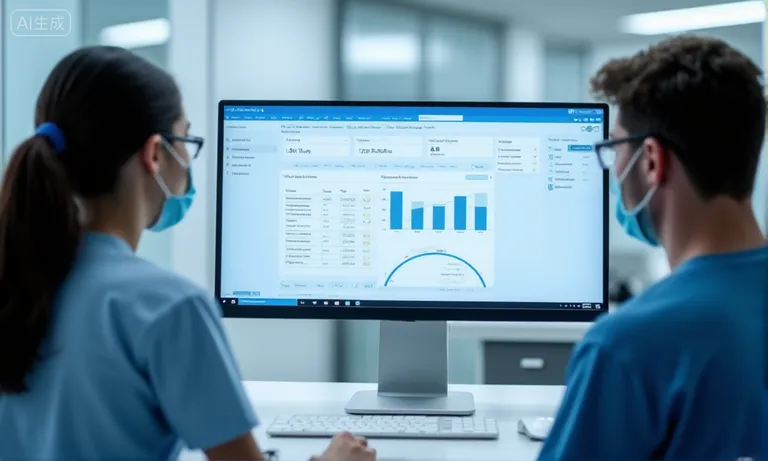
Dental-Lab-Digital-Platform-Dashboard
Why Are Real-Time Platforms Vital for Implant Case Updates?
Real-time platforms allow clinics and labs to see the same case progress at the same time. Instead of waiting for email confirmations, clinicians can track whether a case is in design, printing, or shipping. This visibility reduces uncertainty and prevents last-minute scheduling conflicts.
In one collaboration with a DSO in California, using a shared platform reduced “status check” calls by 40% and improved planning accuracy for multi-clinic scheduling. This shows how real-time visibility transforms coordination from reactive to proactive.
How Do Structured Feedback Loops Reduce Errors and Remakes?
Structured feedback within digital platforms ensures that case revisions are logged and traceable. Instead of feedback being scattered across emails, all updates are tied to specific case IDs.
- Errors are caught earlier, lowering remake rates.
- Revision histories prevent repeated mistakes.
- Procurement managers can audit communication more effectively.
One European distributor reported that by shifting to structured case notes in a shared portal, remake frequency fell by 10% across implant restorations. This confirms that digital tools not only improve speed but also quality consistency.
How Does Transparent Communication Build Lasting Partnerships?
Transparent communication makes expectations clear for both clinics and labs, reducing friction and strengthening relationships.
| Communication Style | Characteristics | Impact on Collaboration |
|---|---|---|
| Structured digital updates | Centralized, timestamped, accessible to all stakeholders | Builds trust, ensures accountability |
| Ad-hoc communication | Scattered emails, unclear timelines | Increases confusion, undermines trust |
One clinic in London shared that structured communication through a digital platform gave them more confidence in working with overseas dental labs, since they could track both progress and lab responses in one place. This visibility is a key driver of long-term collaboration.
Digital platforms are no longer optional—they are critical infrastructure for modern dental implant workflows. Raytops Dental Lab has seen that partners using structured digital tools experience fewer delays and smoother coordination, proving that technology is as important as craftsmanship in sustaining strong lab-clinic relationships.
How Does Turnaround Time Impact Dental Implant Restorations?
Turnaround time is one of the most visible measures of collaboration between clinics and dental labs. Predictable delivery schedules, reliable cross-border logistics, and transparent tracking systems directly affect how smoothly implant cases progress. Delays not only extend chair time for patients but also increase operational costs for clinics and DSOs.
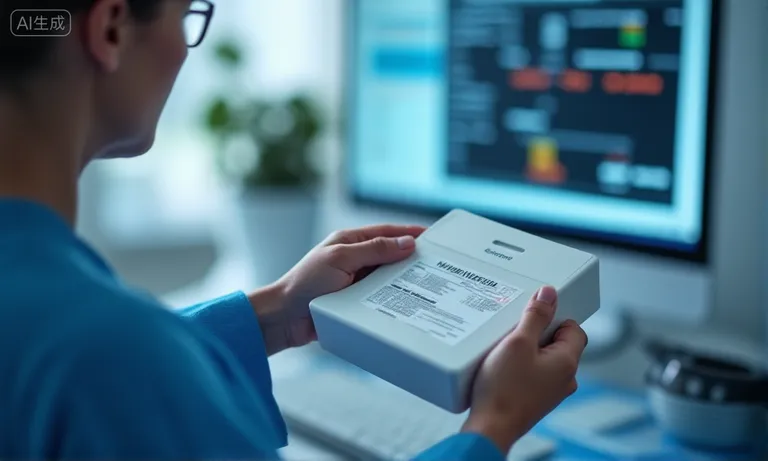
Dental-Lab-Implant-Shipping-Tracking
Why Is Predictable Turnaround Essential for Implant Scheduling?
Predictable turnaround time enables clinics to schedule patients with confidence. When labs provide consistent lead times for implant crowns or abutments, clinicians can align appointments without fearing last-minute cancellations.
Uncertainty creates ripple effects: rescheduled chair time, patient dissatisfaction, and higher costs. For example, one U.S. clinic group found that even a two-day delay caused cascading disruptions across five patient appointments. With consistent lab timelines, they stabilized weekly scheduling and reduced idle chair time.
How Does Cross-Border Shipping Reliability Affect Delivery?
For overseas dental labs, shipping reliability is just as critical as production speed.
- Customs delays can extend delivery windows unexpectedly.
- Inconsistent carriers create gaps in case tracking.
- Unclear shipping policies may lead to hidden costs for clinics.
A distributor in Germany shared that by standardizing shipping partners with their overseas lab, they cut late arrivals by 20% in one quarter. Reliable logistics ensure that the quality achieved in production is not lost in transit.
How Do Digital Tracking Systems Shorten Chair Time?
Digital tracking gives clinics real-time visibility into where a case is within the supply chain.
- Case shipped – Lab uploads digital tracking code immediately.
- Customs clearance – Clinics monitor status updates without manual calls.
- Final delivery – Arrival alerts allow clinics to confirm patient appointments.
When one DSO in Australia integrated digital tracking with lab shipments, it reduced average chair time delays by nearly half a day. Visibility not only reduced stress for procurement teams but also created more confidence in patient-facing scheduling.
Turnaround time is not just about speed—it is about predictability and visibility. Overseas dental labs like Raytops Dental Lab have shown that by combining reliable logistics partners with transparent digital tracking, clinics and DSOs can manage implant cases with fewer disruptions, shorter chair time, and higher patient satisfaction.
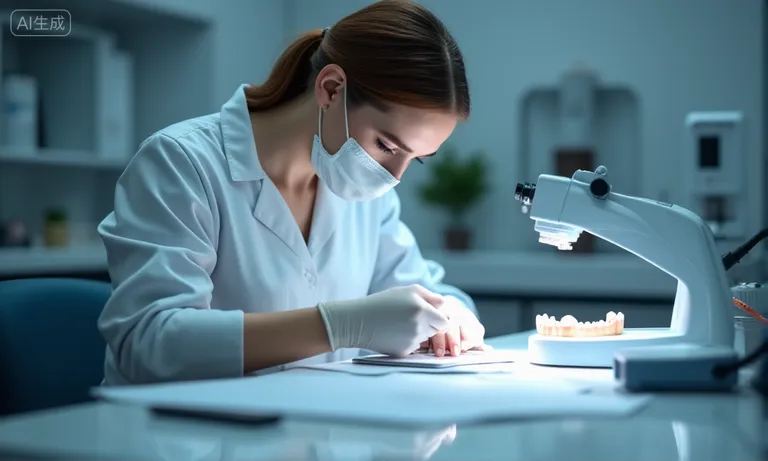
How Does a QA Workflow Ensure Predictable Implant Outcomes?
A defined QA workflow is essential for reducing remakes, ensuring material consistency, and giving procurement teams confidence in long-term collaboration. When quality checks are standardized, both clinics and dental labs benefit from predictable implant outcomes, fewer hidden costs, and stronger trust in the supply chain.
Dental-Lab-QA-Workflow-Check
How Do Remake Rates Affect Long-Term Collaboration?
High remake rates are a clear indicator of workflow breakdowns. Every remake creates additional costs, delays patient care, and strains the clinic–lab relationship.
- Frequent remakes increase chairside frustration and reduce patient confidence.
- Clinics face added shipping costs and lost scheduling slots.
- Labs lose efficiency, as time is spent on corrections instead of new cases.
In one case, a U.K. clinic reduced its remake rate from 12% to 6% after its lab introduced dual-stage margin checks. That 50% improvement not only cut costs but also made the clinic more willing to commit to long-term collaboration.
Why Is QC Documentation Valuable for Procurement Teams?
Procurement managers rely on QC documentation to evaluate lab consistency and accountability.
| With QC Documentation | Without QC Documentation |
|---|---|
| Clear traceability of materials and processes | Limited visibility into cause of remakes |
| Easier compliance with audits and certifications | Higher risk of hidden quality issues |
| Confidence in supplier accountability | Harder to justify long-term contracts |
A DSO partner in Canada highlighted that having digital QC reports attached to every shipment simplified compliance reviews and helped standardize their internal procurement scoring system. This transparency strengthens trust in cross-border lab partnerships.
How Do Material and Process Checks Improve Implant Consistency?
Material and process checks ensure that every implant restoration meets clinical expectations. From verifying zirconia batches to calibrating 3D printers, each step in QA reduces the chance of variance. A structured workflow includes:
- Material batch verification before production.
- Dimensional checks during the CAD/CAM stage.
- Final inspection of occlusion and margins before shipping.
One lab–clinic collaboration in Singapore introduced automated printer calibration logs, which cut variance-related remakes by 20%. This demonstrates how technical checks directly translate into clinical reliability.
Quality assurance is not a single checkpoint—it is a system that sustains trust. Overseas dental labs like Raytops Dental Lab show that consistent QA workflows reduce remakes, improve procurement confidence, and deliver implant outcomes that clinics and DSOs can plan around with certainty.
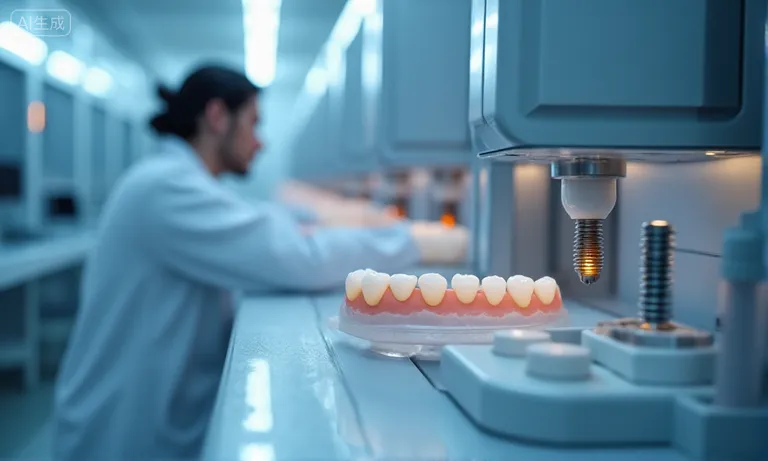
How Can Collaboration Scale for High-Volume Implant Cases?
Scaling collaboration for high-volume implant restorations requires efficiency, standardization, and resource planning. Clinics, DSOs, and labs must align on workflows that can handle growing case loads without compromising quality or predictability. A scalable partnership not only reduces per-unit cost but also ensures stability in long-term implant programs.
Dental-Lab-High-Volume-Implant-Production
What Processes Help Labs Manage Large Case Volumes Efficiently?
Efficient processes determine whether labs can handle hundreds of implant cases each month. Labs that adopt lean workflows and batch scheduling reduce bottlenecks in both design and production.
For example, one U.S. DSO expanded its implant program by 25% after partnering with a lab that implemented automated case routing based on priority and complexity. This process innovation kept turnaround times stable even as case volume grew.
How Does Workflow Standardization Support Scalable Delivery?
Standardized workflows minimize variability and ensure consistent outcomes across high volumes.
- Consistent file formats streamline design integration.
- Standard operating procedures reduce training time for technicians.
- Uniform QA checkpoints maintain predictable quality.
Labs that fail to standardize face increasing remake rates as volume scales, undermining efficiency gains. A Japanese distributor reported that its preferred overseas dental lab maintained <5% remake rate across more than 800 implant units per quarter by enforcing strict workflow templates.
Why Is Resource Planning Critical for DSOs Managing Restorations?
Resource planning aligns human, material, and digital capacity with projected case volume.
| Planning Approach | Characteristics | Impact on High-Volume Collaboration |
|---|---|---|
| Planned resource allocation | Forecast-driven staffing, material pre-ordering, aligned digital systems | Stable turnaround, reduced cost per case |
| Reactive resource allocation | Staff overtime, urgent material orders, ad-hoc system fixes | Unpredictable delivery, higher operational costs |
A DSO in the Middle East noted that working with a lab offering resource planning reports helped them secure predictable chair scheduling across multiple clinics. This proactive approach transformed collaboration into a scalable business model.
Scaling implant case collaboration is not just about capacity—it is about building reliable systems that support growth. Raytops Dental Lab has worked with DSOs and distributors managing high-volume programs, showing that with standardized workflows and forward resource planning, overseas labs can deliver at scale while maintaining trust, quality, and ROI.
Conclusion
Effective collaboration with dental labs is the difference between reactive problem-solving and predictable implant outcomes. Shared goals, digital compatibility, reliable logistics, structured QA, and scalable processes all contribute to smoother workflows and stronger partnerships. For clinics and DSOs, working with an overseas dental lab that prioritizes transparency and consistency means fewer remakes, shorter chair time, and improved patient satisfaction. As a trusted collaborator, Raytops Dental Lab focuses on aligning with partners’ systems and priorities, helping them manage implant cases with confidence while building long-term value into every restoration program.