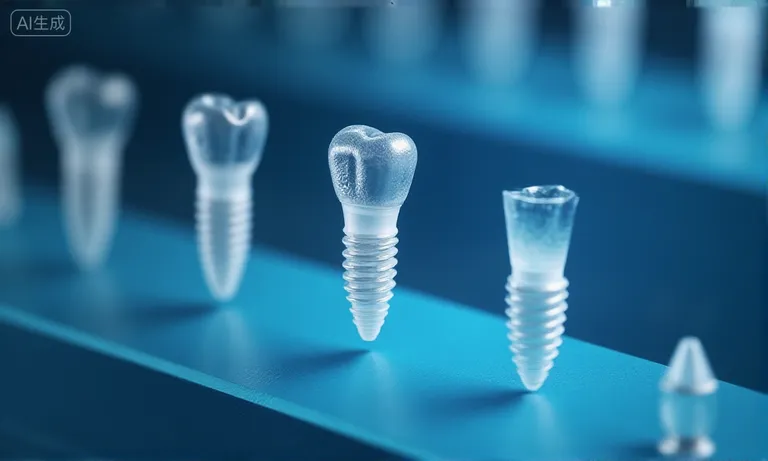
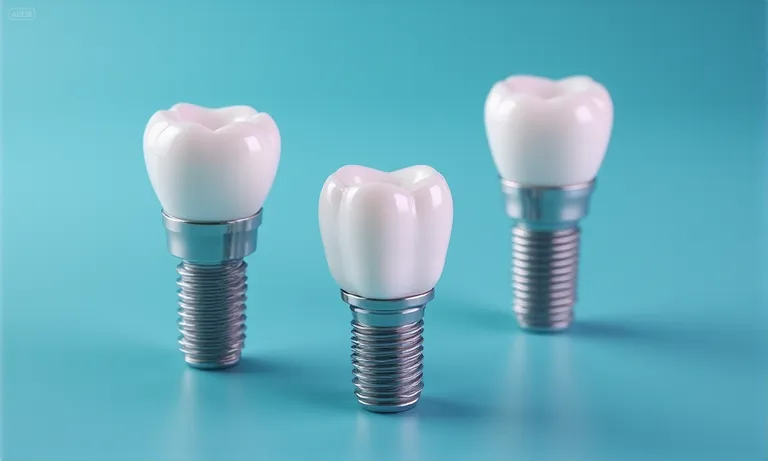
Choosing between custom and stock abutments depends on the restorative requirements of each implant case. Implant position, soft-tissue conditions, crown contour, margin accessibility, and available restorative space influence the abutment geometry needed to support the final restoration.
A stock abutment is suitable when an available component adequately meets these requirements. When stock options introduce meaningful restorative limitations, a custom abutment may provide the additional design control needed. However, customization must remain compatible with the implant system, available components, and clinical and manufacturing constraints. In some cases, the restorative plan itself may need reconsideration.
What Does the Final Restoration Require from the Abutment?
Before selecting an abutment, the intended crown position, cervical contour, retention method, and available restorative space should be evaluated together. These conditions determine the geometry the abutment must provide and which adjustments are possible without compromising the restoration.
Crown Contour and Emergence Profile
The abutment must support the intended crown contour while providing an appropriate transition from the implant connection through the surrounding soft tissue.
This relationship is influenced by implant depth, angulation, tissue contours, and the planned cervical shape of the crown. If the abutment does not provide suitable support, the crown may require compensating contours that create unfavorable restorative geometry.
Emergence contour also deserves consideration beyond its esthetic role. A 2023 systematic review and meta-analysis reported an association between convex emergence profiles and a higher prevalence of peri-implantitis in the included studies. However, these findings do not establish causation or demonstrate that custom abutments provide better clinical outcomes than stock alternatives.
The relevant design requirement is whether the available abutment geometry can support the planned crown and surrounding tissue conditions without unnecessary contour compromises.
Margin Position, Retention, and Restorative Space
Margin position, retention, and restorative space must be assessed together because changing one dimension can affect the others.
| Restorative Requirement | What Needs to Be Evaluated |
|---|---|
| Margin Position | Whether the finish line can be positioned appropriately for the tissue conditions and planned restoration. For cement-retained crowns, access for removing excess cement is particularly important. |
| Retention | Whether the available abutment height, taper, and geometry provide suitable retention for the intended cement-retained restoration. |
| Restorative Space | Whether sufficient clearance exists for the abutment, restorative material, and required component dimensions without compromising their specifications. |
Limited vertical space illustrates this relationship. Increasing abutment height may improve retention but reduce clearance for the crown. Shortening the abutment may provide additional restorative space while compromising retention.
The available geometry must therefore accommodate the combined requirements rather than optimizing one dimension in isolation.
When Is a Stock Abutment a Suitable Choice?
Stock abutments are available in predetermined configurations that may already provide the geometry required for a successful restoration. Their suitability depends on the actual implant components and restorative conditions, not simply on whether a custom design could be produced.
Matching Stock Abutment Geometry to the Planned Restoration
Stock abutments are available in different heights, contours, and angulations. These options should be compared with the intended crown design, implant position, and surrounding soft tissue.
A favorably positioned implant with adequate restorative space may accommodate a stock abutment that provides suitable crown support, sufficient retention, and an accessible margin. When these conditions are satisfied, additional customization may offer little practical advantage.
However, favorable implant positioning does not guarantee that an appropriate stock configuration exists. The available component may still place the margin too deeply, create an unfavorable cervical contour, or provide insufficient retention.
Other compatible stock configurations should be assessed before deciding that individualized geometry is necessary.
Checking the Available Implant Components
Stock abutment selection must be based on components available for the specific implant system and platform. Manufacturers may offer several connection types, collar heights, angulations, and restorative configurations.
Three checks establish whether a suitable option exists:
- Implant compatibility: Confirm the implant system, connection, and platform against the available stock components.
- Available configurations: Compare collar height, abutment height, angulation, and restorative geometry with the planned crown.
- Technical suitability: Verify that the selected component and any permitted modifications remain within manufacturer requirements and the intended restorative workflow.
The findings lead to three possible decisions:
| Case Assessment | Selection Implication |
|---|---|
| An available stock abutment meets the restorative and component requirements. | Stock is a reasonable choice. |
| Stock options introduce significant contour, margin, retention, or space limitations. | Evaluate whether custom geometry can resolve the identified problem. |
| Neither stock configurations nor feasible custom designs meet the essential requirements. | Reconsider the components or restorative plan. |
This assessment provides a practical basis for selecting stock components without overlooking cases that genuinely benefit from customization.
The retention method also affects abutment selection. Cement-retained restorations require particular attention to abutment retention and margin accessibility, while screw-retained solutions must account for screw-channel access and the compatible restorative components.
Choosing Custom or Stock Abutments for Different Implant Cases
Different implant conditions create different restorative challenges. Anterior esthetic requirements, implant angulation, placement depth, and limited restorative space can each influence abutment selection, although none automatically determines the appropriate type.
The following comparison identifies the principal consideration in four common case situations.
| Implant Case | Stock Abutment May Be Suitable When | Custom Abutment May Be Useful When |
|---|---|---|
| Anterior implant with esthetic demands | Available contours support the intended crown emergence and tissue relationship. | Stock geometry creates unfavorable emergence contours or margin positioning. |
| Angulated implant | An available angled component adequately supports the planned crown position. | Available configurations cannot accommodate the required coronal geometry. |
| Deeply placed implant | Collar height, emergence geometry, and margin position remain suitable. | Stock configurations cannot adequately accommodate tissue contours or margin requirements. |
| Posterior implant with limited space | Abutment dimensions preserve sufficient retention and restorative material clearance. | Stock geometry unnecessarily restricts the available restorative space. |
Anterior Implants with Esthetic and Soft-Tissue Demands
Anterior implant restorations require careful coordination between crown contour, emergence profile, margin position, and surrounding soft tissue. Small differences in cervical geometry can affect how the restoration transitions through the gingival tissues.
The available stock contours should be compared with the intended crown shape and the actual tissue conditions. Where a compatible component provides appropriate support, customization may offer little additional benefit.
Individualized abutment geometry becomes valuable when predetermined stock contours would require the crown to compensate for an unfavorable emergence shape or margin arrangement. Greater control over the cervical transition can help accommodate specific restorative requirements.
The anatomical limitations remain important. Customization cannot independently correct unfavorable implant positioning, inadequate tissue volume, or every esthetic complication.
Angulated Implant Positions
Implant angulation affects the relationship between the implant axis and the intended crown position. The restorative challenge is to accommodate this difference while maintaining appropriate crown contours, retention, and component compatibility.
An available angled stock abutment may provide the required correction. Its coronal geometry and relationship with the planned crown still need to be checked rather than selecting it solely by angulation.
When the available angles or abutment shapes do not provide suitable support, custom geometry can offer greater control over the coronal portion of the restoration.
For screw-retained restorations, screw-channel direction introduces a separate constraint. Modifying the external geometry of a custom abutment does not permit unrestricted screw-channel angulation. Any angled screw-channel solution must be supported by the specific implant system and compatible components.
Deeply Placed Implants and Margin Accessibility
Deep implant placement increases the distance between the implant platform and the intended restorative margin. The available collar height and surrounding tissue contours become important in determining whether a stock component can accommodate the restoration.
Deep placement alone is not a reason to select a custom abutment. A compatible stock configuration may still provide acceptable emergence geometry and margin positioning.
The difficulty arises when available stock dimensions place the finish line unfavorably or do not provide suitable cervical support. Customization may allow the margin position and emergence contour to be adapted more closely to the restorative requirements.
For cement-retained crowns, margin accessibility is particularly important. A systematic review and meta-analysis on abutment margin levels and residual cement found that margin position was associated with residual cement, supporting careful evaluation of deeply subgingival margins.
Custom design can provide greater control over margin location, but it cannot guarantee accessibility when implant depth and tissue conditions impose substantial limitations.
Posterior Implants with Limited Restorative Space
Posterior implant restorations may have restricted occlusal clearance, leaving limited vertical space for the abutment and final crown.
The available space must accommodate the selected restorative material, required component dimensions, and suitable retention when a cement-retained restoration is planned.
A stock abutment can be used when its height and contour satisfy these requirements. If the available geometry unnecessarily reduces restorative space, customization may permit a more appropriate distribution of the available dimensions.
However, shortening the abutment can affect retention, while reducing restorative material thickness beyond its specified limits can compromise the planned restoration.
In these cases, the critical relationship is between abutment dimensions, retention, and crown material requirements. Customization can redistribute available space within permissible limits, but it cannot create additional occlusal clearance.
How to Evaluate Cases with Multiple Restorative Constraints
Many implant cases involve more than one restorative limitation. A deeply placed implant may also have restricted vertical space, while an angulated implant may present demanding esthetic and soft-tissue requirements.
When several constraints overlap, the assessment needs to establish which requirements are fixed and which can be adjusted.
Implant connection compatibility, component specifications, material requirements, and anatomical limitations establish the boundaries of the design. Within those boundaries, margin location, coronal geometry, emergence contour, and other adjustable features can be evaluated against the planned restoration.
The order matters because improving one feature may reduce the available options for another. A proposed adjustment should be assessed for its effect on the complete restoration, not only the problem it was intended to solve.
Deep Implant Placement with Limited Restorative Space
Consider a hypothetical posterior implant positioned relatively deep beneath the soft tissue, with limited vertical clearance for the final crown.
The implant depth creates requirements for emergence geometry and margin location. At the same time, available clearance limits the dimensions of the abutment and restorative material.
An increased abutment height may be desirable for retention, but it can leave insufficient room for the crown. A shorter abutment may improve clearance while compromising retention. The available stock configurations must therefore be evaluated against both conditions simultaneously.
Custom design may allow better coordination of margin location, cervical contour, and coronal geometry. However, the resulting design must still provide adequate retention, preserve required material thickness, and remain within component specifications.
If these requirements cannot be satisfied together, the restorative team must reconsider the available components or restoration plan rather than continue modifying the abutment.
Angulation Combined with Esthetic or Soft-Tissue Requirements
Consider a hypothetical anterior implant whose axis differs from the intended crown position, with surrounding tissue contours requiring careful restorative management.
An angled stock abutment may correct the positional discrepancy but have a cervical contour that does not adequately support the planned emergence profile. Selecting the component based solely on its angle could therefore leave an important restorative problem unresolved.
The crown position, coronal support, margin location, and tissue relationship must be considered together.
A custom abutment may accommodate the required coronal geometry while providing greater control of the cervical transition. Its design remains restricted by the implant connection, component compatibility, and the surrounding anatomy.
The key distinction in these combined cases is between geometry that can be adjusted and limitations that remain fixed. This determines whether customization can resolve the constraints together or merely transfers the compromise from one part of the restoration to another.
When a Custom Abutment Is Not the Right Solution
Custom abutments offer flexibility within the limits of the implant system and planned restoration. Some problems are better addressed through different components, manufacturing arrangements, or restorative decisions rather than more complex CAD geometry.
Implant Component and Manufacturing Limitations
A proposed custom abutment must be compatible with the implant connection and the selected manufacturing system.
The availability of appropriate Ti-bases, pre-milled blanks, CAD libraries, and supported fabrication processes determines which geometries can be produced reliably.
A desired emergence contour or margin location may fall outside the available component dimensions or material specifications. Similarly, changing external abutment geometry does not make an unsupported screw-channel configuration feasible.
When the proposed design cannot satisfy the applicable component or manufacturing requirements, an alternative component or fabrication approach must be evaluated.
When the Restorative Plan Needs Reconsideration
Some limitations remain even after stock and custom abutment options have been assessed.
Insufficient clearance may prevent adequate retention and restorative material thickness from being achieved together. Unfavorable implant positioning or tissue conditions can also restrict the feasible restoration beyond what abutment geometry can address.
The restorative team may need to reconsider the component selection, material, retention method, or overall restoration design. These decisions require appropriate clinical and technical evaluation rather than relying on CAD adjustments alone.
Abutment selection should proceed only when the proposed restoration can satisfy its essential requirements within the available clinical and manufacturing conditions.
Conclusion
Choosing between custom and stock abutments starts with the planned restoration and the components actually available for the implant system. The most useful assessment compares crown support, margin position, retention, and restorative space while distinguishing adjustable geometry from fixed clinical and technical limitations.
Stock abutments should not be excluded simply because customization is available. Equally, a custom design should not proceed when its proposed benefits depend on compromising essential restorative requirements. In those cases, reassessing the components or restorative plan is the more appropriate next step.