Specialist
support
Extend your CAD expertise.
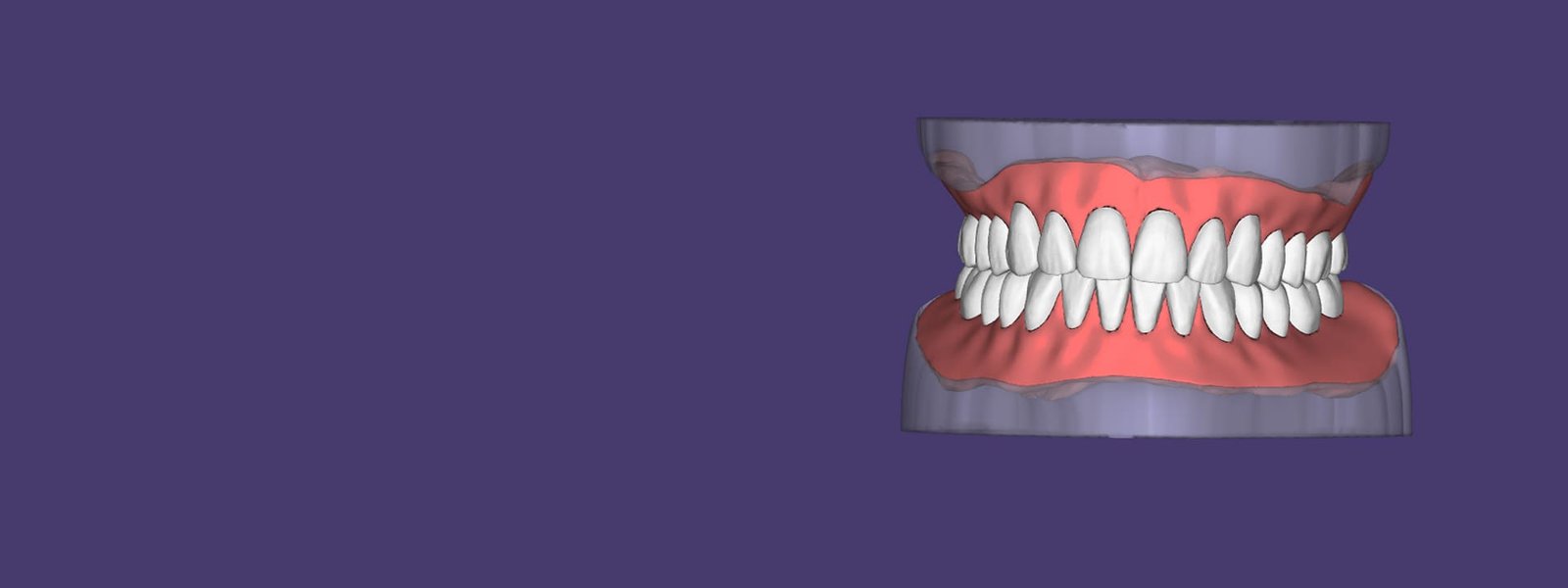
CAD design support for immediate complete and partial dentures, based on pre-extraction records and planned extractions. We prepare digital denture designs and file outputs aligned with your clinical instructions and laboratory fabrication workflow.
✅ 12–24h Standard · 2–6h Rush
✅ Immediate complete and partial denture cases
✅ Design based on pre-extraction records and extraction plans
✅ Fabrication-ready STL + applicable files
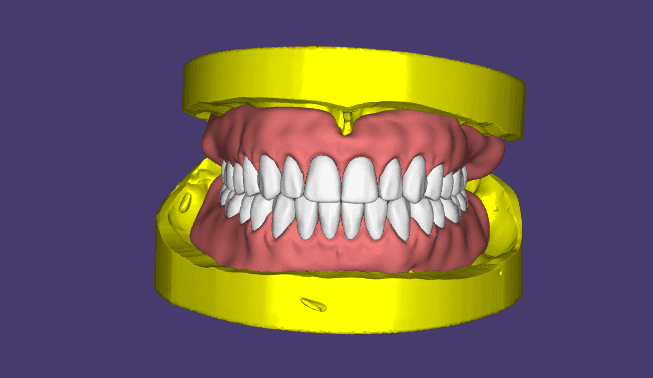
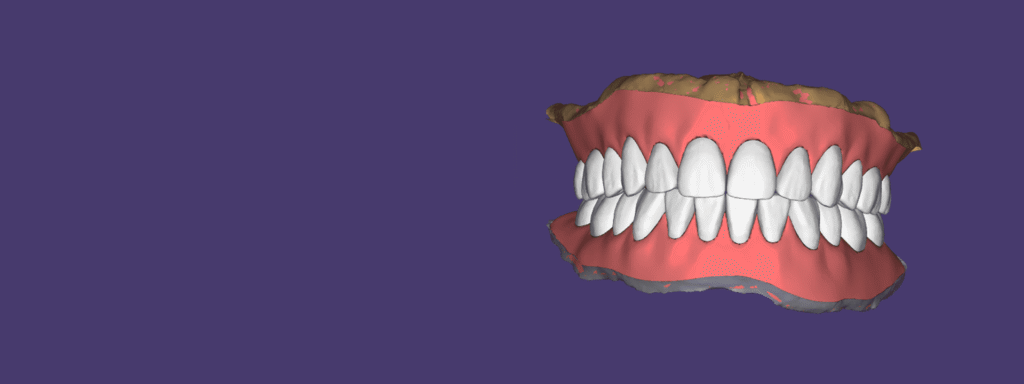
Raytops provides immediate denture CAD design outsourcing for dental labs and clinics, supporting both immediate complete and immediate partial dentures. Each case is developed from pre-extraction records and the approved extraction plan, coordinating virtual tooth removal, replacement tooth setup, and denture base design.
For immediate complete dentures, we develop full-arch tooth arrangements and predicted post-extraction ridge designs. For immediate partial dentures, replacement teeth are designed in relation to the natural teeth that will remain, with extraction sites and partial denture base requirements addressed accordingly.
Design work is supported in both exocad and 3Shape. Final CAD files are organized according to the required output structure and the receiving laboratory's fabrication workflow.
WHAT THIS MEANS FOR YOUR LAB
Extend your CAD expertise.
Support your design workload.
Match outsourcing to demand.
Add capacity, not headcount.
START WITH ONE CASE
Let’s agree on scope, turnaround and pricing before your trial.
FROM OUR CAD TEAM
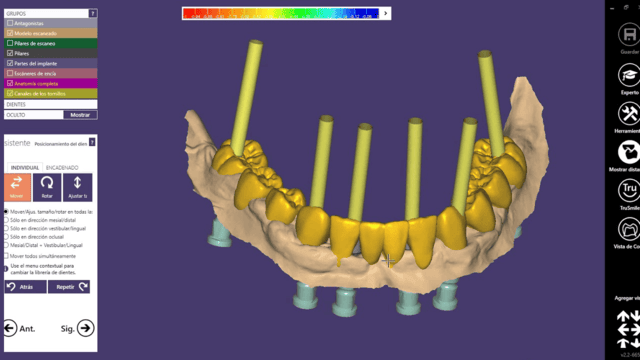
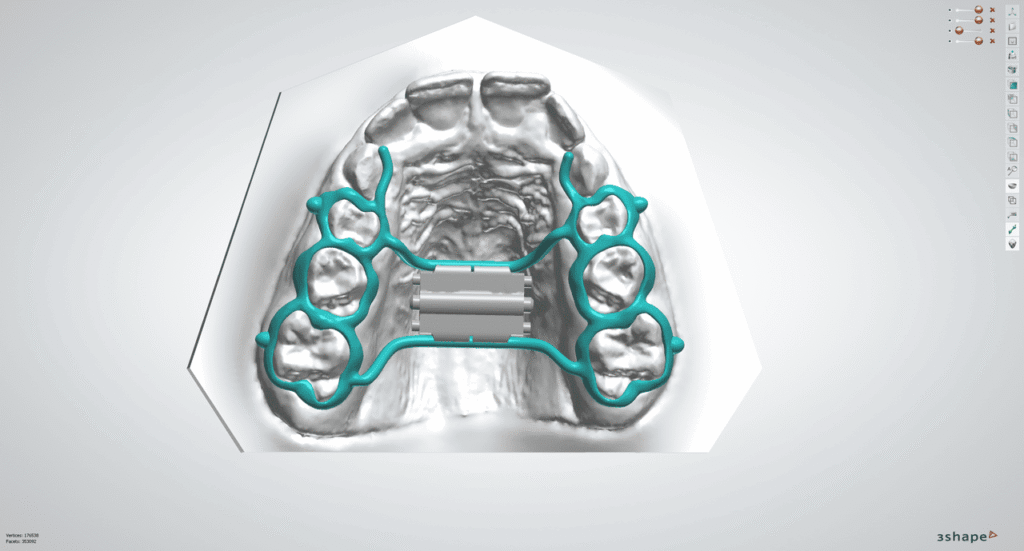
Explore a selection of dental CAD designs, from individual restorations to full-arch work. Click any image to view the design in detail.
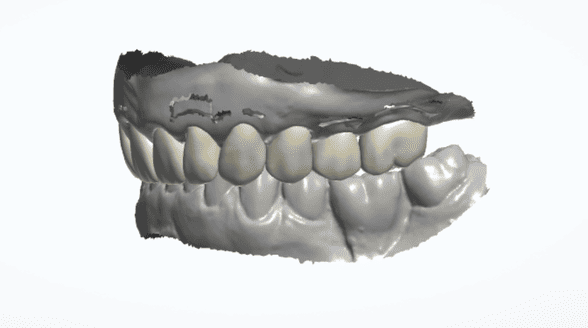
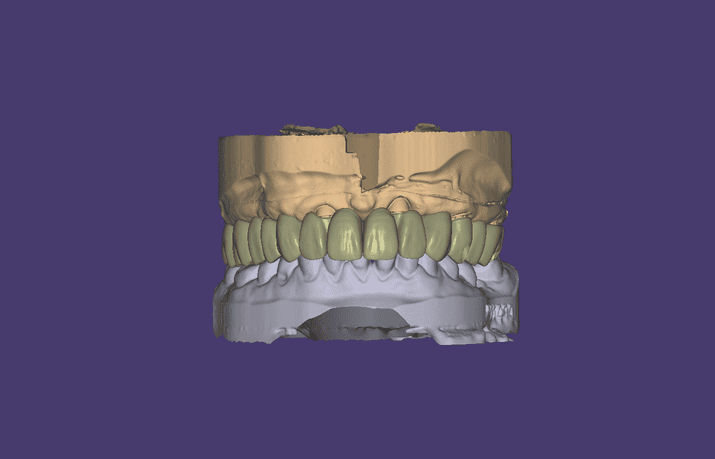
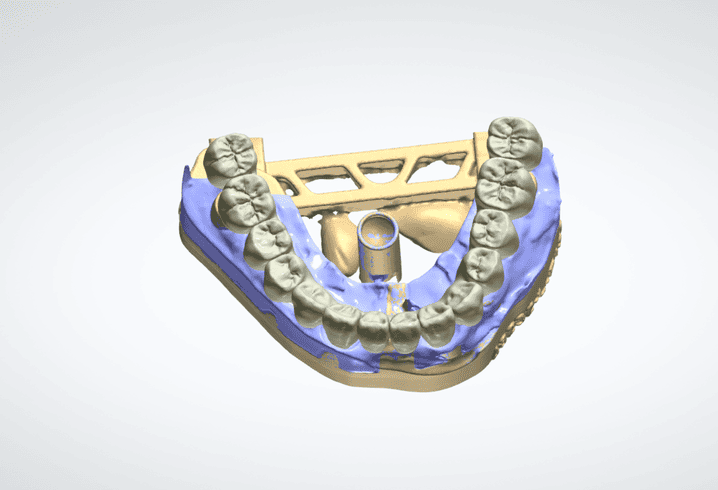
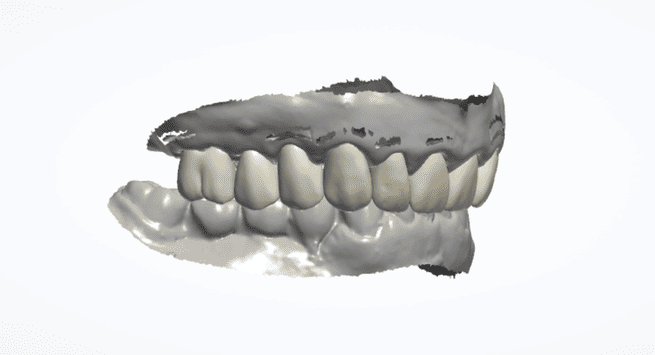
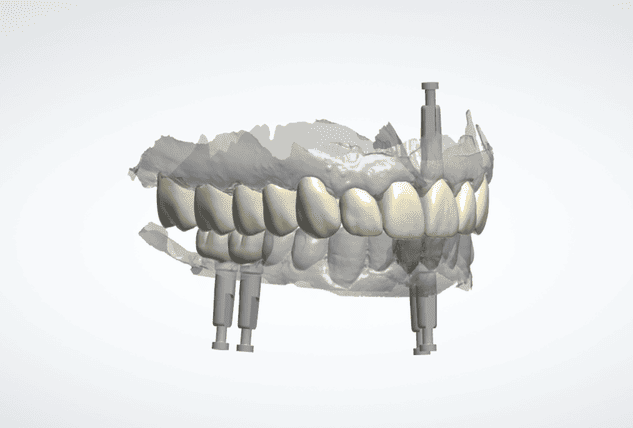
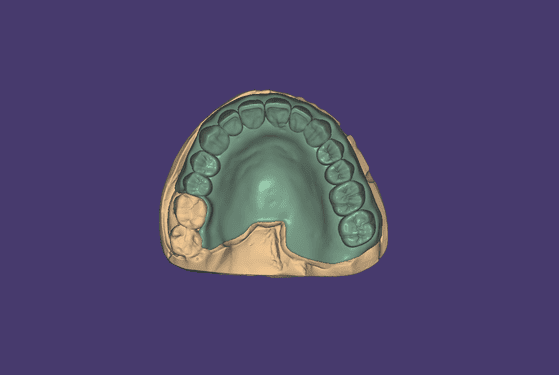
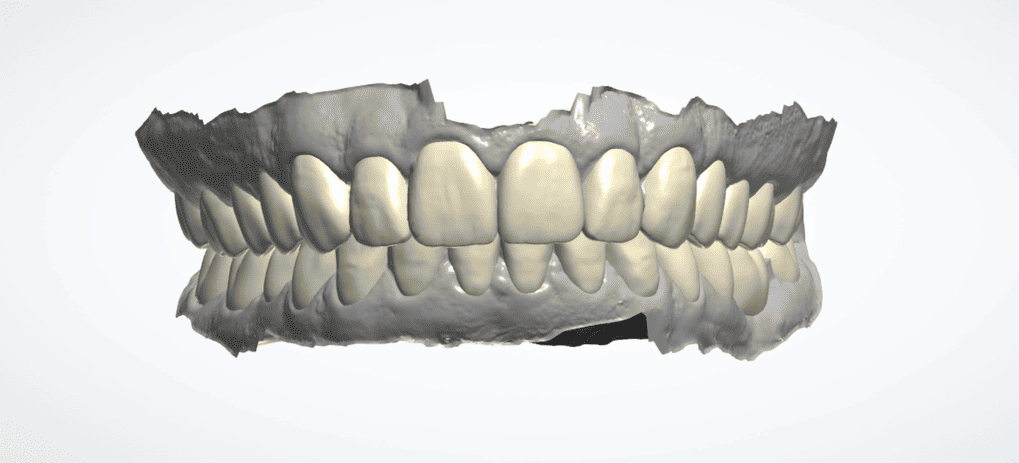
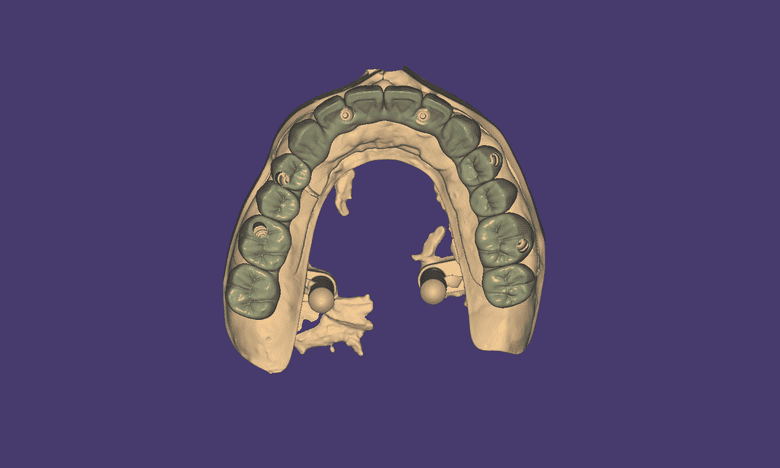
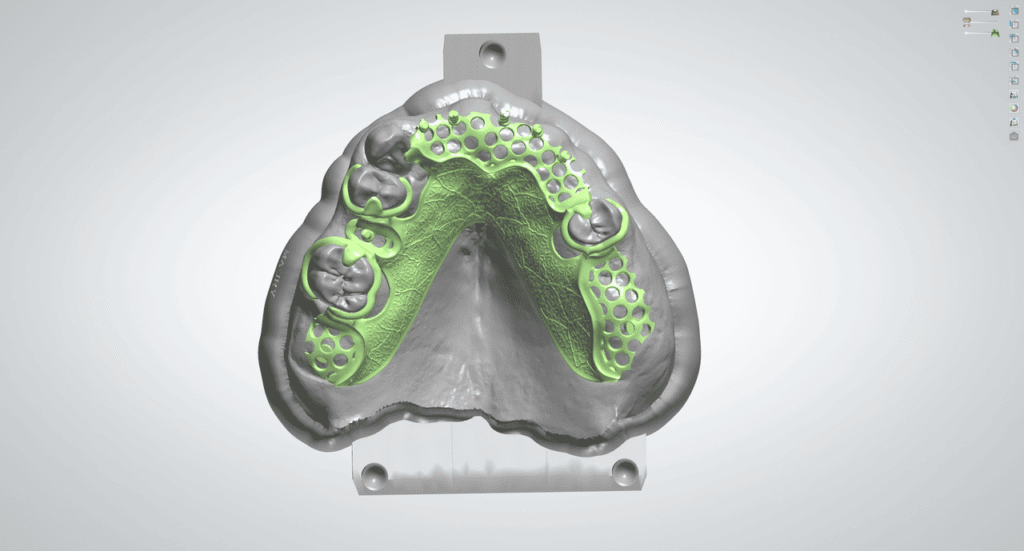
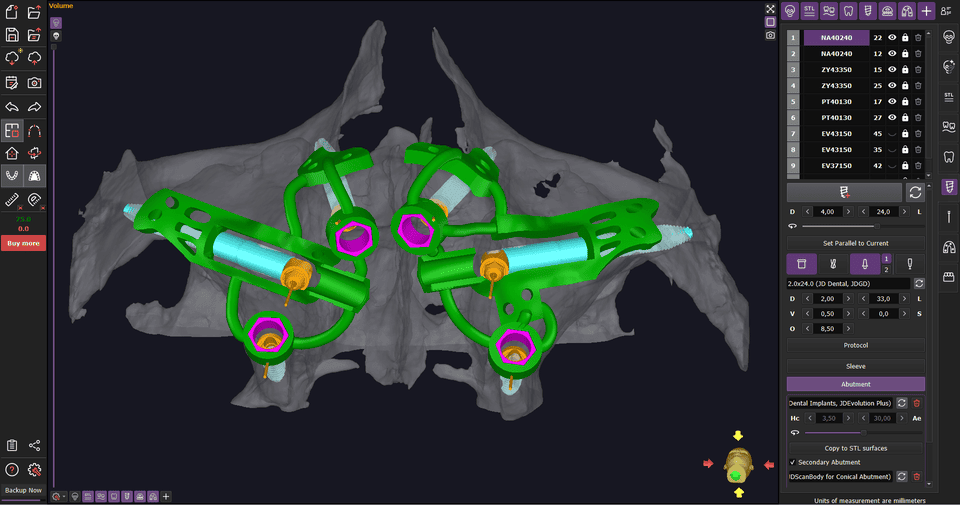
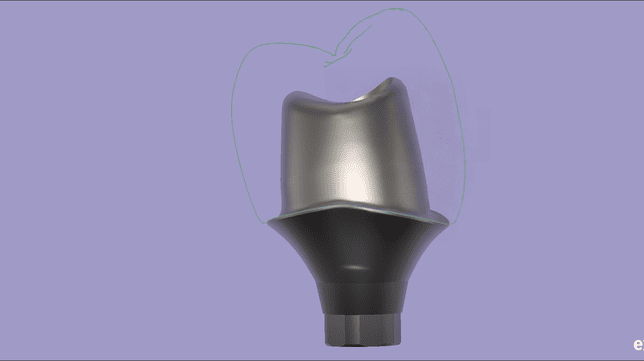
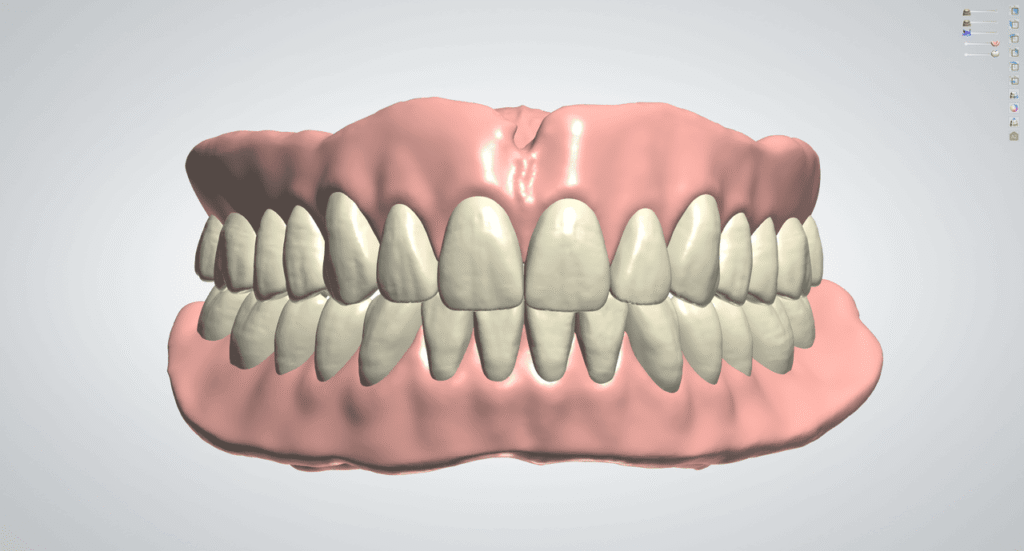
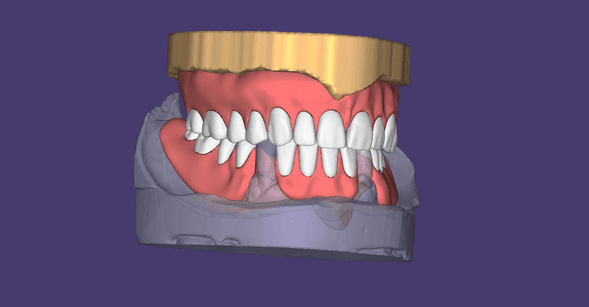
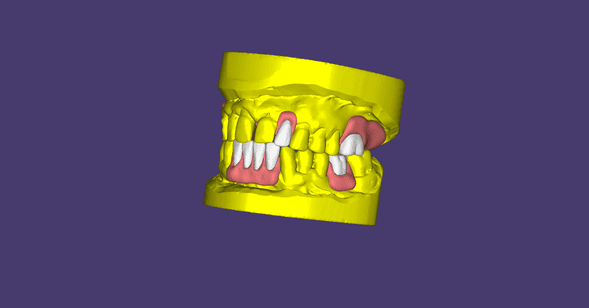
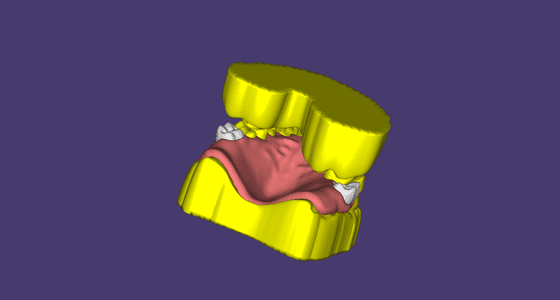
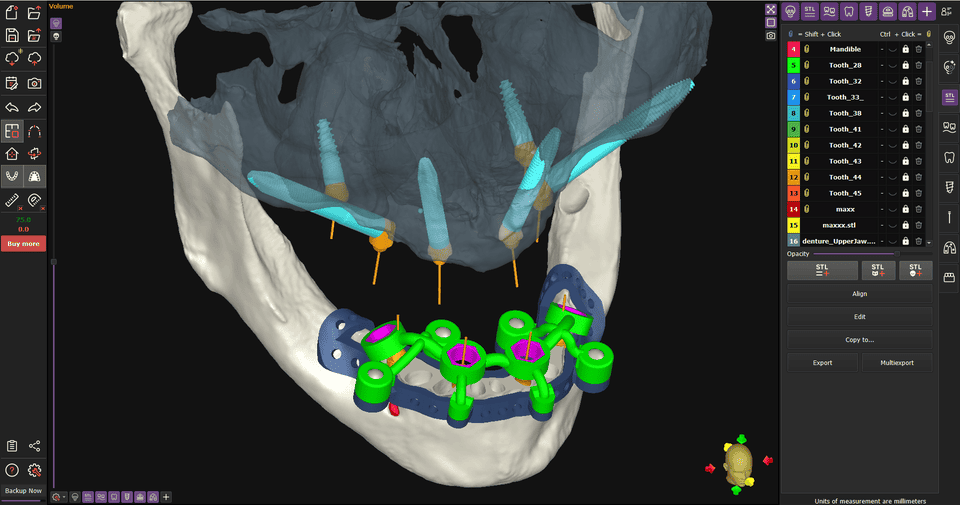
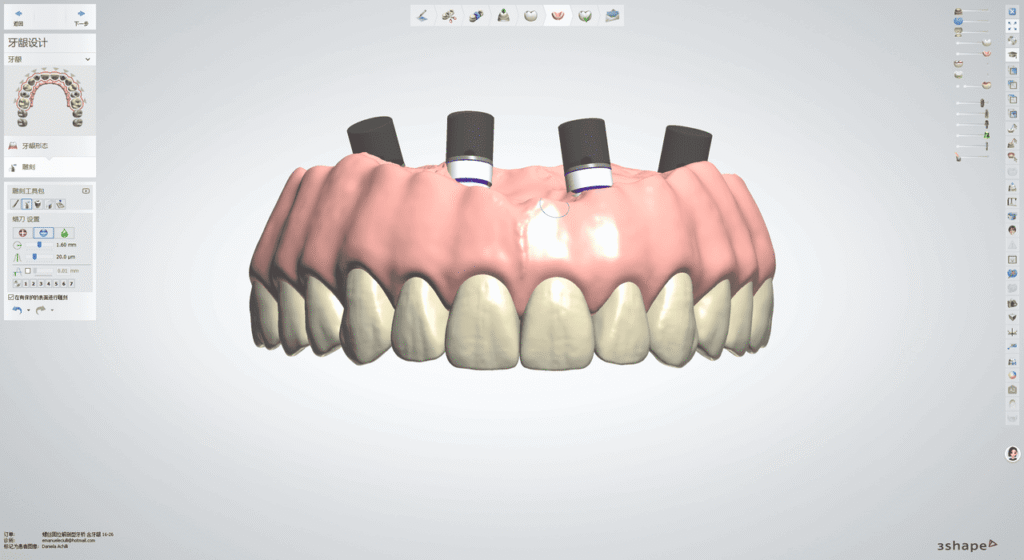
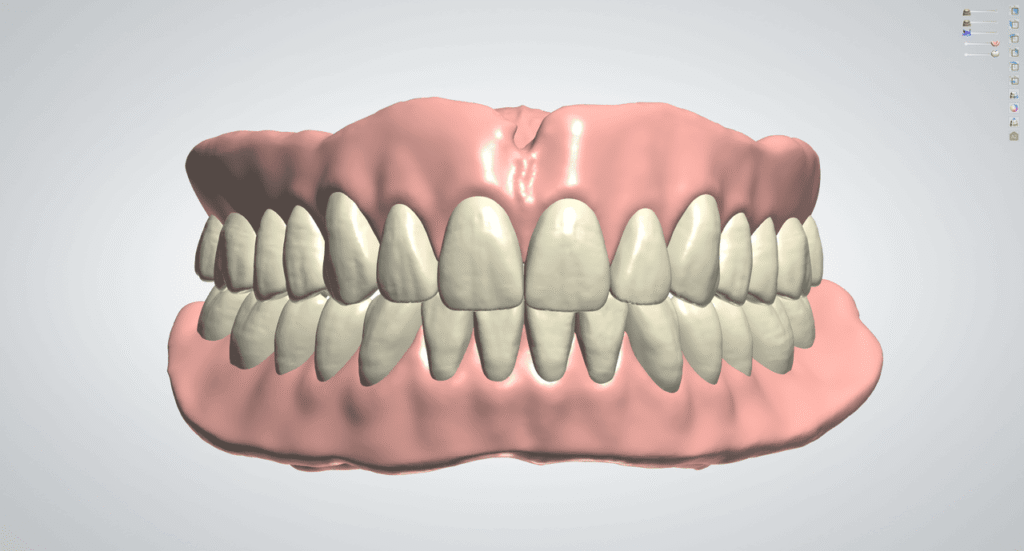
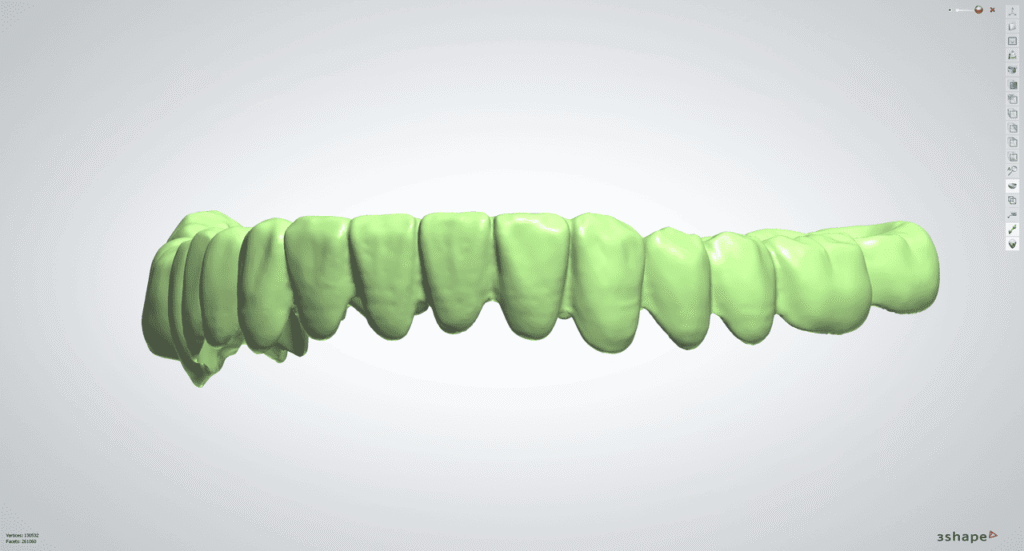
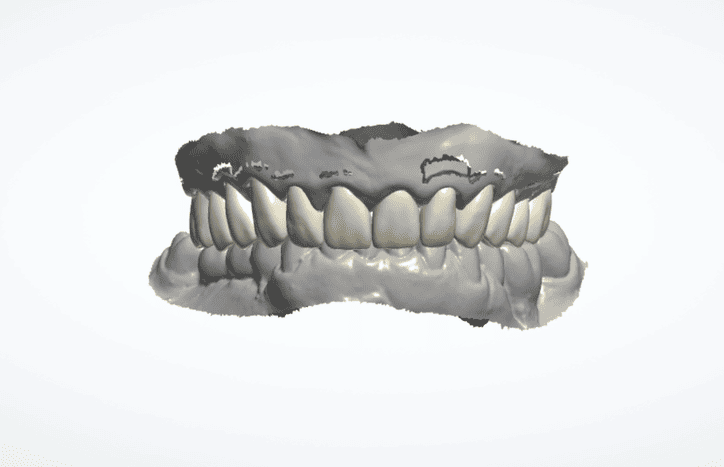
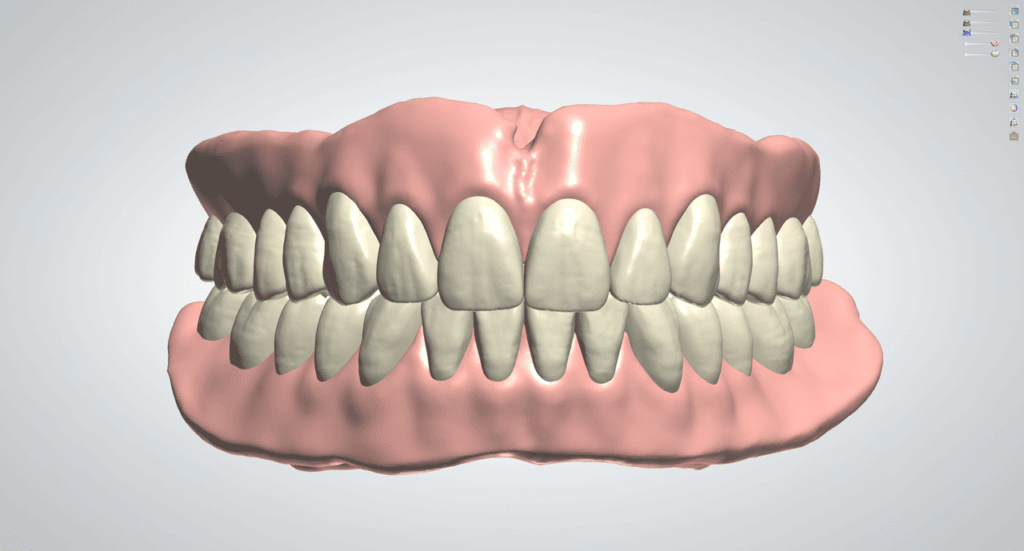
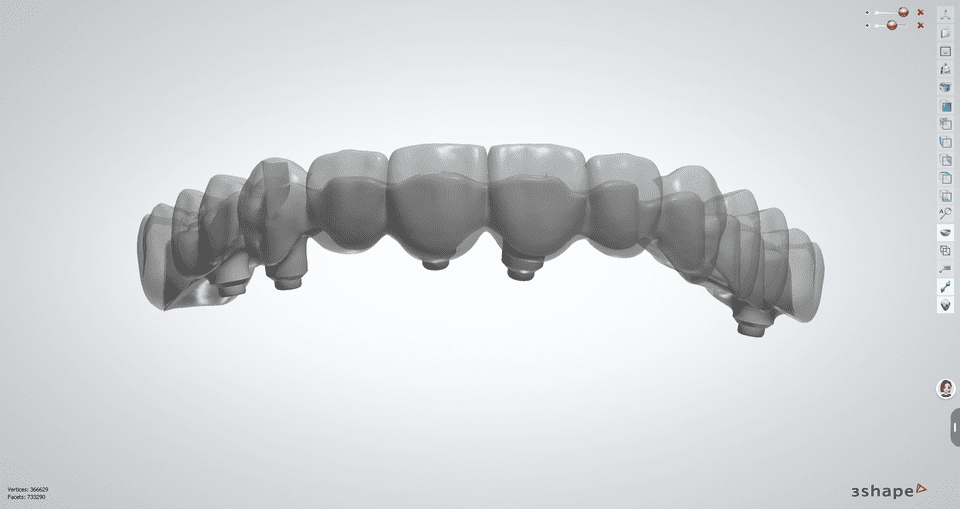
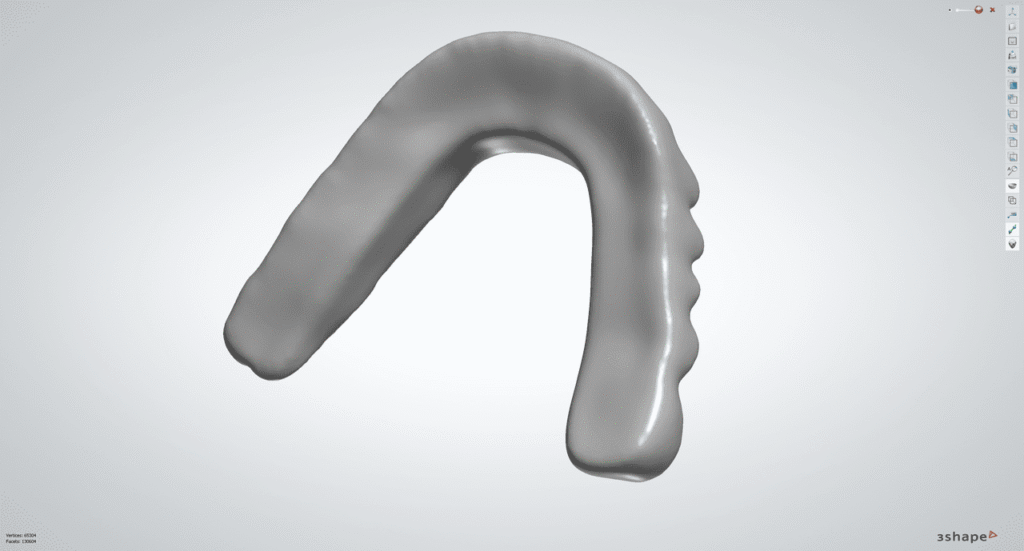
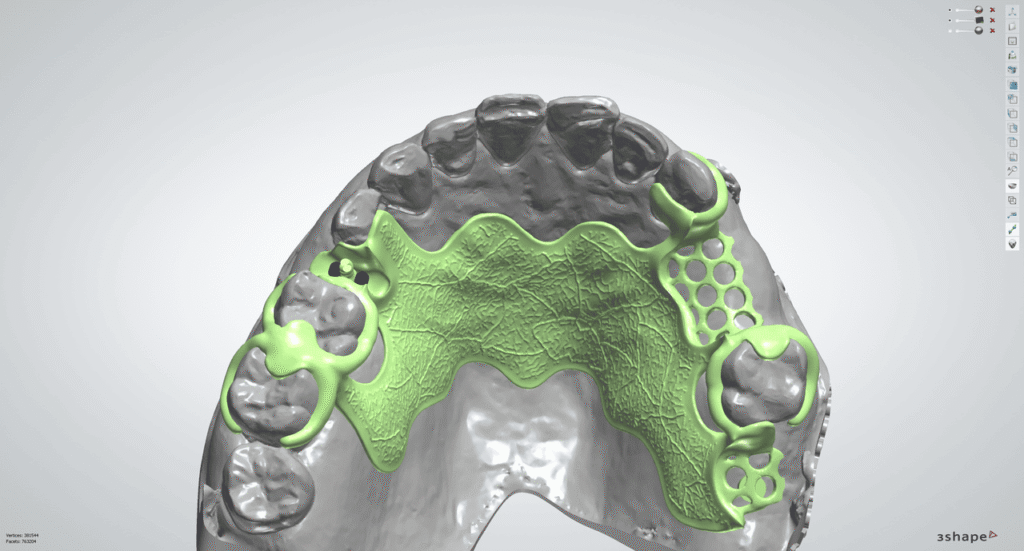
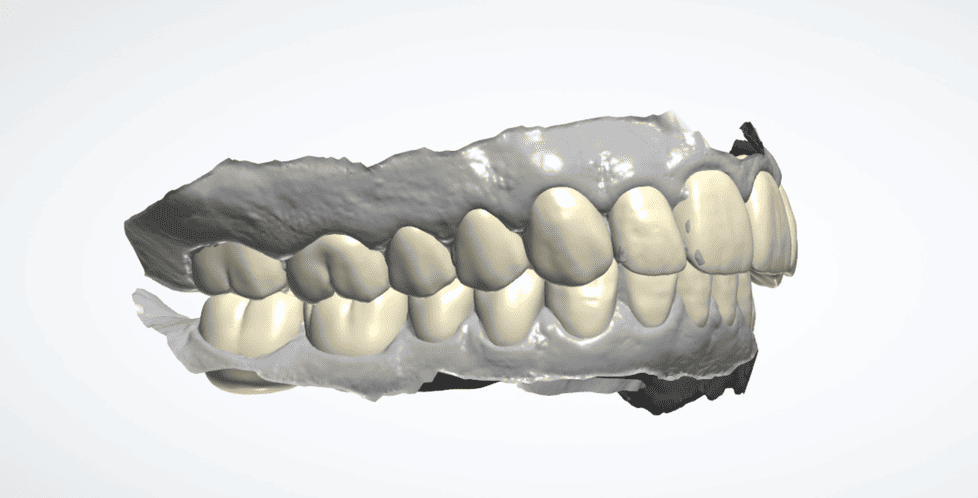
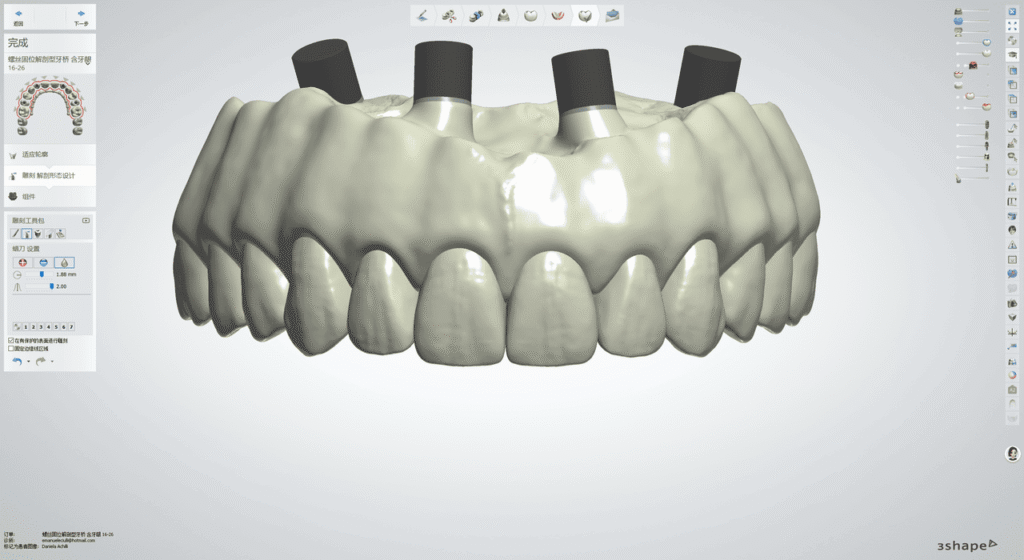
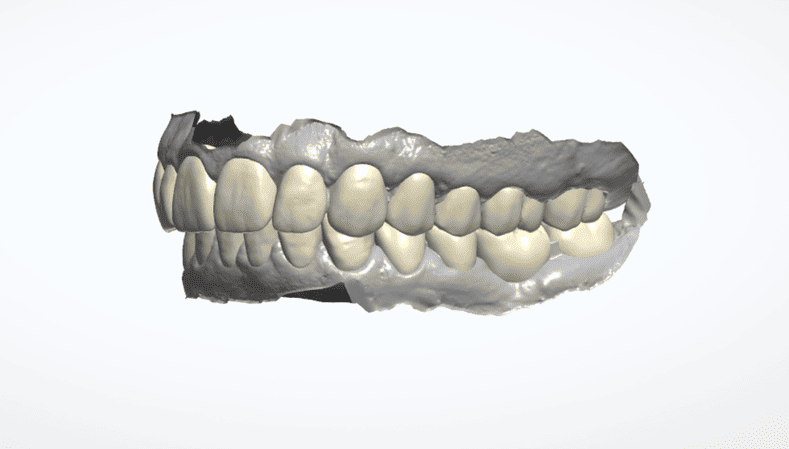
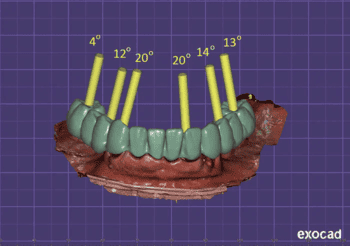
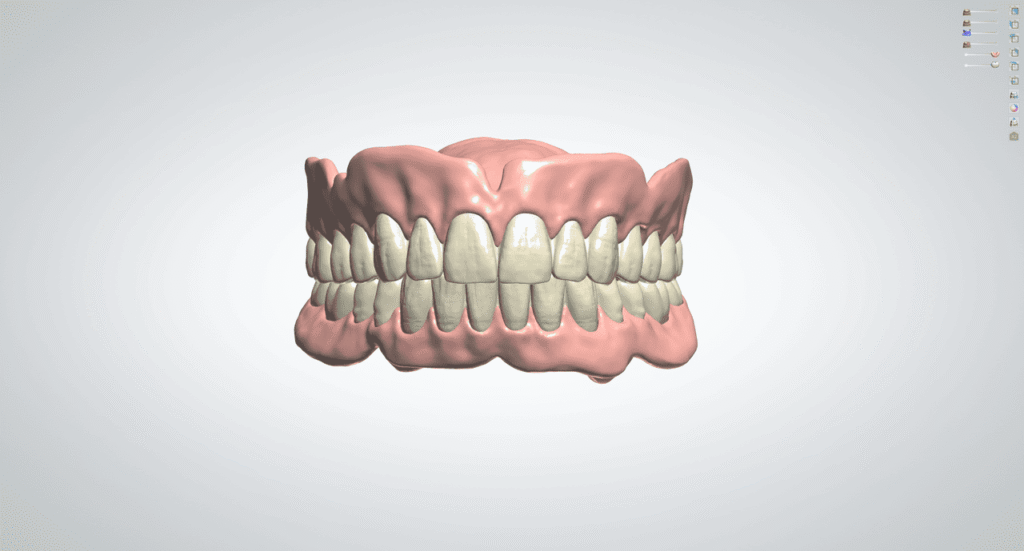
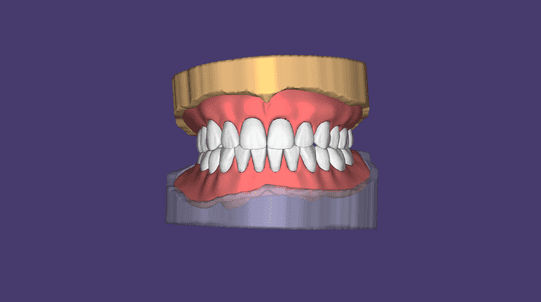
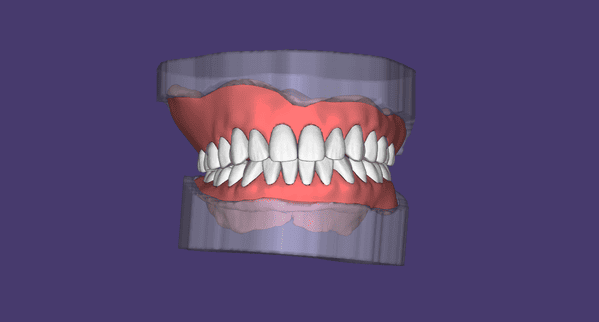
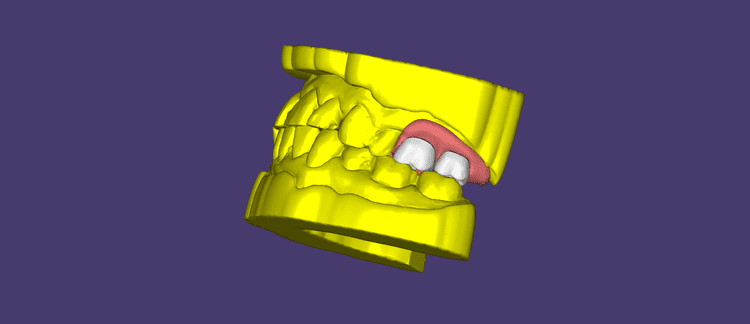
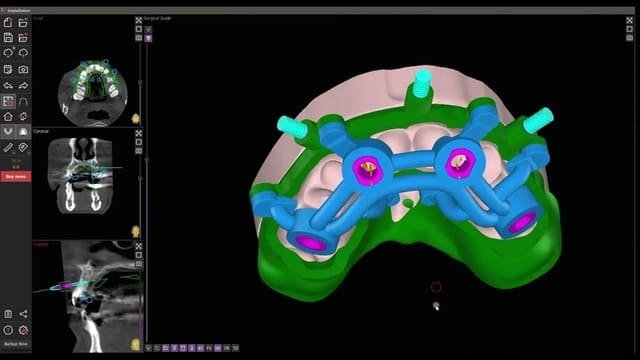
Add immediate denture CAD capacity without building a separate in-house design team. Support complete and partial cases while keeping clinical planning, design approval, and fabrication under your control.
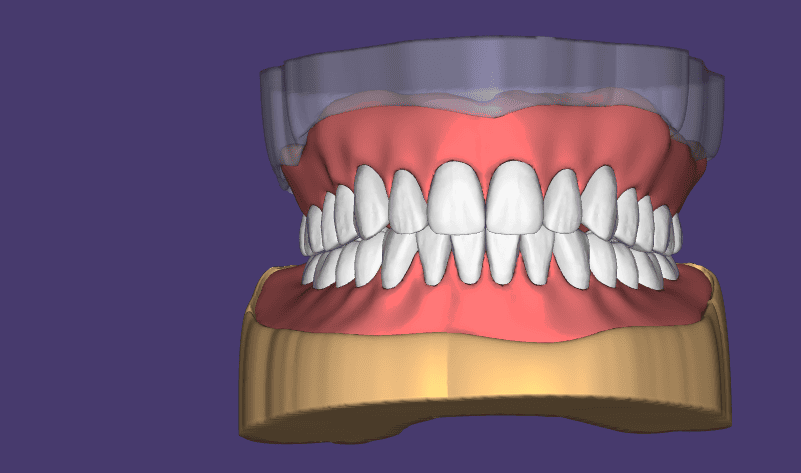
Outsource the CAD work behind immediate complete and partial dentures, from virtual tooth removal to replacement tooth setup and denture base design, while keeping clinical decisions and production within your own workflow.
Extend your outsourced design scope to immediate complete and partial dentures without building a separate in-house design workflow for these cases.
Your clinical team defines the extraction plan and approves the design. Raytops handles the agreed CAD work, while fabrication and clinical treatment remain within your established workflow.
Virtual tooth removal, replacement tooth setup, and denture base design can be coordinated within one outsourced CAD service, reducing the need to split these design tasks across separate providers.
Use exocad or 3Shape design support, with final file structure coordinated around your laboratory’s existing fabrication requirements.
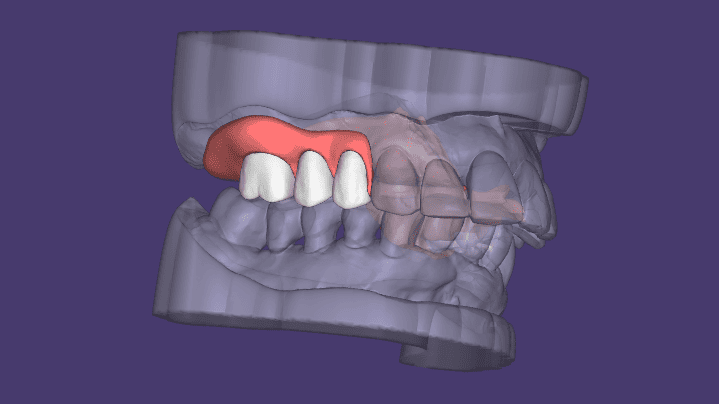
From pre-extraction records to final CAD delivery, each case follows a coordinated review and design process. Raytops supports exocad and 3Shape workflows, with design files prepared according to your approved clinical instructions and fabrication requirements.
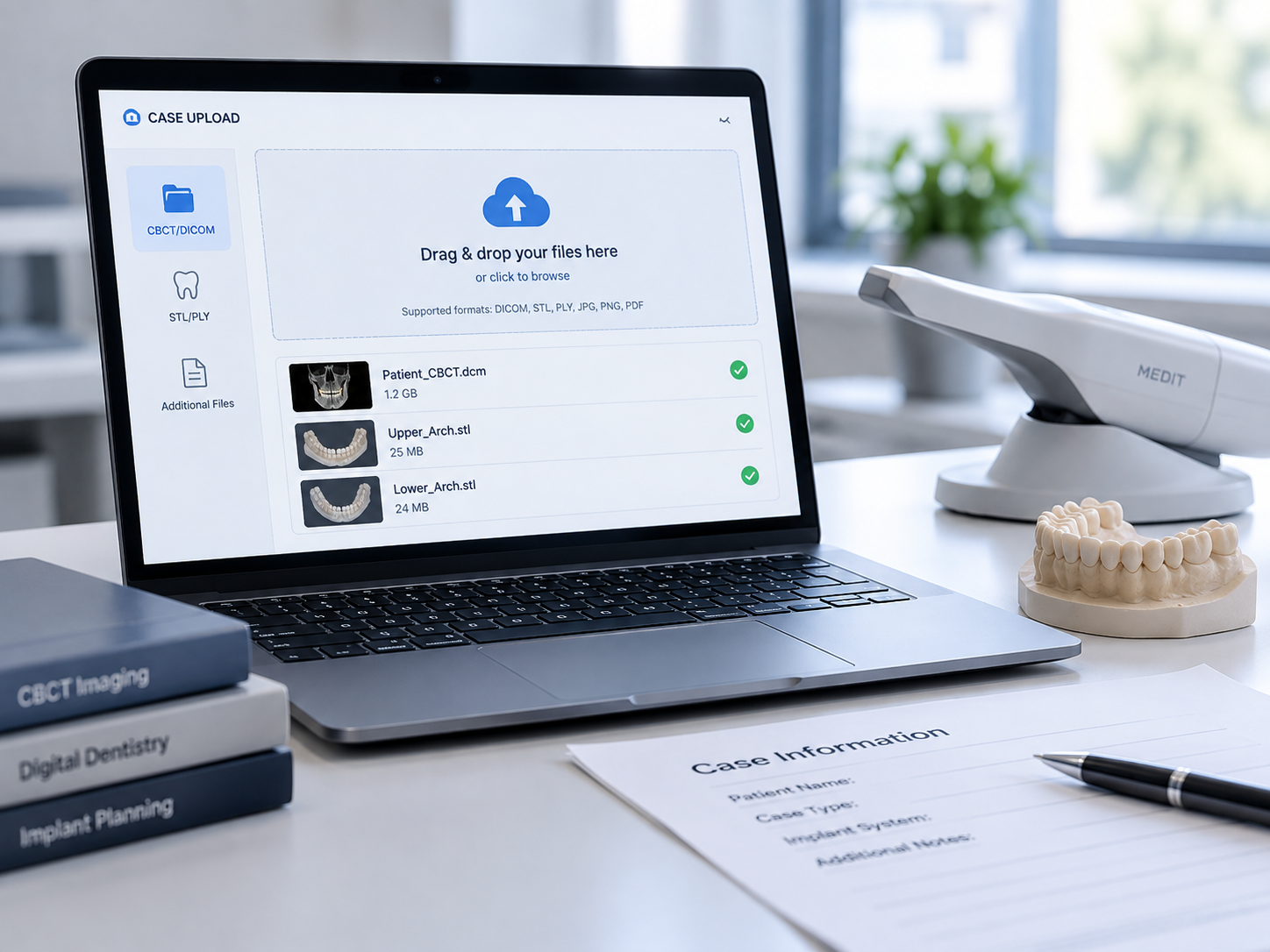
Explore practical answers about digital immediate denture design, pre-extraction records, virtual tooth removal, complete and partial dentures, and fabrication methods.
Not always. Intraoral scans can capture the existing teeth and accessible oral structures, but may not fully record movable soft tissues or functional borders. Reliable design may also require opposing arch scans, bite records, the extraction plan, and additional impressions when the clinical situation requires them. The appropriate records depend on the patient’s anatomy and the intended denture design.
Virtual tooth removal digitally removes the teeth designated for extraction from the pre-extraction model. The resulting spaces are reconstructed to create a predicted post-extraction model for denture base design and tooth arrangement. If alveoloplasty is planned, the digital model must also reflect the approved surgical plan. This remains a prediction, not a record of the actual post-extraction tissues.
An immediate complete denture replaces the remaining dentition across an arch following planned extractions. An immediate partial denture replaces only designated teeth while preserving the natural teeth that will remain. Partial denture design therefore requires particular attention to retained tooth morphology, adjacent tooth relationships, occlusion, and the appropriate base and retention design.
Both fabrication methods can be used for digital immediate dentures, depending on the material, design configuration, and laboratory equipment. Some workflows use separately fabricated teeth and denture bases, while others use different integrated or hybrid approaches. The CAD design and file structure should be planned around the selected material and fabrication system.
No. A digital preview allows the clinical team to review tooth arrangement, midline, incisal edge position, and esthetic references before extraction. However, it cannot fully verify post-extraction tissue adaptation or actual clinical fit. These can only be assessed after insertion, and chairside adjustment may still be necessary.
Successful immediate denture CAD design outsourcing depends on more than digital design capability. It requires a partner who understands the differences between immediate complete and immediate partial dentures, can accurately translate approved clinical instructions into digital designs, and delivers files that meet the receiving laboratory’s fabrication requirements.
Clear expectations must be established before design begins. Pre-extraction digital records provide the foundation for the design, the approved clinical plan determines the intended treatment changes, and the manufacturing requirements define the necessary deliverables. Both parties must also recognize that a predicted post-extraction model cannot guarantee the actual tissue anatomy or final clinical fit. These factors determine whether an outsourcing arrangement can deliver reliable results within the intended clinical and fabrication workflow.
Immediate denture experience should be assessed against the specific case types you intend to outsource. Immediate complete and immediate partial dentures are both designed before planned extractions, but the teeth being removed, teeth remaining, design references, and denture base requirements are different. Experience in one category does not automatically demonstrate capability in the other.
The fundamental difference is whether all remaining teeth in an arch are scheduled for extraction or only selected teeth are being replaced while other natural teeth remain.
| Design consideration | Immediate Complete Denture | Immediate Partial Denture |
|---|---|---|
| Planned extractions | Replacement of the remaining dentition following planned full-arch extractions | Replacement of designated teeth while other natural teeth remain |
| Primary design references | Pre-extraction arch records, opposing dentition, bite records, and approved tooth setup | Pre-extraction records, retained natural teeth, adjacent tooth morphology, and existing occlusion |
| Tooth arrangement | Full-arch tooth arrangement based on the intended esthetic and occlusal outcome | Replacement teeth positioned in relation to the retained dentition and opposing arch |
| Denture base | Full-arch base designed around the anticipated supporting anatomy and planned extension | Base designed around the extraction sites and retained teeth, according to the case requirements |
| Retention considerations | Primarily related to tissue support, denture base extension, and anticipated ridge form | May involve support from retained teeth and tissues, with case-specific retentive features |
These differences affect which structures the designer must remove, preserve, and use as references. An immediate partial denture cannot simply be treated as a shortened complete denture because the remaining natural teeth continue to influence tooth position, base design, occlusion, and retention.
For example, consider an immediate partial denture case in which one maxillary central incisor is scheduled for extraction while the adjacent natural teeth remain. The replacement tooth must be designed in relation to the retained dentition and opposing arch. The contralateral central incisor can provide a useful morphology reference, but the replacement still needs to be positioned according to the existing dental relationships and approved clinical instructions.
A published clinical case illustrates this approach, including the use of the contralateral tooth as a design reference and separate design of the artificial tooth and denture base for the selected fabrication method.
Raytops provides CAD design support for both Immediate Complete Dentures and Immediate Partial Dentures, using exocad and 3Shape.
Depending on the approved clinical plan and agreed deliverables, the design scope can include:
The design scope is determined by the actual case requirements rather than applying one standard workflow to every immediate denture.
A general claim of digital denture experience is not enough to establish experience with immediate dentures. The portfolio should demonstrate the specific case types and design requirements the laboratory intends to outsource.
When reviewing comparable cases, look for:
A full-arch rendering alone does not demonstrate experience with immediate partial dentures. Likewise, a partial denture example does not establish the ability to handle full-arch immediate denture cases.
The most relevant portfolio is one that demonstrates experience with the same case categories and design requirements found in your regular workload.
Clinical reference: Virard et al. – Manufacturing of an Immediate Removable Partial Denture
A pre-extraction STL file alone does not establish that an immediate denture case is ready for CAD design. The design team needs sufficient information to understand the existing dentition, the relationship between the arches, the planned extractions, and the intended denture design.
The required records vary depending on the case. The objective is not to collect every possible scan or clinical record, but to ensure that all information affecting the design is reliable, complete, and clearly communicated.
The following records provide the main references for immediate denture CAD design:
| Required record | What it establishes | Importance |
|---|---|---|
| Pre-extraction scan of the arch to be restored | Existing teeth, alveolar ridge, and accessible tissue surfaces before extraction | Essential |
| Opposing arch scan | The opposing dentition and its relationship with the arch being restored | Required when relevant to the design |
| Bite / jaw relation records | The intended maxillomandibular relationship and occlusal references | Essential for establishing reliable occlusion |
| Extraction plan and tooth numbers | Which teeth will be removed and which natural teeth must remain | Essential |
| Planned alveoloplasty / ridge modification instructions | Whether the anticipated ridge form requires specific surgical modification | Required when applicable |
| Facial and smile photographs | Facial context, midline, tooth proportions, incisal display, and esthetic references | Case-dependent |
| Tooth setup, shade, and esthetic instructions | Intended tooth arrangement, appearance, and design preferences | Required according to the design objectives |
| Existing denture or approved reference setup | Previously established tooth arrangements, occlusal references, or esthetic preferences | Optional, when available |
| Denture type, tooth arrangement, and retention instructions | The intended design scope and specific requirements for the immediate complete or partial denture | Essential |
These records serve different purposes and should not be treated as interchangeable.
The pre-extraction scan establishes the existing anatomical condition. The opposing arch and bite records provide the references needed to assess tooth relationships and occlusion. Without a reliable jaw relationship, the design team cannot determine the intended occlusion from STL geometry alone.
Esthetic references are particularly important when replacing anterior teeth. The original tooth arrangement can provide a useful starting point, but it does not necessarily represent the intended final result. If the clinical objective involves changes to the midline, tooth length, proportions, or arrangement, these preferences should be communicated rather than assumed.
For example, facial and smile photographs can help clarify the intended anterior appearance, while an existing denture or previously approved setup can provide a reference when the intention is to preserve an established arrangement.
The importance of combining these records is also demonstrated in published digital immediate denture workflows, which use pre-existing dentition, occlusal records, and smile references as complementary design inputs.
An intraoral scan can capture existing teeth and accessible anatomical surfaces, but it does not necessarily record every movable soft-tissue area or functional border required for a denture.
This distinction matters because a digitally complete model is not automatically a functionally complete impression.
Particular attention may be needed around anatomical areas such as the maxillary tuberosities, vestibules, muscle attachments, and mandibular retromolar pads. These structures can influence denture base extension and functional tissue adaptation.
A 2025 clinical report on a hybrid digital-functional technique provides a practical example of how this limitation can be addressed. The workflow uses a custom tray with openings around the remaining teeth to perform functional border molding and obtain a final impression. The resulting record is then digitized and combined with the pre-extraction scan.
This demonstrates that digital scanning and conventional impression techniques can complement each other when additional functional tissue information is required.
However, a custom tray, CBCT, or facial scan should not automatically be required for every immediate denture case. The appropriate records depend on the patient’s anatomy, clinical plan, available occlusal references, and specific design requirements.
The practical approach is:
Missing anatomical or functional information should be resolved through appropriate clinical records rather than assumptions or arbitrary modifications to the digital model.
The extraction plan is one of the most important clinical instructions in an immediate denture case. The design team must know exactly which teeth are scheduled for removal and which natural teeth must remain.
For immediate partial dentures, this distinction is particularly important because the retained natural teeth continue to influence tooth arrangement, denture base design, and retention.
The same applies to planned alveoloplasty or other ridge modifications. If the clinical plan includes changing the anticipated ridge form, the intended modification must be clearly communicated before the corresponding digital design is finalized.
These decisions belong to the clinical treatment plan, not to the external CAD designer.
Not every missing detail needs to stop all preliminary design work. The important distinction is whether the missing information affects the fundamental design or only concerns preferences that can be confirmed later.
| Missing information | Recommended handling |
|---|---|
| Unconfirmed extraction teeth or unclear tooth numbers | Obtain clinical confirmation before finalizing the affected design |
| Unclear retained teeth in an immediate partial case | Confirm which natural teeth must remain before proceeding with the affected design |
| Unreliable bite / jaw relationship | Request reliable records or a clinically approved alternative before finalizing occlusal decisions |
| Unconfirmed alveoloplasty or ridge modification | Confirm whether modification is planned and establish the intended clinical target before modifying the digital ridge |
| Missing functional tissue information | Determine whether additional functional records are required before finalizing the affected denture base design |
| Tooth shade or adjustable esthetic preferences | A preliminary design may proceed, with finalization subject to approval |
| Missing existing denture or reference setup | Proceed using the available clinical records and instructions without assuming an unprovided reference |
The distinction is important: an outstanding esthetic preference may allow preliminary design work, but an unclear extraction plan, unreliable jaw relationship, or unconfirmed ridge modification can invalidate the underlying design assumptions.
If the clinical plan changes after the initial records are submitted, the affected design stages must be reassessed before finalization.
A capable outsourcing partner should identify missing information, explain why it matters, and request clarification before proceeding with the affected design work.
Once the required records and clinical instructions are confirmed, the next step is to translate the planned extractions into a digital model suitable for immediate denture design.
Virtual tooth removal involves more than deleting teeth from a pre-extraction scan. The design must reflect the correct extraction sites, preserve the teeth and anatomical structures that remain, and reconstruct the resulting surfaces according to the approved clinical plan.
The distinction between routine digital reconstruction and planned surgical ridge modification is particularly important. Both can affect the predicted post-extraction model, but they represent different design decisions and must not be treated as interchangeable.
During virtual tooth removal, the teeth identified in the extraction plan are digitally separated and removed from the pre-extraction model. The resulting extraction spaces must then be reconstructed to create a continuous digital surface for denture base design.
This process involves three distinct steps:
Automated reconstruction can provide an initial surface, but it should not be accepted without inspection. The generated contours may require further refinement, particularly where the extraction sites or surrounding anatomy are irregular.
A 2025 technical report published in Dentistry Journal demonstrates this process using digital tooth removal, soft-tissue surface reconstruction, and subsequent ridge contour refinement. It also illustrates how the resulting model can support further denture and surgical guide design.
The most important limitation is that the reconstructed surface represents a predicted post-extraction condition, not the patient’s actual healed anatomy. It cannot fully predict the tissue changes, surgical outcome, or final ridge form following extraction.
For this reason, the predicted model should be treated as a design reference based on the available pre-extraction records and approved instructions, rather than a confirmed representation of the future clinical condition.
Not every immediate denture case requires alveoloplasty. Virtual tooth removal and socket reconstruction do not automatically authorize additional ridge reduction or reshaping.
The CAD team must distinguish between routine reconstruction of the extraction sites and virtual simulation of a separately planned surgical modification.
When alveoloplasty is included in the clinical treatment plan, the intended ridge modification should be reflected in the predicted digital model used for denture base design.
This requires clear instructions regarding:
If no ridge modification is planned, the CAD team should not independently remove additional bone contours or reshape the ridge simply to create a smoother digital surface or simplify denture insertion.
A useful example is the 2025 digital alveoloplasty technique reported by Badr et al. The authors describe a workflow combining virtual tooth removal, digital ridge reconstruction, planned ridge contouring, and the design of a 3D-printed surgical guide with a verification stent.
This demonstrates how a predicted digital ridge can be connected to a planned surgical procedure. However, the specific guide configuration and workflow represent a documented technical approach, not a mandatory requirement for every immediate denture case.
The key distinction is that virtual alveoloplasty represents the intended surgical change in the digital model. It does not independently determine whether surgery is necessary or authorize a particular amount of bone reduction.
The clinical team is responsible for confirming the extraction plan, whether ridge modification is required, and the intended surgical outcome.
The CAD design team is responsible for translating those approved instructions into the predicted digital model and denture design. When the instructions do not establish the required extraction sites or ridge form, the missing information should be clarified rather than independently assumed.
At Raytops Dental Lab, we follow the confirmed clinical extraction and ridge-modification instructions when performing virtual tooth removal, surface reconstruction, and planned virtual alveoloplasty. Our role is to translate the clinical plan into a consistent digital design, not to independently determine which teeth should be extracted or how much bone should be surgically removed.
Before the design is finalized, the following responsibilities should be clear:
If the clinical plan changes, the affected digital model and denture design must be reassessed against the updated instructions.
Clear responsibility prevents an unapproved surgical assumption from becoming part of the final denture design or manufacturing files.
Immediate denture CAD design and surgical guide design are related but separate services.
An immediate denture case may require a surgical guide to assist with planned alveoloplasty, particularly when a specific ridge contour needs to be transferred from digital planning to clinical execution.
However, including virtual alveoloplasty in the denture design does not automatically mean that surgical guide design or fabrication is included in the same service.
Where a guide is required, the scope should clarify:
Raytops Dental Lab also provides surgical guide planning and design as a separate service, with fabrication available when included in the agreed scope. For immediate denture cases requiring a bone-reduction guide, the guide requirements should therefore be confirmed as a distinct part of the case rather than assumed to be included in routine denture CAD design.
The important point is to establish whether the required deliverable is a predicted post-extraction denture model, a surgical guide, or both. Each has a different purpose and should have clearly defined design and delivery requirements.
Clinical reference: Badr et al. (2025) – Digitally-Driven Surgical Guide for Alveoloplasty Prior to Immediate Denture Placement
An immediate denture should not proceed to manufacturing simply because the CAD design has been completed. The proposed design needs to be reviewed against the supplied clinical records, approved treatment plan, and intended esthetic and occlusal outcomes.
Because the denture is designed before extraction, the approval process must focus on the design elements that can be evaluated from the available records and digital preview. It should also establish which design decisions have been accepted and which changes still require confirmation.
A clear approval process helps prevent misunderstandings, repeated revisions, and the use of outdated design files.
A pre-extraction CAD preview allows the clinical team to evaluate the proposed tooth arrangement and esthetic design before the denture is fabricated.
The review should focus on the following details:
For immediate partial dentures, the review should also confirm that replacement teeth maintain the intended relationships with the natural teeth that will remain.
For immediate complete dentures, attention should be given to the overall full-arch arrangement and its relationship to the opposing dentition.
The approval should identify the actual design decisions being accepted. Rather than relying on a general comment that the preview looks satisfactory, the clinical team should confirm important tooth positions, esthetic changes, and occlusal references.
A 2017 clinical study by Hassan et al. demonstrated how facial scanning, bite records, and virtual tooth arrangement can be integrated to support preoperative esthetic evaluation of immediate complete dentures. The study used a virtual patient representation to evaluate the proposed arrangement before fabrication, illustrating the value of combining facial and intraoral references.
At Raytops Dental Lab, we provide design previews for review and can make adjustments based on the supplied instructions and confirmed clinical feedback. This allows the proposed arrangement to be evaluated before the final design is released.
A digital preview can help evaluate the proposed tooth arrangement, esthetic outcome, and design geometry, but it cannot establish the actual tissue adaptation of the denture after extraction.
Approval should therefore be understood as confirmation that the proposed CAD design follows the available records and approved clinical instructions, not as a guarantee of final clinical fit.
The distinction between design approval and actual post-extraction clinical fit is important and is addressed further in the following section.
Not all changes have the same impact on an approved immediate denture design. A routine design revision within the existing clinical plan is different from a change to the underlying treatment plan.
Routine Design Revisions
Routine revisions may include:
When these changes do not invalidate the underlying digital model or clinical plan, the affected design elements can be revised without unnecessarily repeating the entire design process.
The updated preview should be reviewed and approved before the revised design is released.
Clinical Plan Changes
Changes to the planned extraction teeth, retained natural teeth, or ridge-modification instructions may affect the underlying design assumptions.
In these situations, the team should:
If manufacturing has already started at the receiving laboratory, the parties should also identify which version has entered production and determine whether the affected work needs to be paused or replaced.
At Raytops Dental Lab, we distinguish between routine design adjustments and changes that affect the approved clinical plan. This helps ensure that revisions are made against the correct design assumptions rather than treating every change as a simple tooth-position adjustment.
The files released for manufacturing must correspond to the design version that has received final approval.
This becomes particularly important when a case involves multiple previews, design revisions, or changes to the clinical plan.
Before release, the handoff should establish:
If any changes are made after approval, the revised design should be treated as a new version and approved again before manufacturing.
The important point is not simply to send the latest available files, but to ensure that the receiving laboratory uses the exact design version that was reviewed and approved.
This approval and version-control process provides a clear transition from CAD design to the manufacturing compatibility checks discussed in the next section.
Clinical reference: Hassan et al. (2017) – Integrating 3D Facial Scanning in a Digital Workflow to CAD/CAM Design and Fabricate Complete Dentures for Immediate Total Mouth Rehabilitation
A denture design may look correct in the CAD preview and export successfully as an STL file, yet still fail to meet the receiving laboratory’s fabrication requirements.
The key question is not simply whether the supplier can export STL files, but whether the design configuration, tooth library, component structure, materials, and output files are compatible with the laboratory’s actual production workflow.
These requirements should be established before design begins because changing the intended fabrication method may require changes to the CAD design itself, not just a different file export.
Immediate denture designs can be prepared for different fabrication configurations. The required file structure depends on how the denture will be manufactured and assembled.
| Fabrication configuration | Design and file requirements |
|---|---|
| Monoblock / Monolithic Denture | Artificial teeth and denture base form one integrated structure, generally delivered as one STL per arch. |
| Separate Base and Teeth | The denture base and artificial teeth are delivered as separate components. The teeth may be exported as one connected arch or as individual STL files. |
| Milled Base with Prefabricated Teeth | The base requires accurately positioned tooth pockets that correspond to the selected physical tooth system and its assembly requirements. |
These configurations are not interchangeable.
For example, a laboratory using separately printed teeth and a denture base needs the components to fit together according to the selected assembly method. A laboratory requesting individual tooth files has an additional requirement beyond simply receiving a separate base and tooth arch.
Not every laboratory needs each artificial tooth exported independently. Some workflows use a connected tooth arch, while others require individual STL files for positioning, customization, or a specific manufacturing process.
Before design begins, confirm whether the required delivery includes:
The file structure should follow the receiving laboratory’s actual fabrication and assembly requirements, not a supplier’s default export settings.
The selected denture tooth library affects more than tooth morphology and arrangement. It can also determine the available production options and how the artificial teeth can be exported.
Some libraries provide open files for different production routes, while others restrict the available output structure. For example, certain libraries allow teeth to be exported as a connected group but do not support exporting each tooth individually.
This creates a practical problem when a laboratory requires:
The design may look correct in the CAD preview, but the required output may not be available from the selected library.
Both exocad and 3Shape support digital denture design, but compatibility should be evaluated at the level of the actual tooth library and export configuration rather than the software name alone.
At Raytops Dental Lab, we work with both exocad and 3Shape. We confirm the required output structure against the selected design workflow before finalizing the files. Where the agreed workflow requires a separate base and individual tooth STL files, the library’s export capability must be checked to ensure that the requested files can actually be produced.
The most reliable approach is to confirm the selected tooth library, available production options, and required export structure before design begins.
Different manufacturing methods impose different requirements on denture design. A design prepared for one production route may need adjustments before it can be used with another.
The main considerations include:
For example, a separately printed denture base and tooth arch require compatible coupling geometry and an appropriate assembly interface. A milled base designed for prefabricated teeth instead requires pockets that match the physical tooth system.
Material-specific parameters should not be transferred indiscriminately between systems. Base thickness, coupling gaps, and other design settings may vary according to the selected resin, material manufacturer, and fabrication process.
The receiving laboratory should therefore communicate its intended manufacturing method, material system, and relevant CAM requirements before the CAD design is finalized.
STL is a surface geometry format. It can transfer the shape of a designed component, but it does not automatically preserve the editable CAD project, tooth library associations, material settings, or all the information required by a particular CAM workflow.
A file that opens successfully does not necessarily mean it is ready for production.
Before accepting an outsourced immediate denture design, confirm the following:
For Raytops Dental Lab, the objective is to deliver design files according to the agreed manufacturing requirements, rather than treating a successful STL export as the final measure of compatibility.
The most reliable verification is to evaluate the actual design files against the receiving laboratory’s software, material, and production setup. A successful export or CAM import is an initial compatibility check; actual fabrication and assembly provide further confirmation.
Technical references:
An immediate denture is designed before extraction, using the available pre-extraction records and a predicted post-extraction model. Even when the digital records are processed correctly, the CAD design follows the approved instructions, and the denture is fabricated accurately, the actual tissue anatomy after extraction may differ from the predicted model.
This distinction is important when evaluating an outsourced CAD design service. The provider should be accountable for the accuracy of the design and delivered files within the agreed scope, but should not guarantee that the denture will require no chairside adjustment after extraction.
Three separate quality checkpoints help establish where accuracy can be assessed and where clinical conditions introduce additional variables.
Three levels of accuracy should be distinguished when evaluating an immediate denture:
| Accuracy level | What it means | How it can be evaluated |
|---|---|---|
| Digital Model Accuracy | Whether the supplied digital records have been correctly captured, aligned, and processed within the agreed workflow | Compare the processed model with the original scan data and supplied clinical records |
| CAD Design Accuracy | Whether the denture design correctly follows the digital model, approved clinical instructions, and agreed design requirements | Review tooth arrangement, denture base geometry, extraction-site reconstruction, and approved design details |
| Fabrication Accuracy | Whether the fabricated denture accurately reproduces the approved CAD design | Compare the finished prosthesis with the approved design and specified manufacturing requirements |
These checkpoints are related, but they evaluate different stages of the workflow.
For an outsourced CAD design service, the provider is primarily responsible for correctly interpreting and processing the supplied records within the agreed scope, following the approved clinical plan, and delivering the required design files.
When fabrication is performed independently by the receiving laboratory, fabrication accuracy also depends on its equipment, materials, CAM settings, and production procedures.
Even when all three checkpoints are satisfactory, actual clinical fit remains a separate consideration. The supporting tissue anatomy is not fully established until the planned extractions and any associated surgical procedures have been performed.
An immediate denture is prepared before extraction, but its final adaptation depends on the actual anatomical conditions following tooth removal and surgery.
Several factors can create differences between the predicted digital model and the clinical situation:
These differences may make chairside adjustment or relining necessary, even when the original CAD design and fabrication are accurate.
For example, a 2025 clinical report on a digital hybrid immediate denture workflow documented an initially acceptable denture fit, followed by reduced retention, stability, and support at a three-week follow-up. A chairside soft reline was performed, with a hard reline planned after healing.
This illustrates why immediate denture adaptation should be assessed over the clinical course rather than judged solely by the initial digital design or insertion.
Not every immediate denture requires the same degree of adjustment. The need depends on the extraction procedure, actual tissue condition, surgical modifications, and subsequent healing.
For laboratories evaluating an outsourcing partner, the important distinction is whether the provider can identify a genuine CAD design problem separately from an adjustment required by the actual surgical outcome.
For Raytops Dental Lab, the CAD design responsibility is to deliver a design that accurately reflects the supplied records and approved clinical instructions within the agreed scope. Adjustments arising from anatomical changes after extraction are a separate clinical matter and should not automatically be classified as design errors.
One advantage of digital immediate denture design is that the approved tooth arrangement and digital design information can be retained for subsequent treatment stages.
These records may provide useful references when preparing a relined denture or transitioning to a definitive complete denture.
However, reusing the original digital design does not mean that the pre-extraction tissue model can be reused unchanged. The supporting anatomy may have changed following extraction and subsequent healing, so updated clinical records are needed to establish the tissue conditions for the next design stage.
The distinction is:
A 2016 clinical report by Neumeier and Neumeier described how digital immediate denture records could support subsequent relining and definitive denture fabrication. The definitive denture could be developed using a reline impression and a new centric relation record while retaining the existing digital immediate denture design as a reference.
A 2020 clinical technique further demonstrated the transition from a CAD-CAM immediate denture to a definitive complete denture by reproducing the approved tooth arrangement and cameo surface.
For laboratories handling multiple treatment stages, retaining organized digital case records can therefore make subsequent design work more efficient. The original design provides continuity, while updated clinical records establish the anatomy required for the next stage.
The value of digital immediate denture design extends beyond the initial prosthesis, provided that the original design information and the patient’s changing clinical conditions are treated as separate but complementary references.
A supplier may offer suitable CAD design capabilities and meet your technical requirements, but the commercial arrangement determines whether the service can fit into your laboratory’s daily operations.
Before committing to an outsourcing partner, clarify the practical terms of cooperation, including turnaround times, revision charges, design capacity, data management, pricing, payment conditions, and communication responsibilities.
The objective is to understand the full operating cost and service commitment rather than choosing a partner based on the lowest initial quote.
Turnaround time should reflect the actual design requirements rather than relying on one standard promise for every immediate denture case.
When comparing suppliers, distinguish between:
The start point of the turnaround period should also be clearly defined. Does the clock begin when the files are first received, or only after all required records and clinical instructions have been confirmed?
Other practical details include:
For recurring outsourcing, predictable turnaround times are often more valuable than an aggressive delivery promise that cannot be maintained across different case complexities.
At Raytops Dental Lab, turnaround arrangements should be agreed according to the actual immediate denture design scope and the completeness of the submitted case records, so that both parties have clear expectations before work begins.
The commercial revision policy should define which changes are included in the quoted design fee and which requests constitute additional work.
Although the technical handling of revisions is covered in the design approval process, the commercial terms should make the cost implications clear.
| Revision category | Typical examples | Commercial terms to clarify |
|---|---|---|
| Design Corrections | Corrections where the delivered design does not follow the original instructions | Whether corrections are included without additional charges |
| Preference Adjustments | Changes to tooth position, shape, or proportions within the agreed design scope | Number of included revision rounds |
| Clinical Plan Changes | Changes to extraction teeth, retained teeth, or the approved ridge-modification plan | Whether affected design work is quoted separately |
| Additional Scope | New components, additional deliverables, or work beyond the original agreement | How additional fees are calculated and approved |
The distinction matters because not every revision represents a design error, and not every additional request should be treated as a correction.
A clear policy should establish what is included in the original fee, when additional charges apply, and whether approval of the additional cost is required before work continues.
Without this clarification, even a competitive initial quote can result in unpredictable costs during ongoing case handling.
For regular outsourcing, the supplier’s ability to maintain consistent service becomes as important as the quality of individual designs.
Consider how the partner manages:
Designer continuity can reduce repeated explanations and unnecessary revisions because the team becomes familiar with the laboratory’s working preferences.
However, a sustainable outsourcing arrangement should not depend entirely on one individual. Consistent internal procedures and backup capacity are also important for maintaining service when workloads change or personnel are unavailable.
For a laboratory planning to increase its immediate denture outsourcing volume, it is worth clarifying the supplier’s available capacity and how additional resources would be arranged before making a larger commitment.
Immediate denture cases involve patient records, clinical instructions, original scans, design previews, and final CAD files. These materials need to remain organized and accessible throughout the cooperation.
Before starting, clarify the following:
These arrangements become particularly important when multiple cases are handled simultaneously or when an immediate denture design needs to be revisited for relining or a later definitive denture.
The supplier should be able to explain its actual data-handling and file-management arrangements, including any applicable confidentiality and access restrictions, rather than relying only on a general statement that it supports digital workflows.
For Raytops Dental Lab, clear case identification and organized design-file delivery are important parts of maintaining continuity across initial design, revisions, and subsequent treatment stages.
The quoted design fee is only one part of the commercial arrangement. The complete pricing structure and operating conditions should be understood before regular case submission begins.
| Commercial factor | What should be clarified |
|---|---|
| Pricing Structure | Is pricing calculated per arch, per case, or according to design complexity? |
| Additional Charges | Are Rush services, additional revision rounds, or extra design deliverables charged separately? |
| Minimum Volume | Is there a minimum order quantity or monthly commitment? |
| Payment Terms | What are the payment frequency, accepted methods, and settlement conditions? |
| Contract Terms | Are pricing, service scope, confidentiality, file ownership, and termination conditions clearly defined? |
| Communication Responsibilities | Who handles case submissions, missing information, technical questions, revision requests, and delivery updates? |
For laboratories planning to outsource regularly, payment frequency and minimum volume commitments can directly affect cash flow and operating flexibility.
Communication responsibilities should also be established. Both parties should understand where cases are submitted, how incomplete instructions are clarified, and who coordinates technical feedback and delivery updates.
A commercially suitable partner is not necessarily the supplier with the lowest price. It is the one whose pricing structure, turnaround commitments, revision policy, capacity, and operating arrangements match the laboratory’s actual business requirements.
A supplier’s service descriptions, portfolio, and technical claims cannot fully establish whether an outsourcing partnership will work in practice. A trial case provides an opportunity to evaluate the actual design process, communication, file delivery, and compatibility with your laboratory’s workflow.
The most useful trial is not necessarily the easiest case. It should represent the type of immediate denture cases you expect to outsource and allow you to evaluate the complete process, from case submission to final CAD delivery.
When evaluating Raytops Dental Lab, the trial should demonstrate not only whether the design meets the agreed requirements, but also whether the entire working process fits your laboratory’s existing operations.
An effective trial should reflect your expected business requirements rather than simply demonstrate that a supplier can complete a straightforward case.
Immediate complete dentures and immediate partial dentures have different design considerations. The selected trial should match the type of cases you intend to outsource.
Consider the following when selecting a trial case:
A case with complete records, a clear extraction plan, and a confirmed fabrication route provides a more meaningful basis for evaluating design performance.
If your expected workload includes both immediate complete and immediate partial dentures, a successful trial in one category should not automatically be treated as proof of capability in the other. Each category should be evaluated against its own design requirements.
The final denture design is only one part of the evaluation. The trial should allow you to assess how the supplier handles each stage of the outsourced workflow.
Pay particular attention to:
This evaluation helps identify problems that may not be visible when reviewing the final design alone.
For example, a visually acceptable design may still create difficulties if the extraction plan was misunderstood, the required STL structure was not delivered, or revision instructions were not followed correctly.
A good outsourcing partner should demonstrate consistency across the entire process, not just produce an attractive CAD preview.
For a trial with Raytops Dental Lab, the receiving laboratory should assess the actual delivered files and workflow against its established requirements. This provides a practical basis for determining whether the design service can be integrated into its regular case handling.
A successful trial demonstrates that a supplier can complete a particular case under the conditions tested. It does not establish that the same quality and turnaround can be maintained across different cases and increasing volumes.
Long-term cooperation requires further evaluation of:
It is also important to distinguish workflow validation from clinical outcome validation. A successful CAD trial can demonstrate that the design and file-delivery process meets the agreed requirements, but it cannot establish final post-extraction clinical fit or replace clinical evaluation.
A sensible approach is to begin with representative trial cases, review the actual results, and gradually increase case volume as consistency, communication, and delivery reliability become established.
The objective is not simply to find a supplier that can complete a trial, but to identify a partner capable of supporting your laboratory’s ongoing immediate denture workflow.
The most reliable partner is not necessarily the one with the broadest digital denture capabilities or the lowest quote. It is the one whose experience fits your case mix and whose process connects clinical instructions, design review, file delivery, and your actual fabrication requirements—without overstating what a pre-extraction design can guarantee about post-extraction fit.
Start with representative cases and evaluate the entire workflow, not just the final design preview. A successful trial is a useful first indication, but consistent performance across repeated cases is what supports a larger, dependable outsourcing relationship.
Successful immediate denture CAD outsourcing depends on more than digital design capability. It requires a partner who understands the differences between immediate complete and partial dentures, can translate approved clinical instructions into accurate digital designs, and delivers files that fit the receiving laboratory’s fabrication workflow.
The most important consideration is to establish clear expectations before work begins. Pre-extraction records provide the foundation for design, the approved clinical plan determines the intended treatment changes, and the manufacturing requirements define the necessary deliverables. At the same time, both parties should recognize that a predicted post-extraction model cannot guarantee the actual tissue conditions or final clinical fit.
Raytops Dental Lab provides Immediate Complete and Immediate Partial Denture CAD Design using exocad and 3Shape, supporting the digital design stages from virtual tooth removal and predicted ridge design to denture base design, tooth arrangement, and manufacturing file delivery.
If you are considering outsourcing immediate denture design, send us a representative case with its pre-extraction records, approved clinical instructions, and intended fabrication requirements. We can review the design scope and file requirements together and determine how the workflow can fit your laboratory’s needs.
Send us your requirements and our technical team will reply with a practical recommendation.